Maybe it’s because I’m a man.
Maybe it’s because I live, unapologetically, on the heterosexual side of life.
Or maybe—more simply—I’m a traditionalist, wired to see certain forms through old lenses that still feel true.
But when I look at a tall ship, I don’t see an it.
I see a she.
I always have.
There’s something unmistakably feminine about her presence. Not in a cartoonish or reductive way, but in a deeper, quieter sense—one that has more to do with grace than glamour, with mystery than display. She doesn’t shout for attention. She attracts it. Slowly. Inevitably.
Her curves come first.
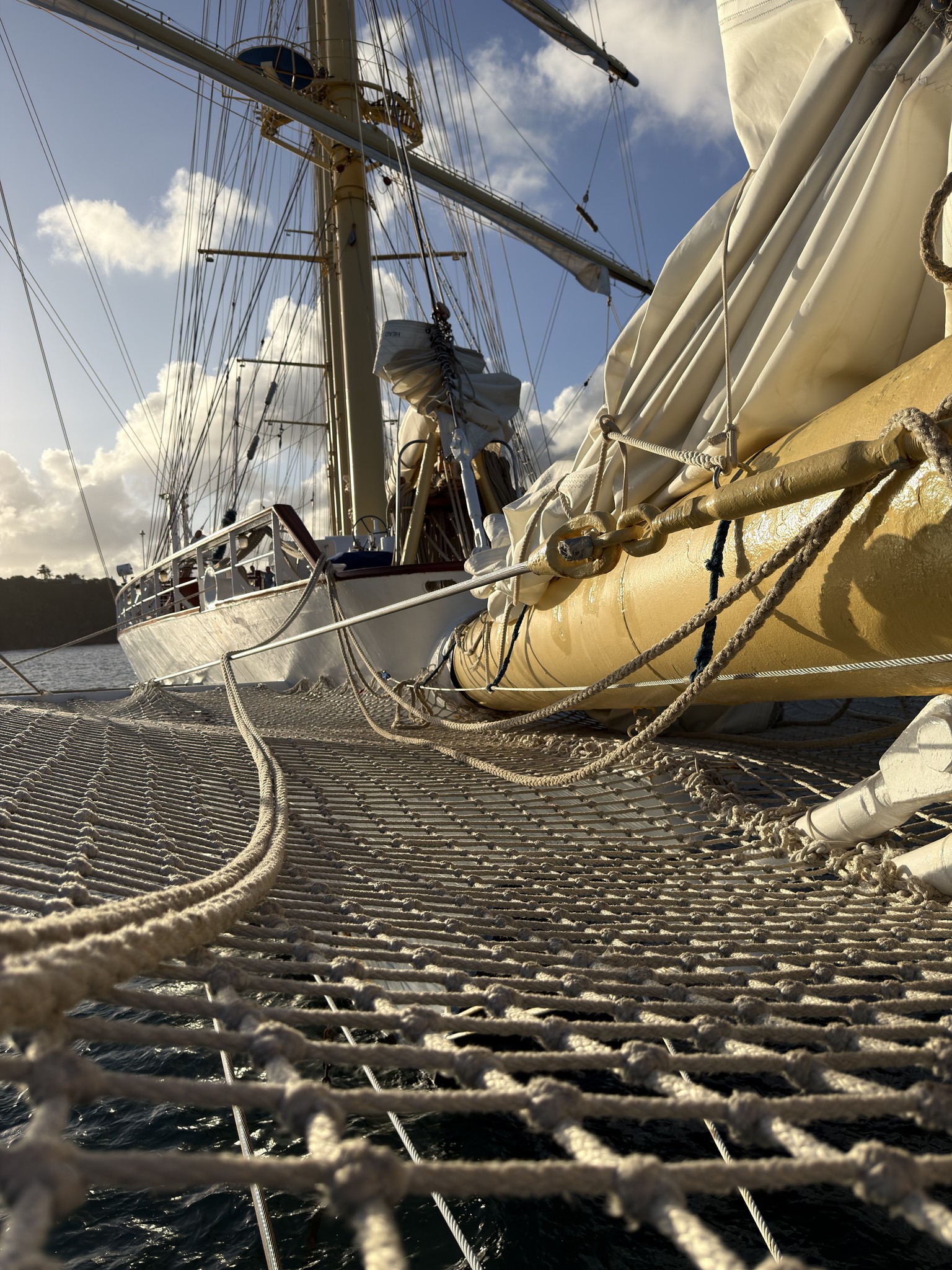
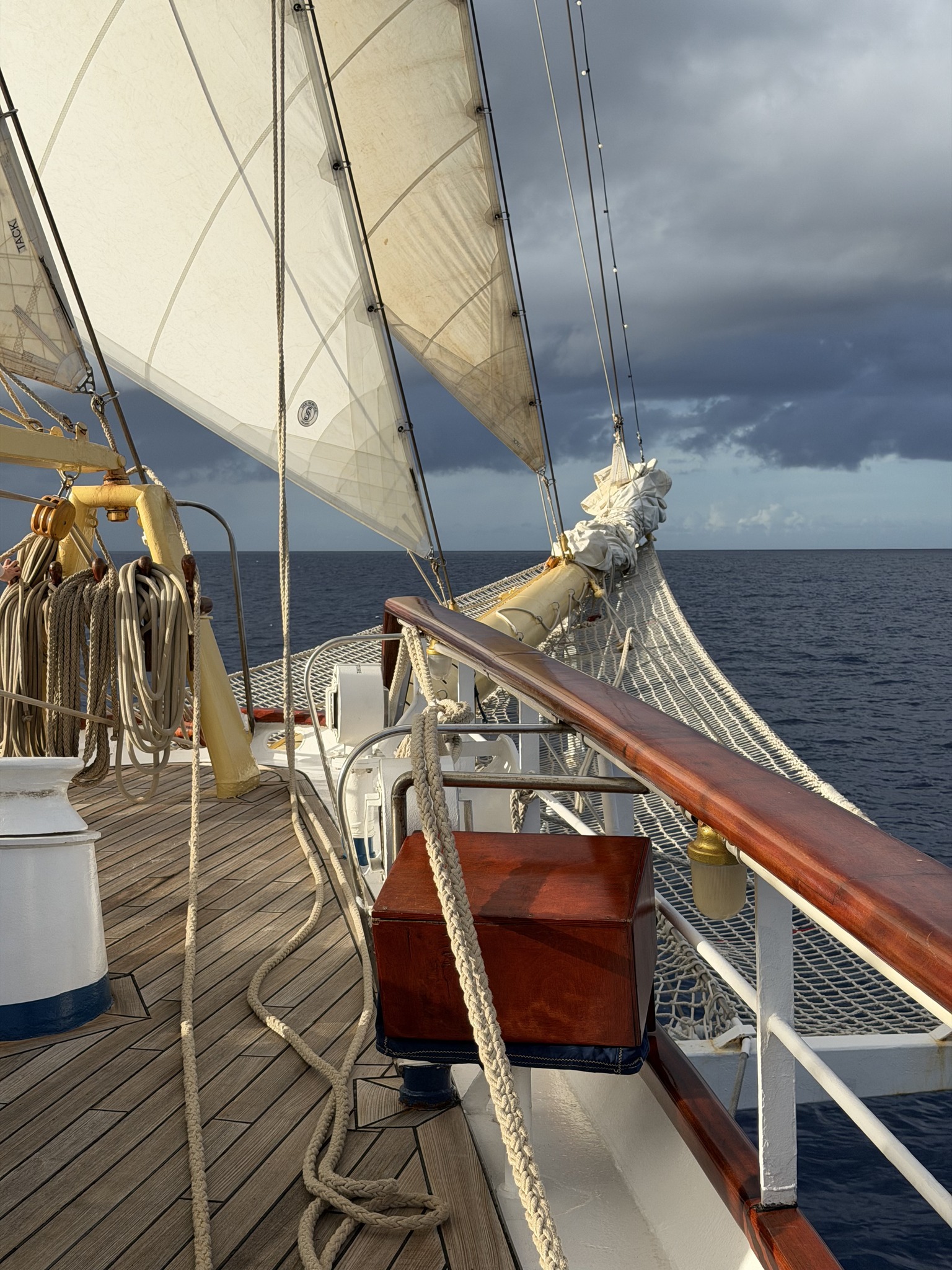
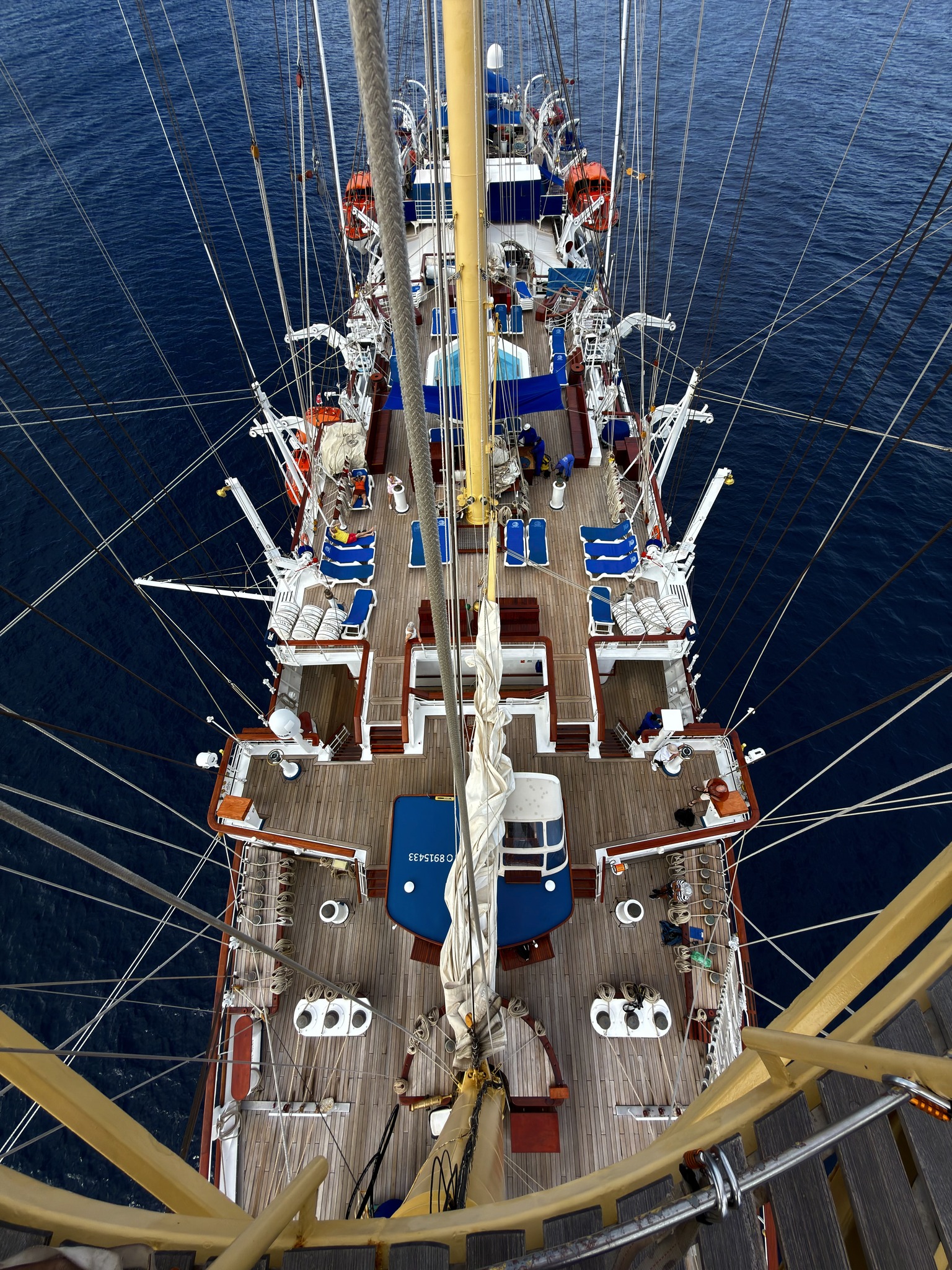
The long, arcing sweep of the hull.
The gentle flare at the bow.
The way her body widens and narrows with intention, not excess.
Nothing is abrupt. Nothing is harsh. Even her strength is softened by flow. She is powerful, yes—but her power is concealed inside elegance. She doesn’t muscle through the water. She parts it. Coaxes it. Persuades it to let her pass.
Soft edges.
Endless lines.
Details that reveal themselves only if you linger.
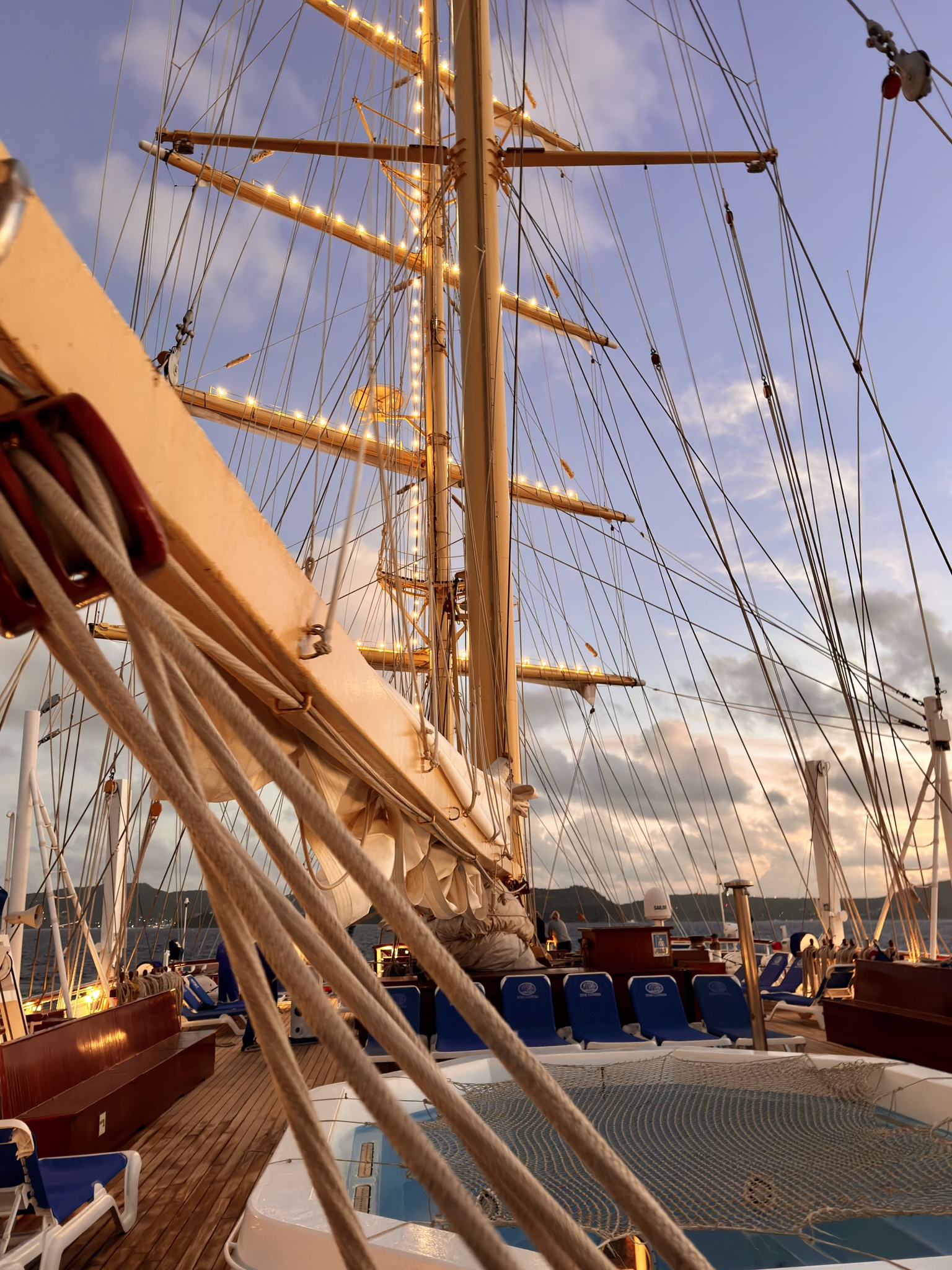
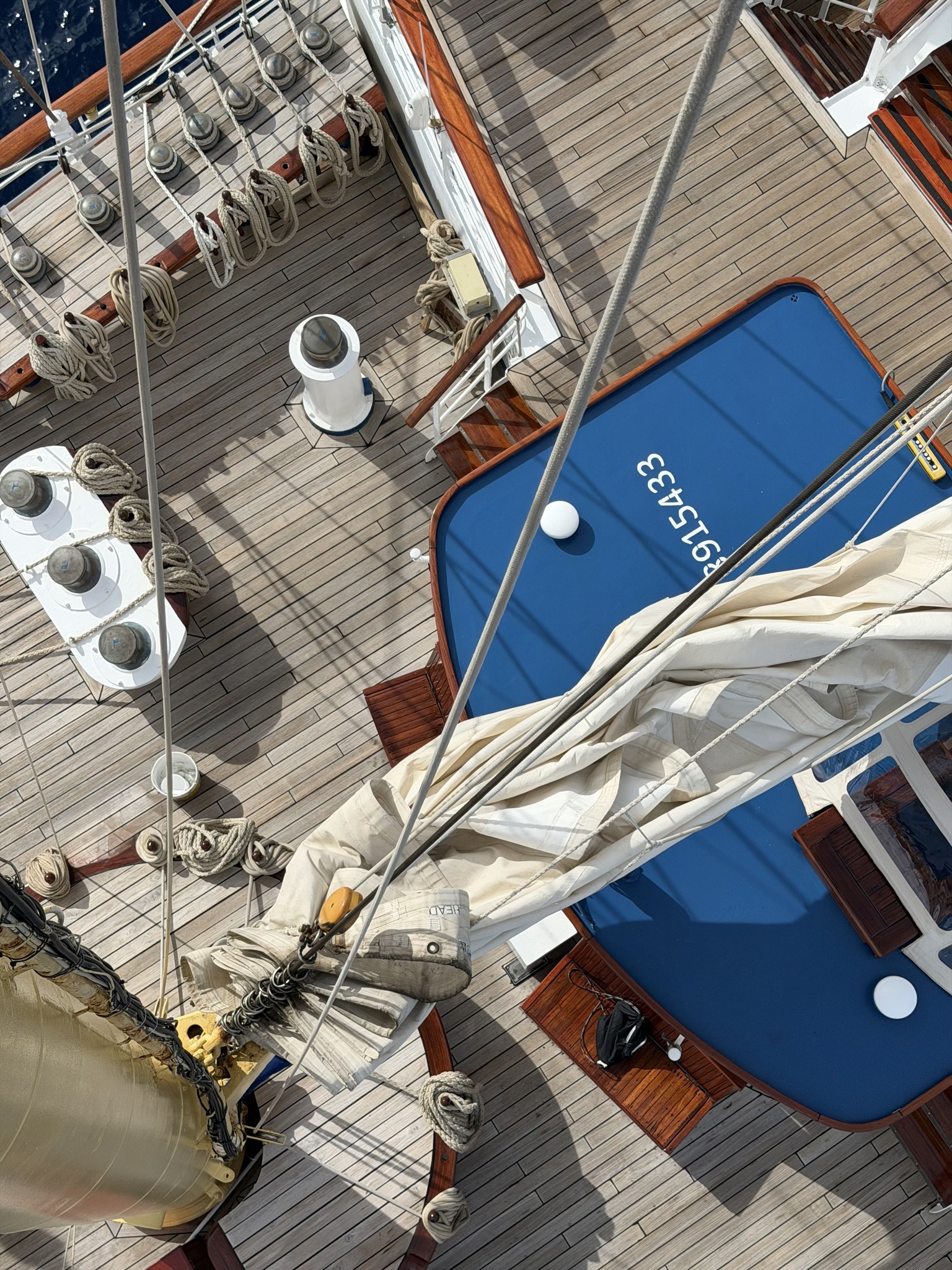
That’s the thing about her—you don’t consume a tall ship at a glance. You discover her. Slowly. Like a body that doesn’t give itself away all at once. You walk her length. You circle her. You notice how the light falls differently at dawn than it does at dusk. How shadows gather in the hollows. How the sun kisses the rigging just so.
There is always unexplored detail. Always something you missed the first time.
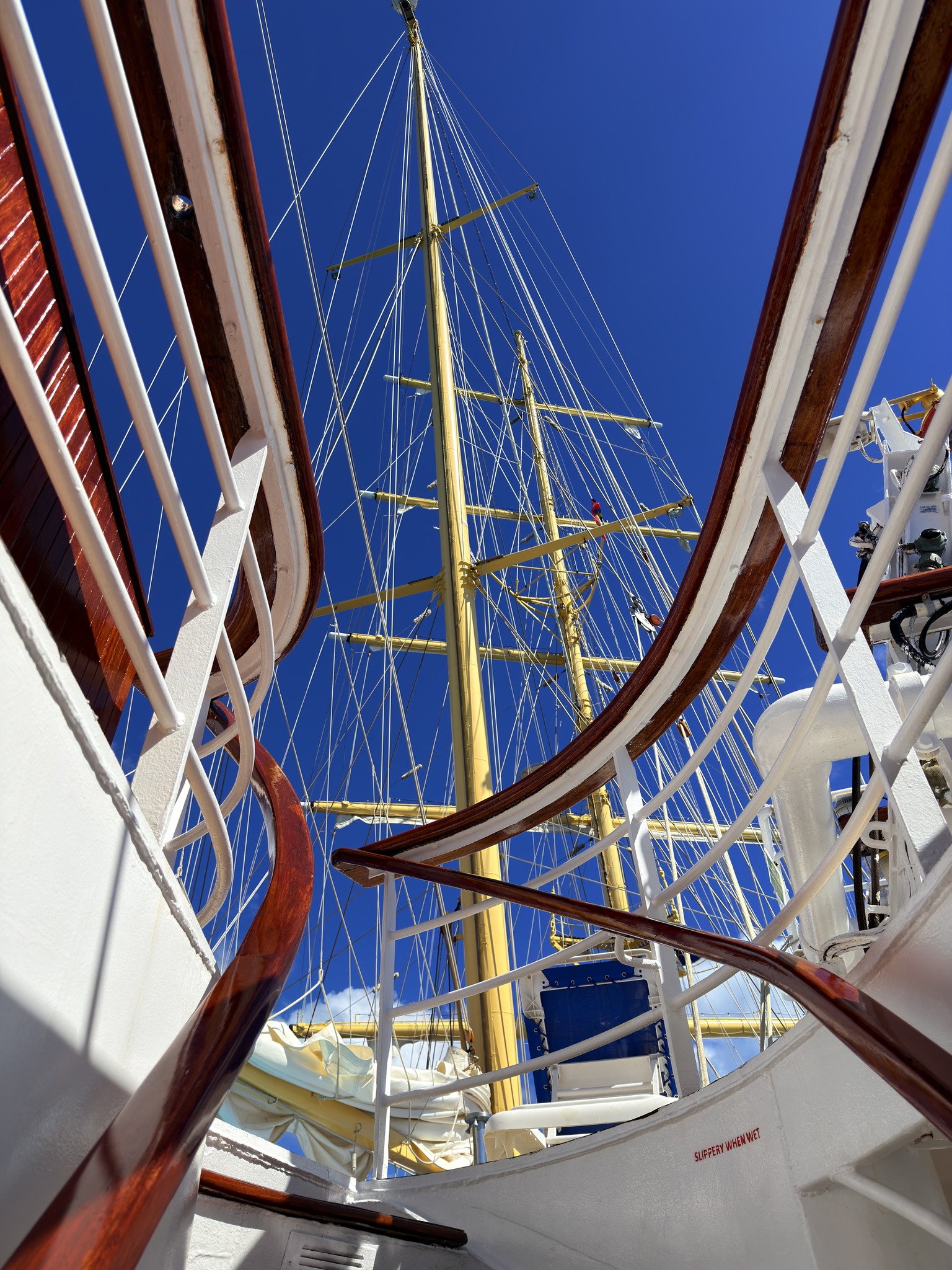
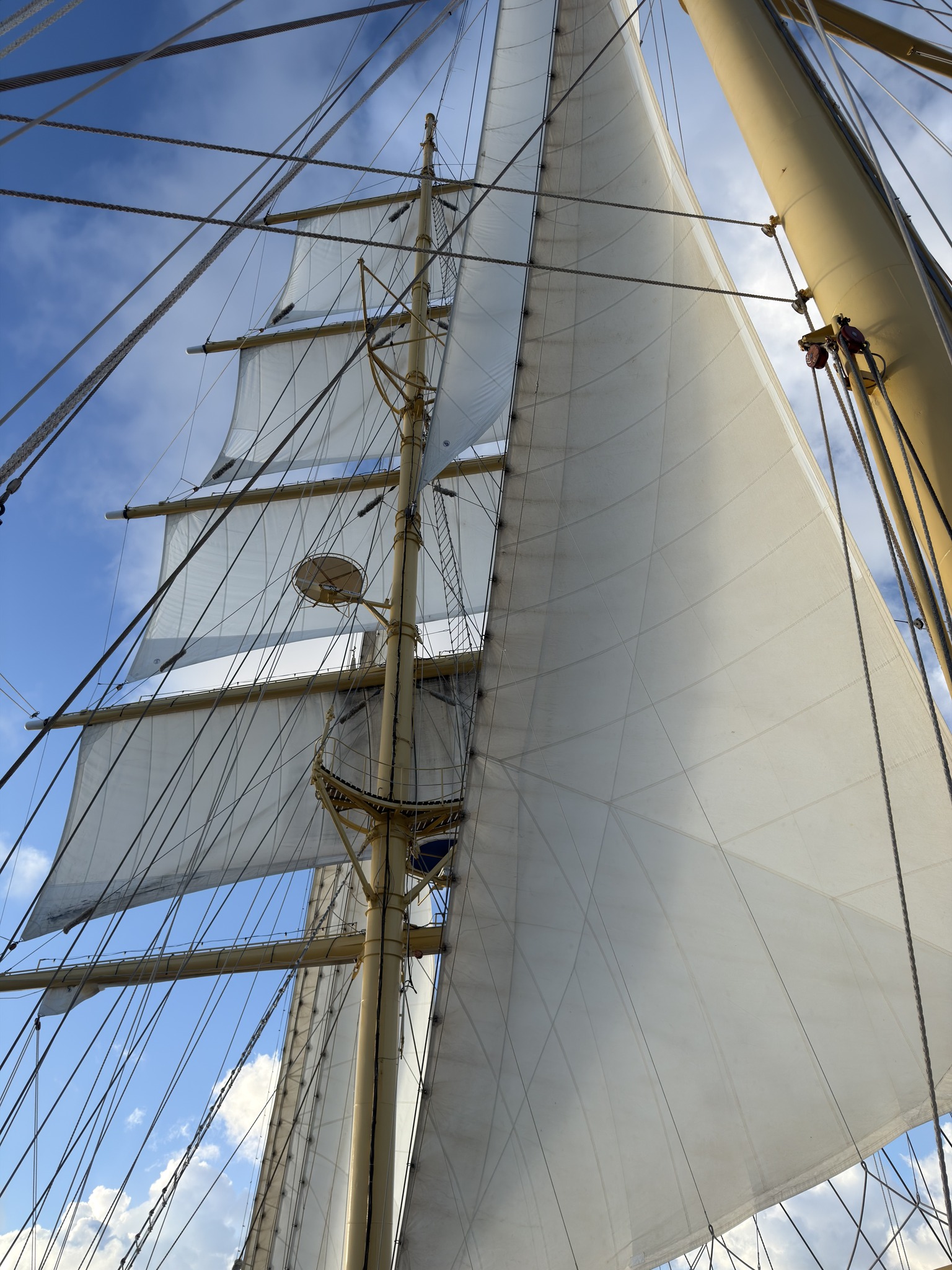
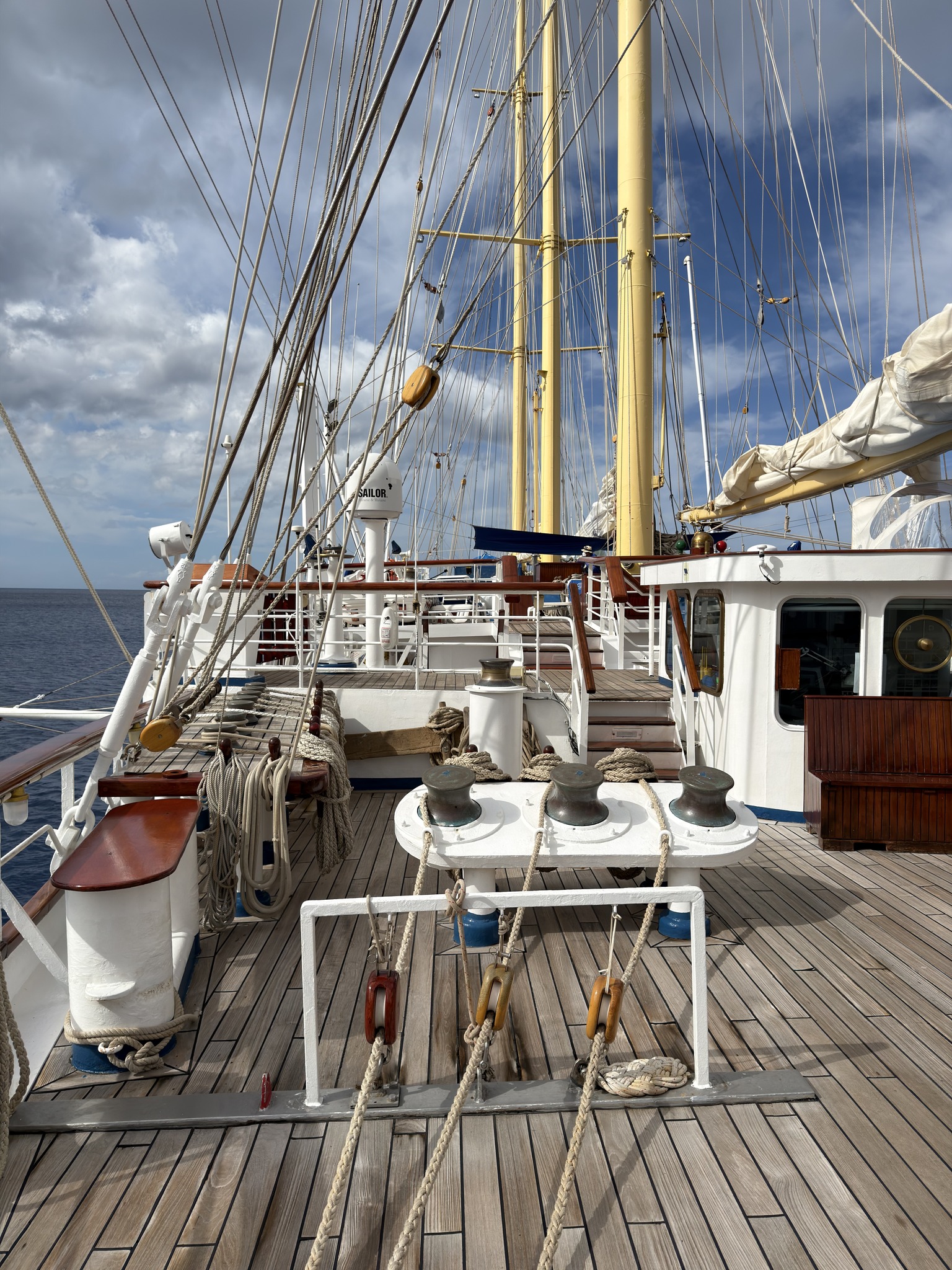
And then there are the masts.
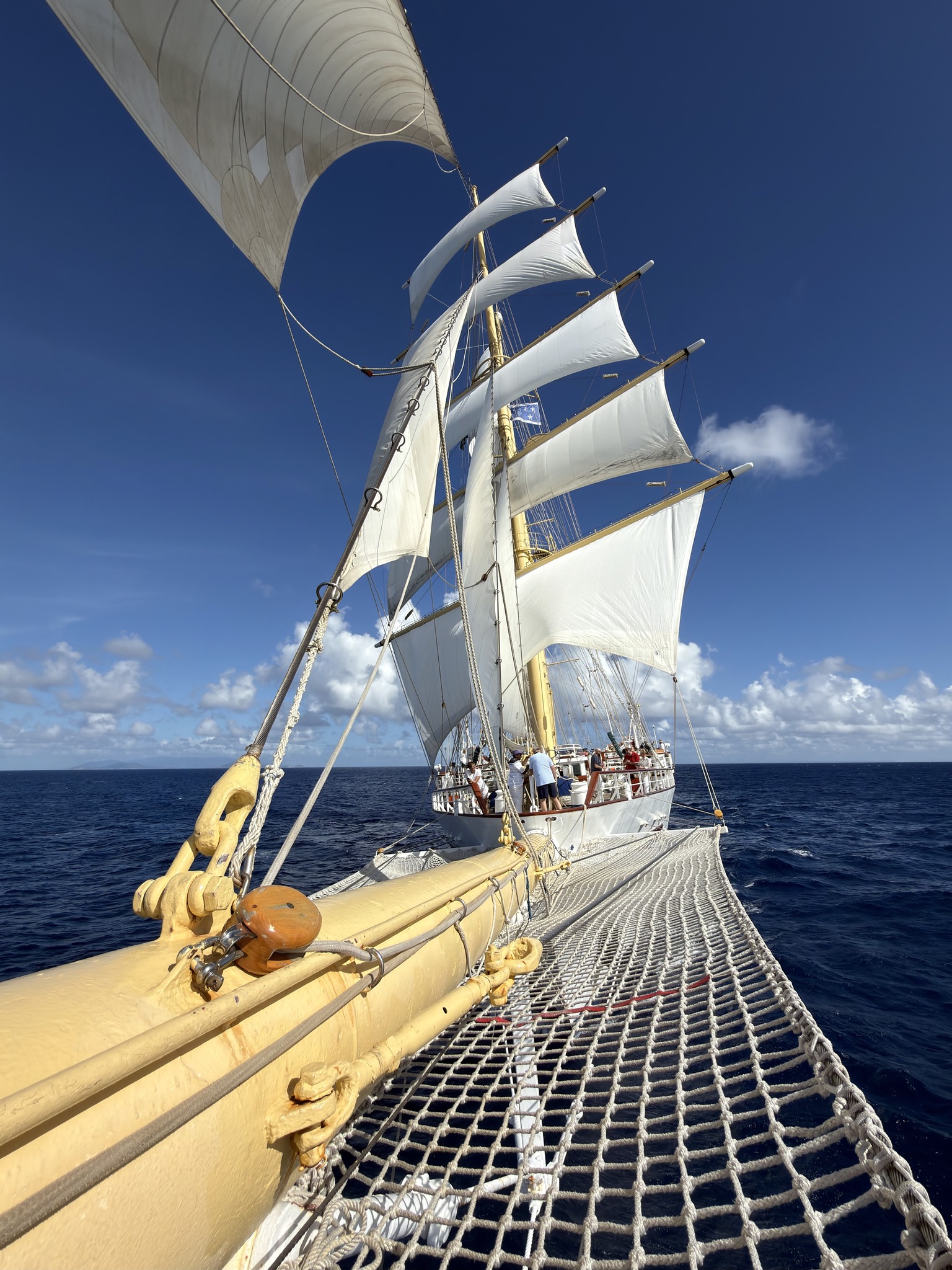
Tall. Upright. Reaching skyward.
An almost audacious verticality, counterbalanced by the softness below.
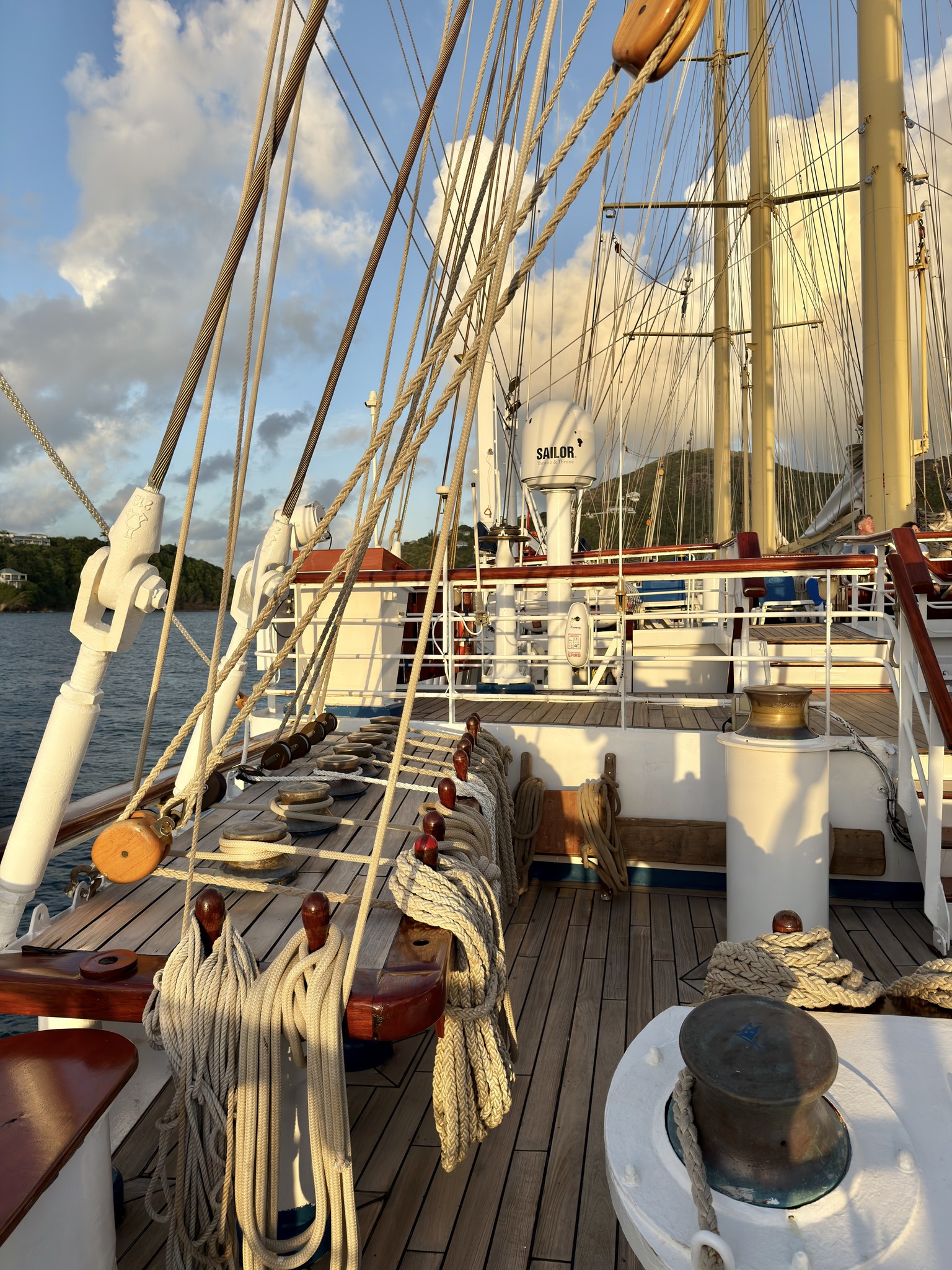
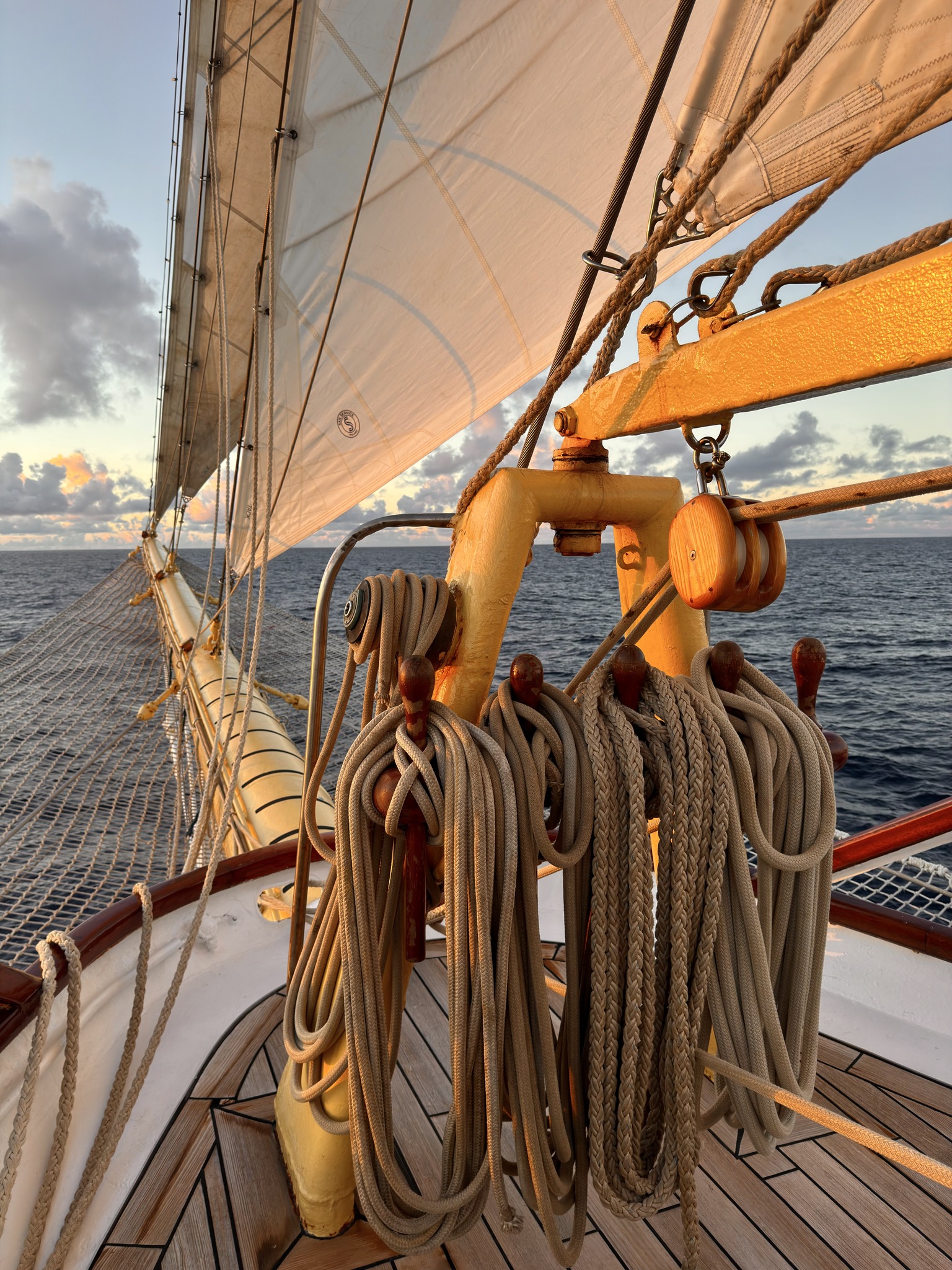
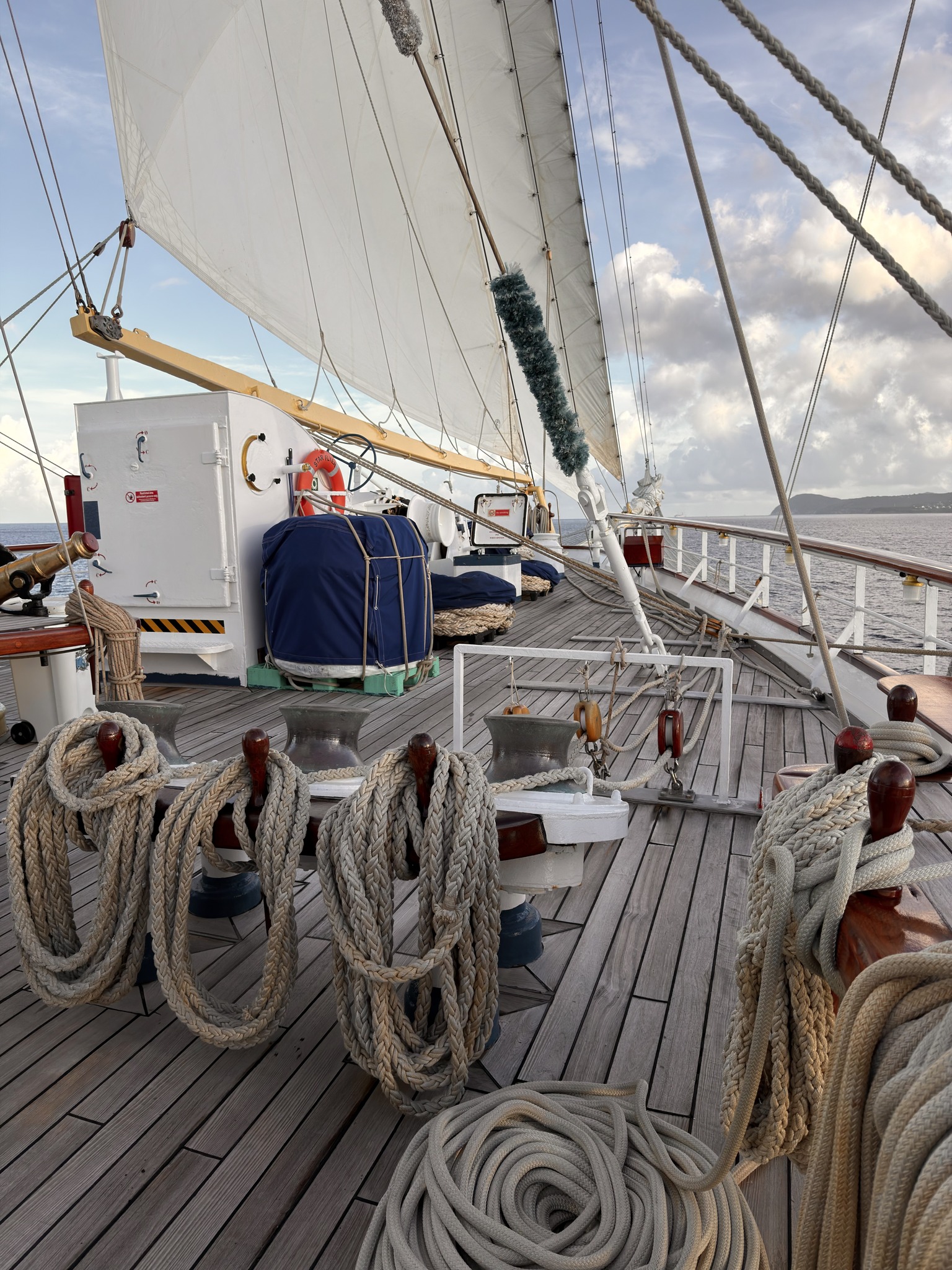
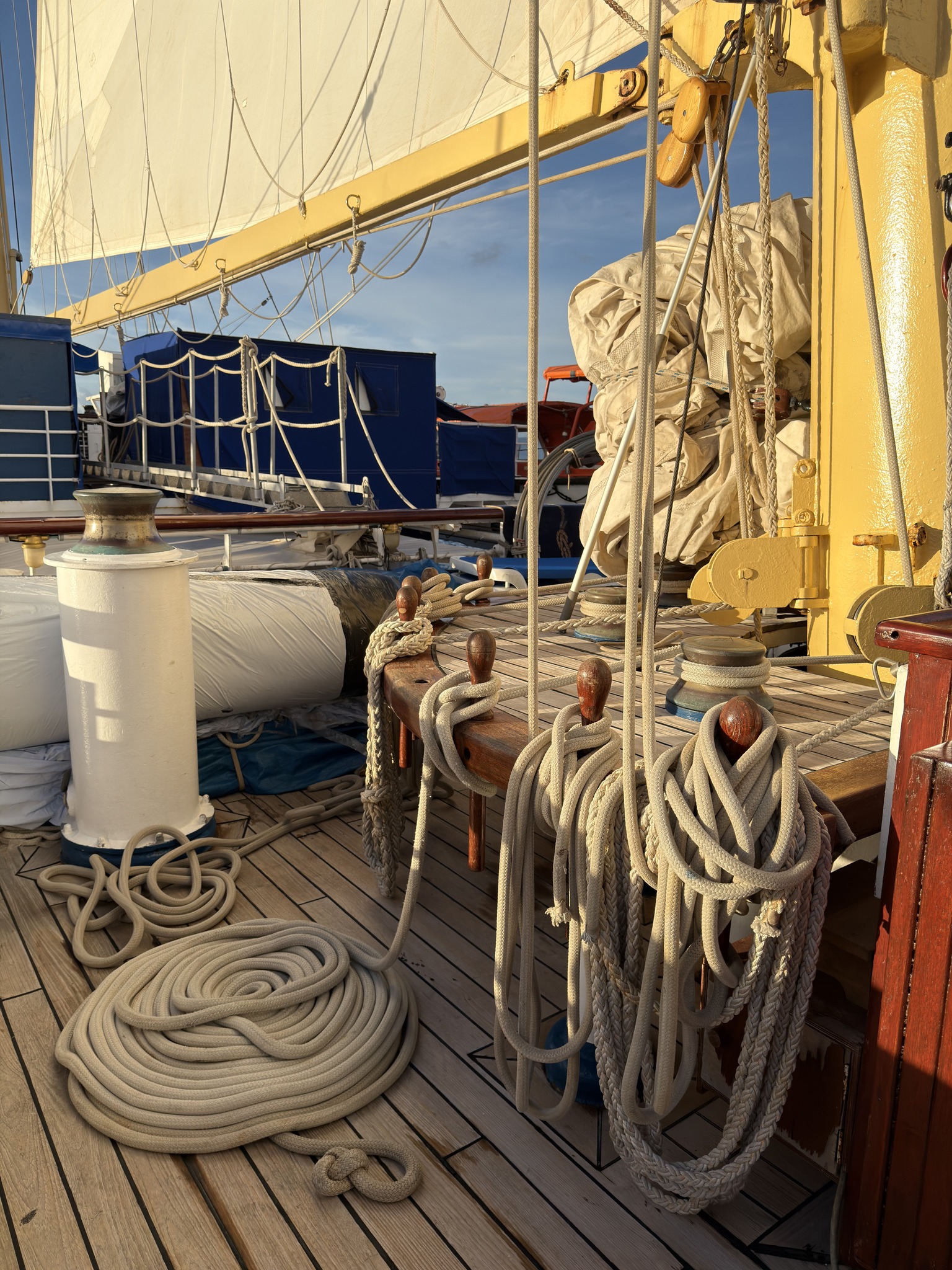
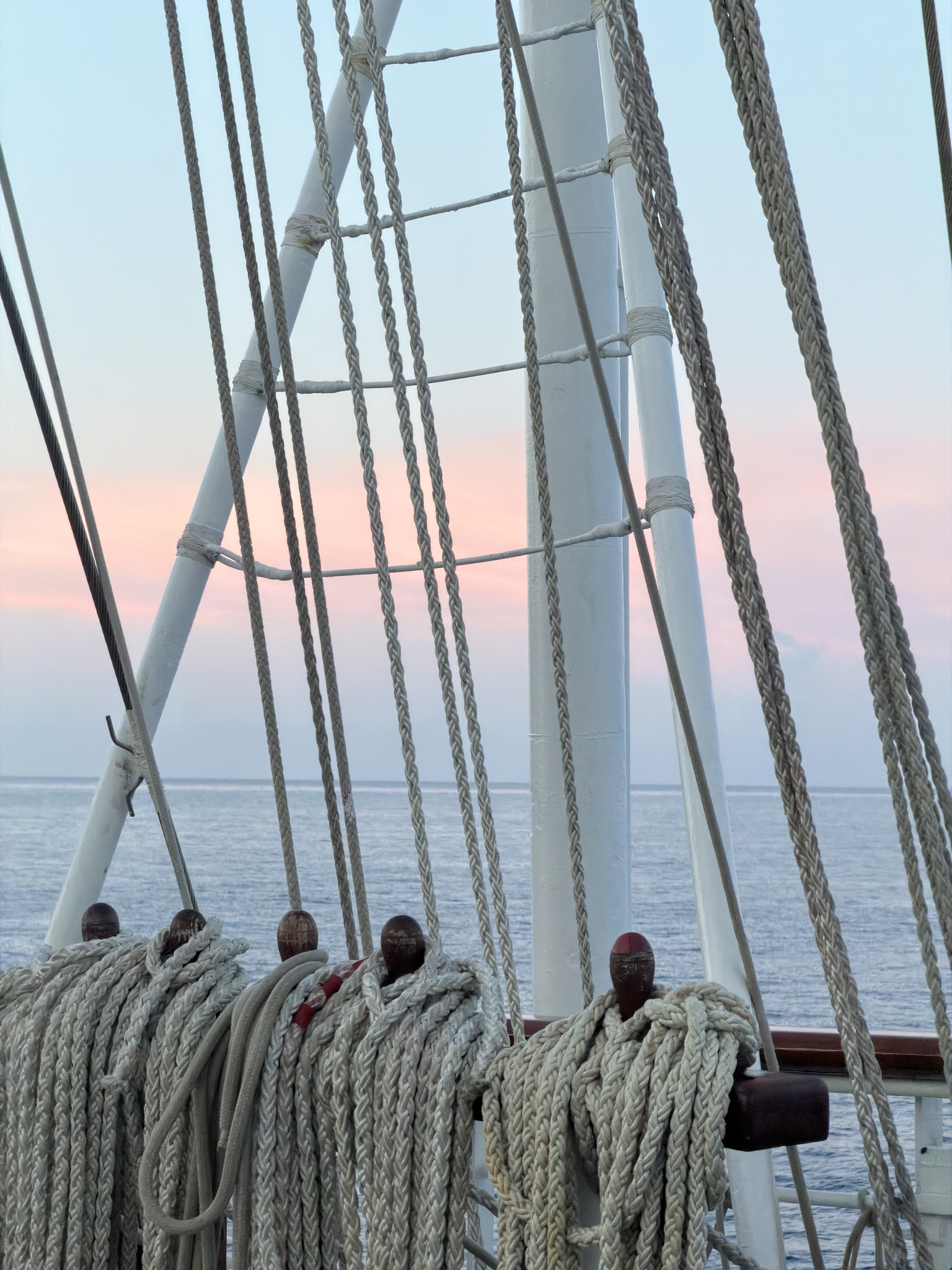
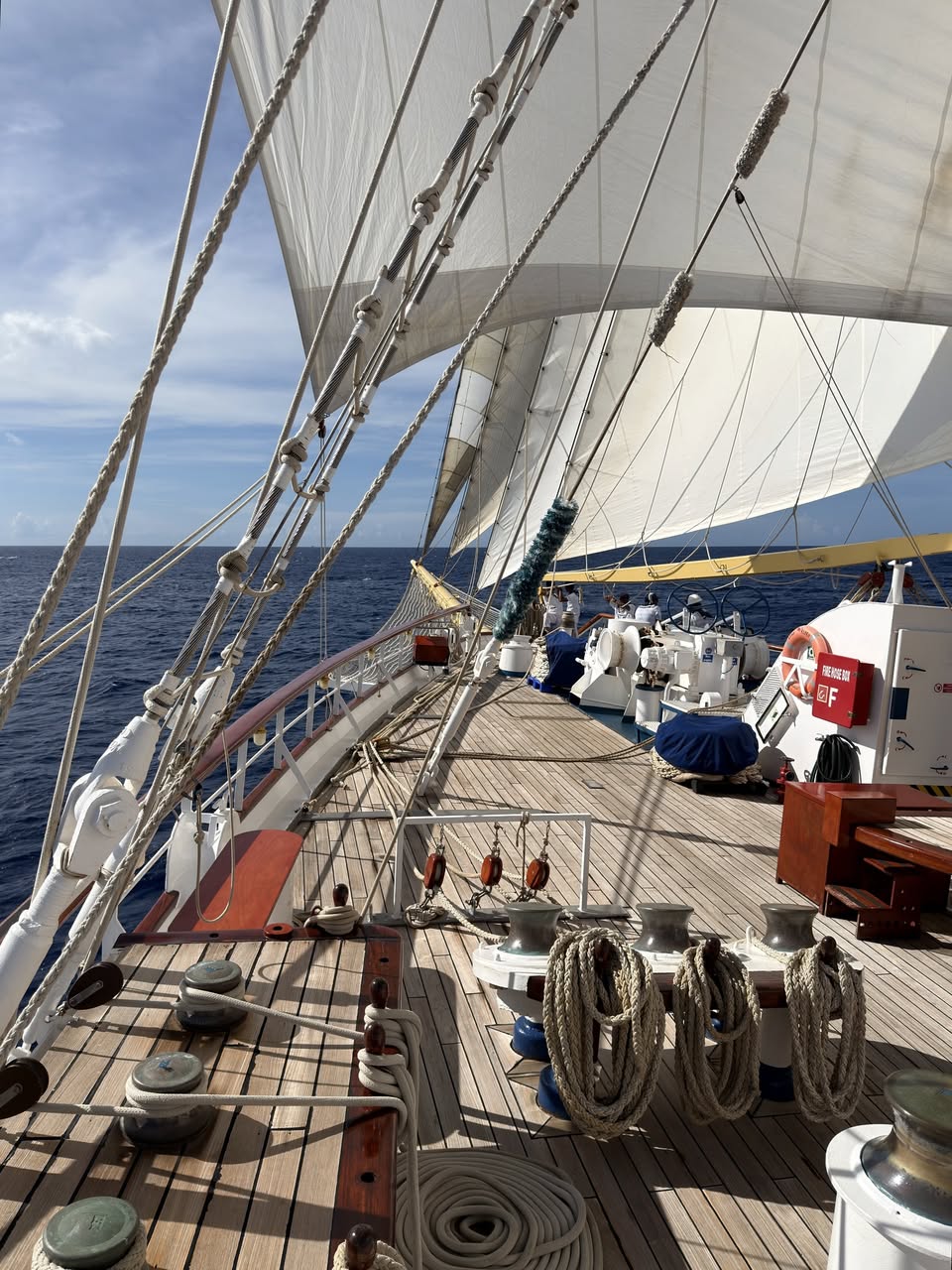
They rise from her body like aspirations—hope made visible. Not rigid, not sterile, but alive. Taut lines hum with tension and promise. Ropes stretch and relax, responding to wind and weather like muscles beneath skin.
Nothing about her is static.
She breathes with the sea.
Watch her at anchor and she still moves—subtly, rhythmically—rocking ever so slightly, as if remembering motion even while resting. She never truly sleeps. She waits. Listens. Feels.
There’s sensuality in that awareness.
Not sexuality. Sensuality.
The difference matters.
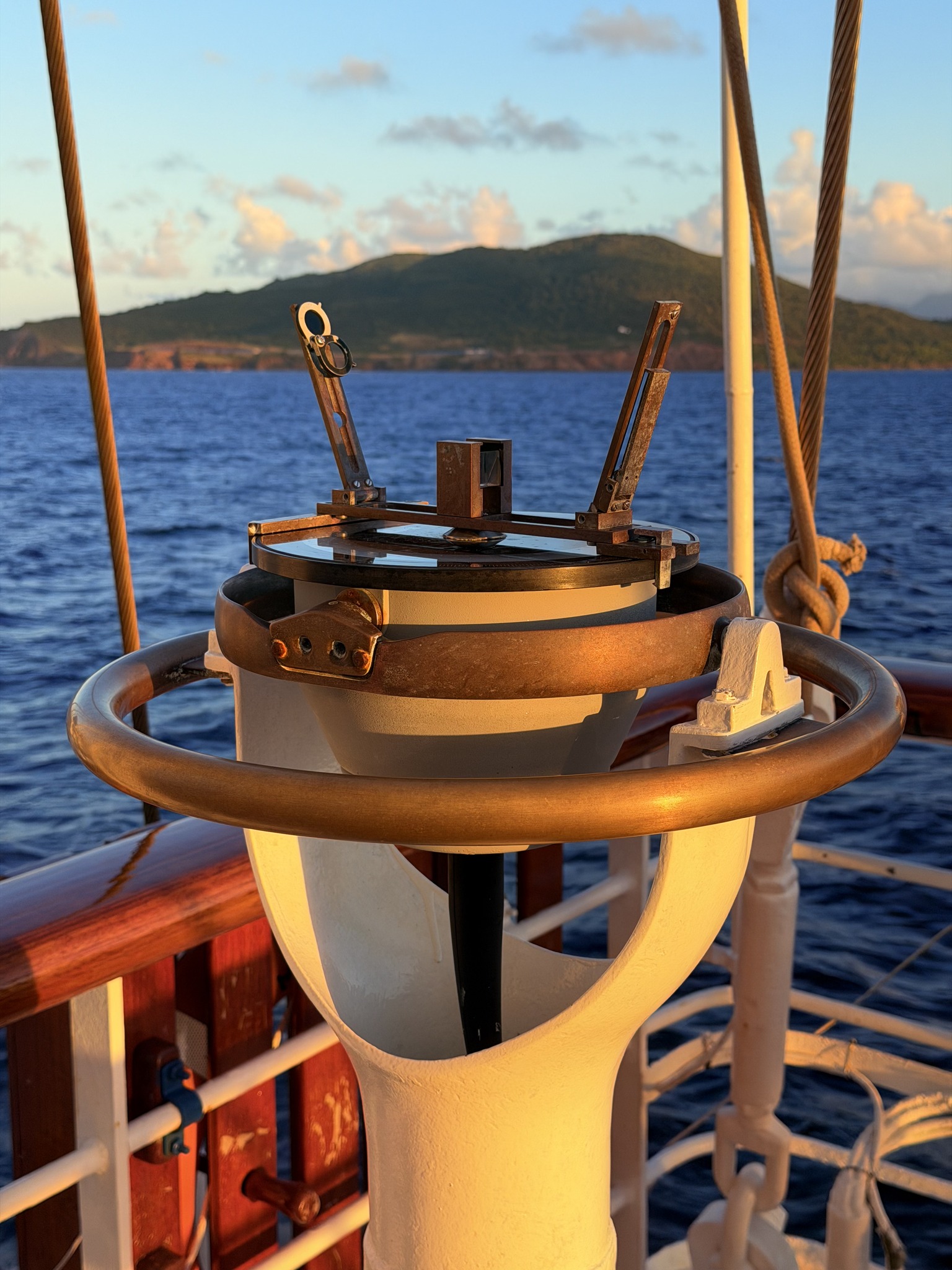
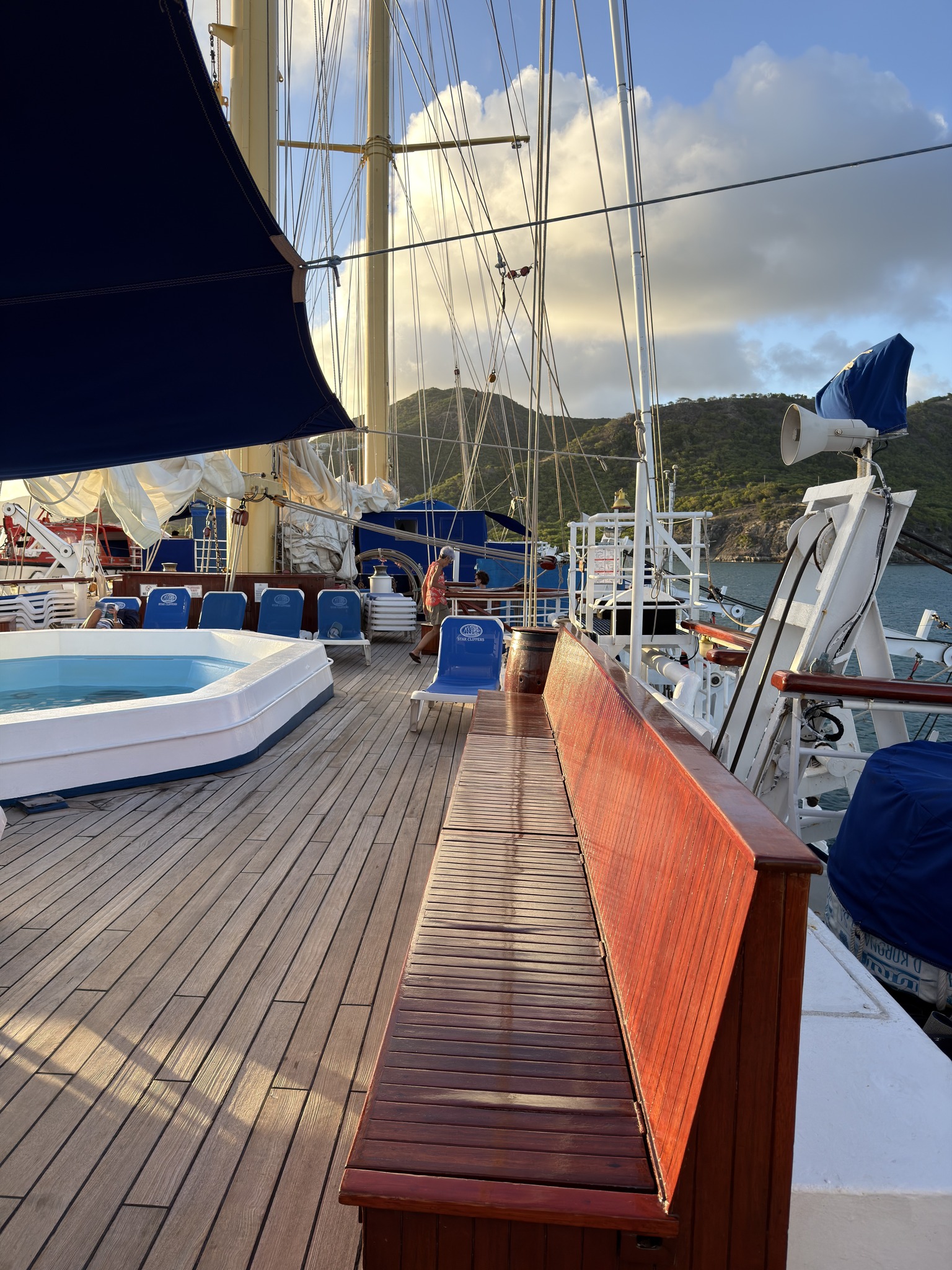
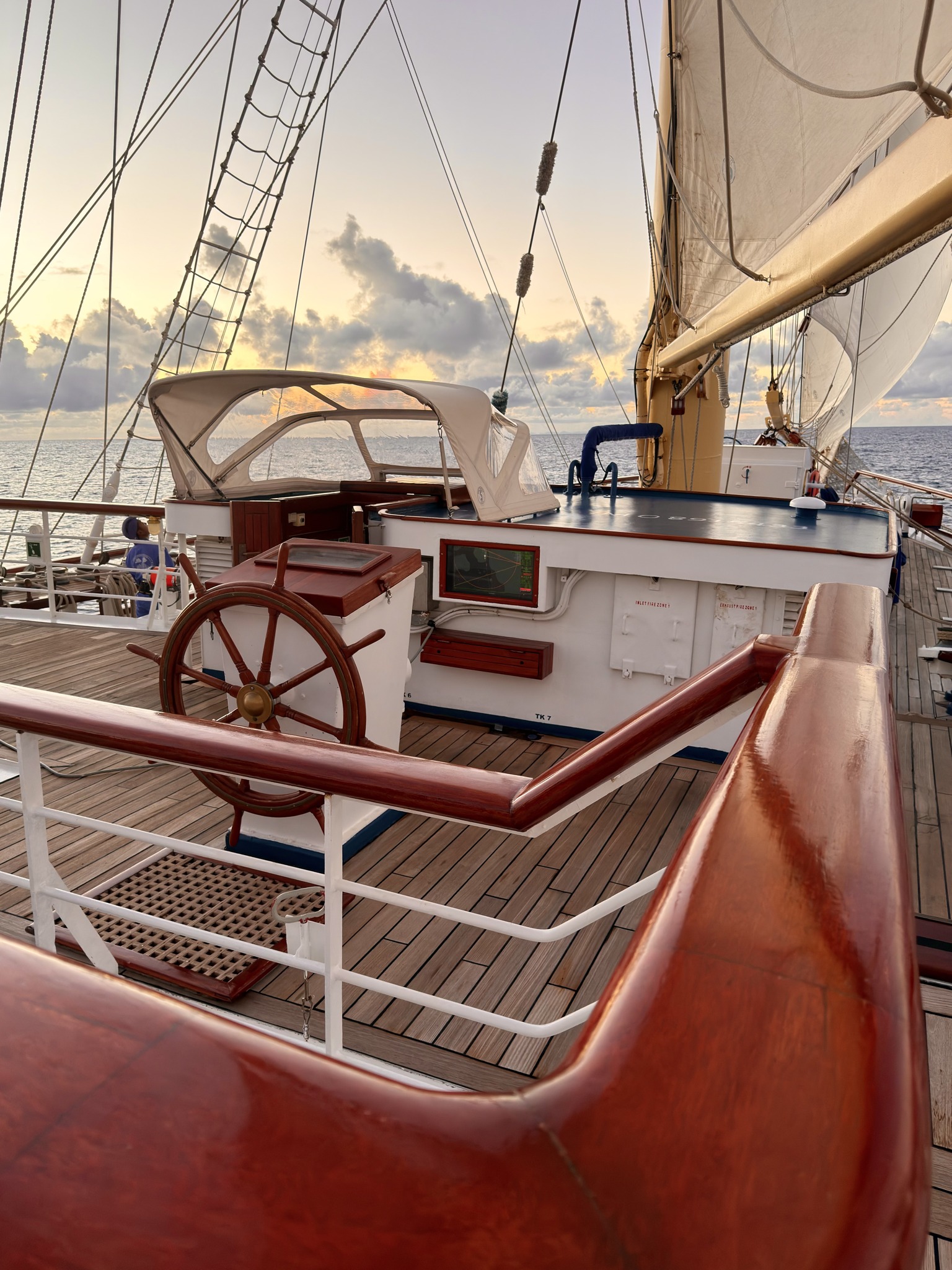
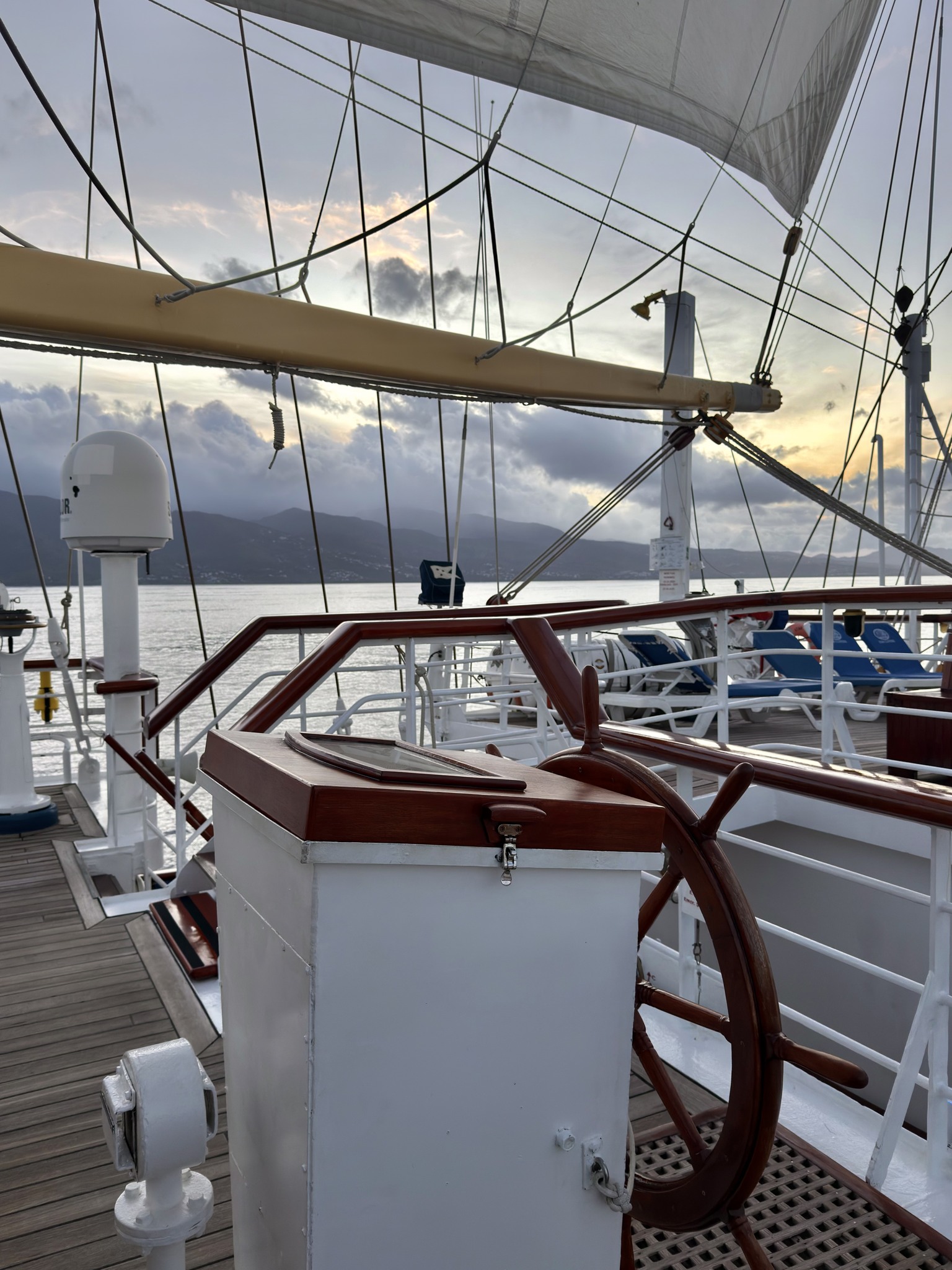
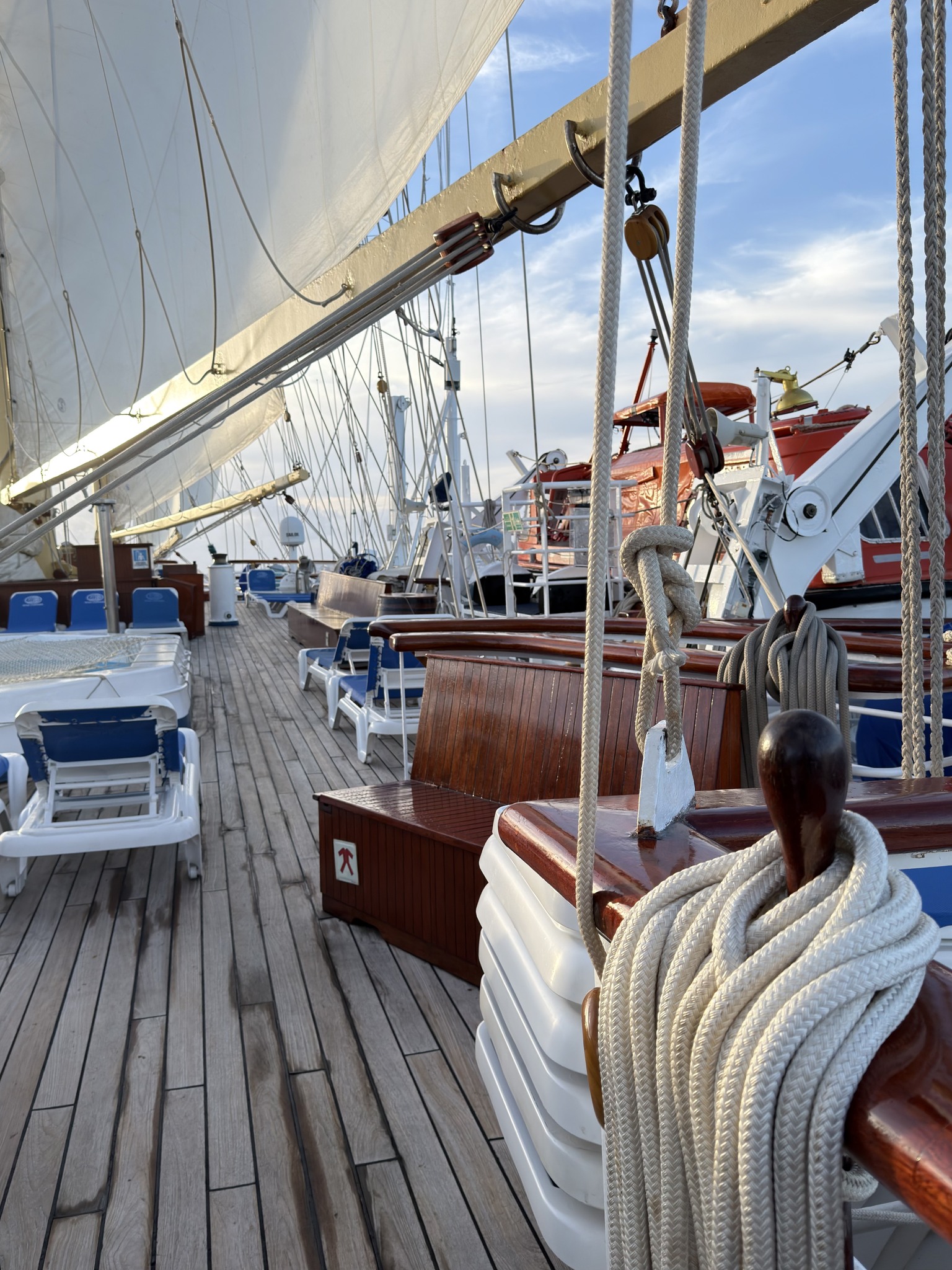
Sensuality is about touch, texture, temperature. About how things feel as much as how they look. The warmth of sun-soaked wood beneath your hand. The salt-slick rail. The faint creak and sighs that come from deep within her when the tide shifts.
She speaks, but quietly.
Old ships always do.
There’s history in her voice. Stories etched into her planks. Scars that don’t detract from her beauty but deepen it. A nicked beam here. A weathered edge there. Evidence of time passed, storms endured, distances crossed.
She has lived.
And that, too, feels feminine to me—the way experience accumulates not as something to hide, but as something to carry with dignity.
She wears her age well.
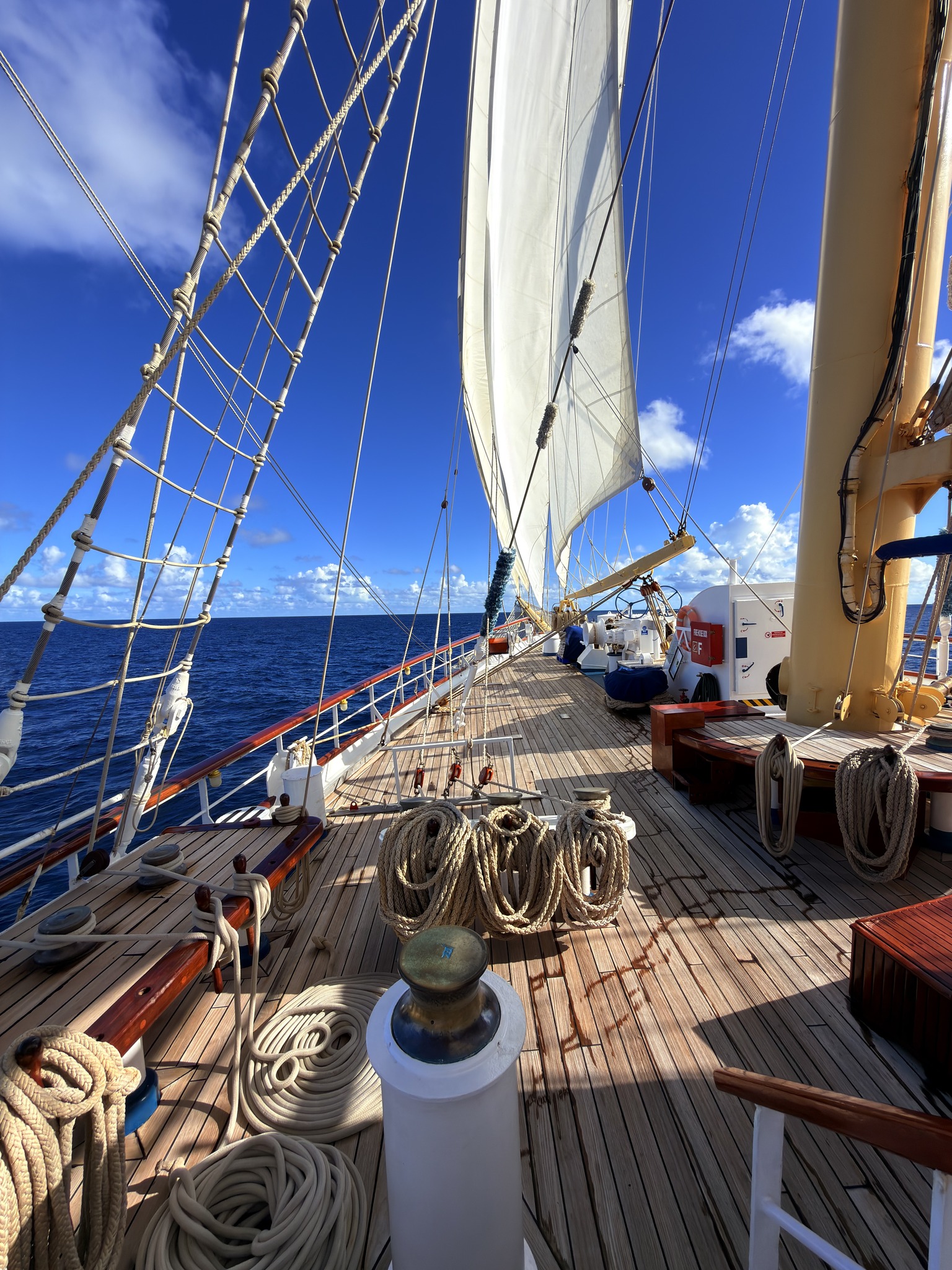
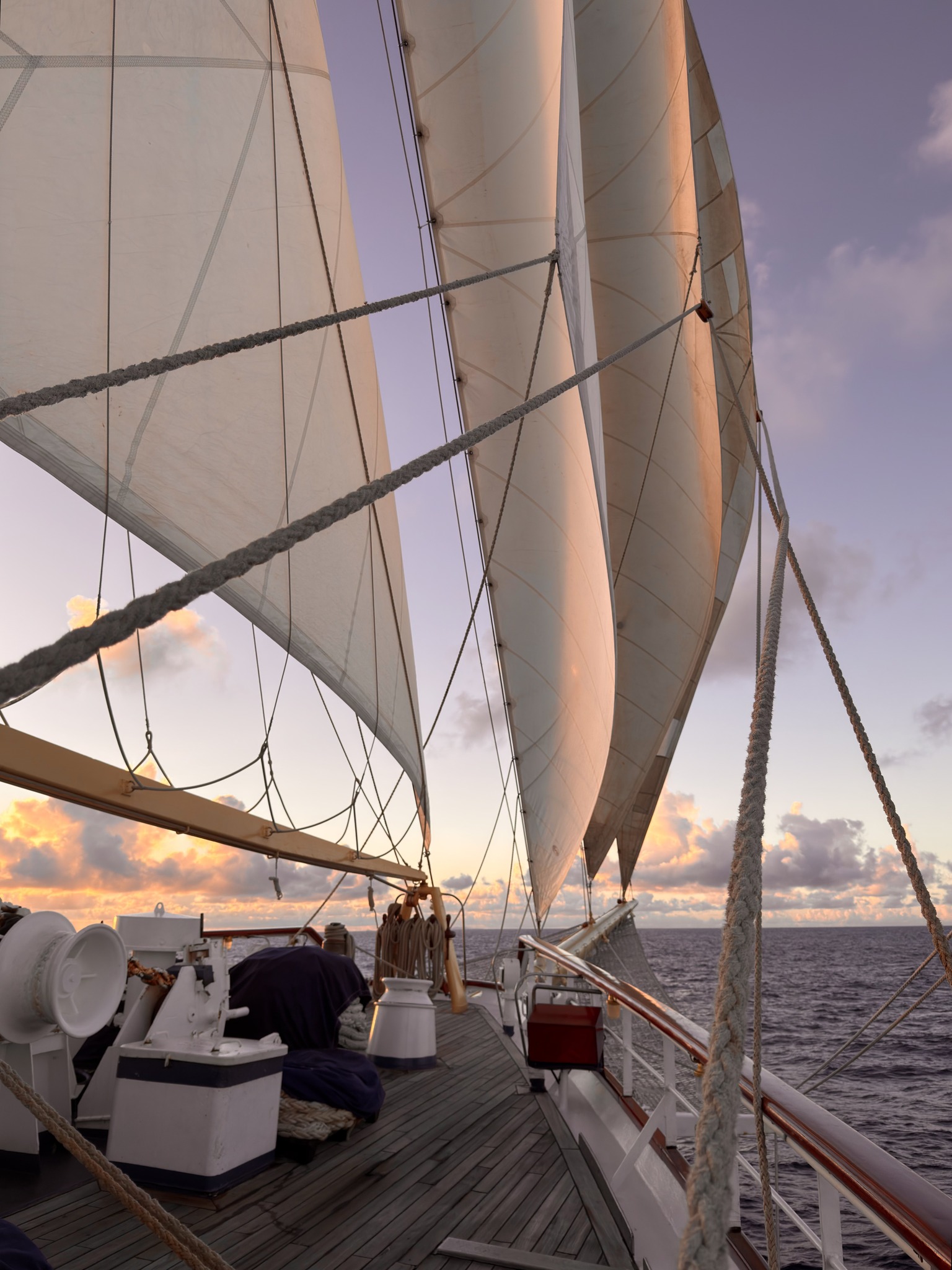
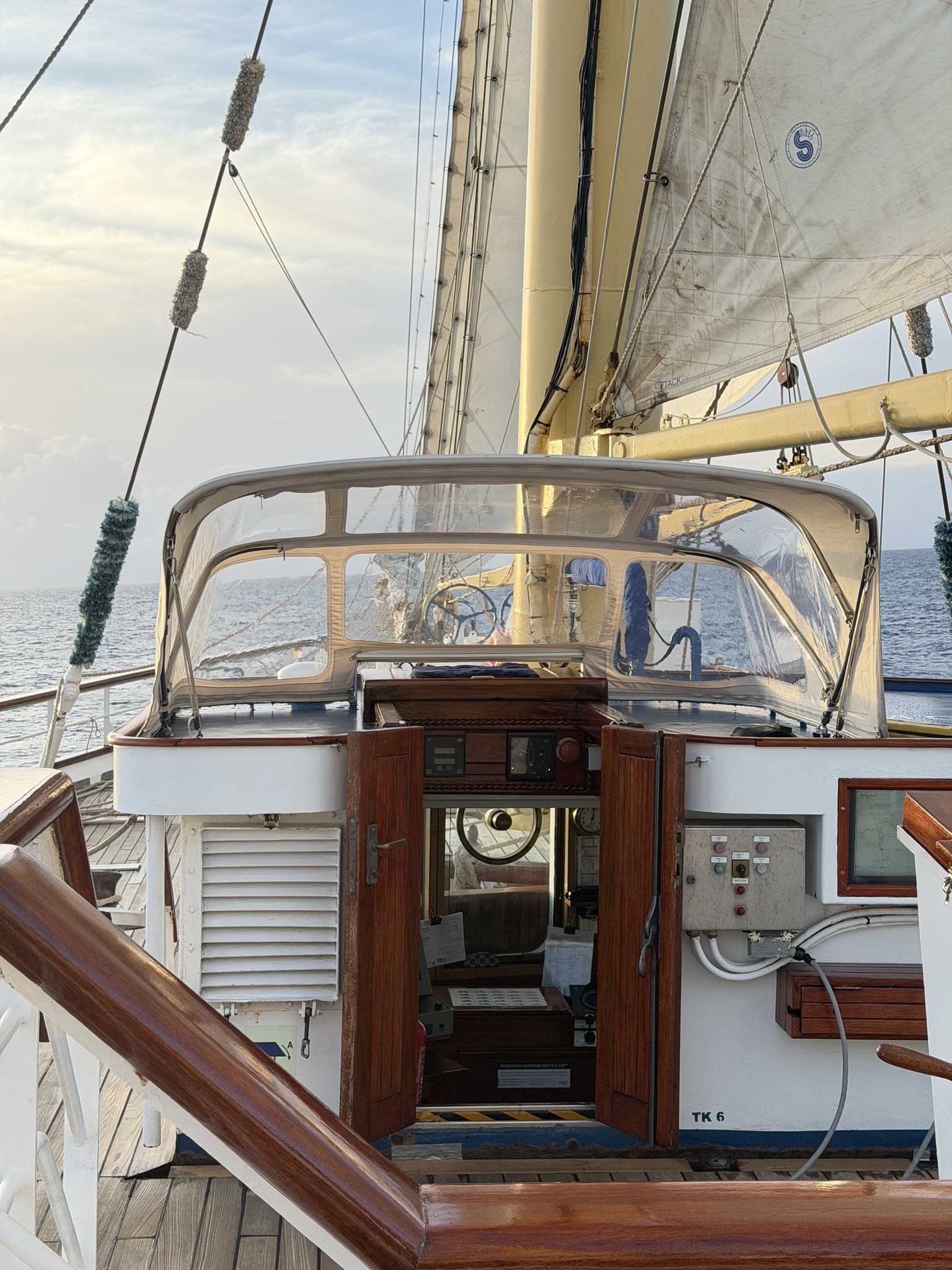
Her sails, when raised, transform her entirely. Suddenly she’s no longer contained. She expands. Opens herself to the wind. Takes a deep breath and lets the world move her forward.
That moment—when canvas fills, when lines go taut, when motion begins—feels intimate. Almost private. Like witnessing someone step fully into themselves.
There is trust involved. Between ship and wind. Between ship and sea. She surrenders just enough control to move with purpose.
That balance—between surrender and command—is rare. And intoxicating.
It’s hard not to anthropomorphize something that behaves with such emotional intelligence.
She responds to conditions. Adjusts. Compromises. Advances. Retreats. She knows when to push and when to yield. When to lean in. When to hold back.
She is not reckless. But she is brave.
I’ve heard people argue that calling ships “she” is outdated. Romantic nonsense. A relic of a bygone, male-dominated world.
Maybe.
But I don’t use the word lightly. I don’t use it possessively. I don’t use it dismissively.
I use it reverently.
Calling her “she” isn’t about ownership. It’s about relationship. About acknowledging presence. About admitting that what I’m looking at stirs something human in me.
Because a tall ship doesn’t just occupy space. She commands it. Quietly. Confidently. Without apology.
She doesn’t need to prove herself.
She simply exists—beautiful, capable, complex—and that is enough.
Standing on deck, hand on rail, watching her cut through water that has carried countless stories before her, I feel something ancient awaken. A recognition. A sense that beauty once meant something slower, more earned. Less disposable.
She reminds me that not everything of value is optimized. Or efficient. Or modern.
Some things are beautiful precisely because they take time. Because they demand attention. Because they reward patience.
She reminds me that elegance and strength are not opposites. That curves can be powerful. That softness can endure.
So yes—I see tall ships as “she.”
Not because I need them to be.
But because, standing before one, it’s hard to see her as anything else.
She is grace made visible.
She is motion and stillness intertwined.
She is history, desire, and possibility—floating.
And every time she passes, I watch her go the way one watches someone beautiful disappear into a crowd—not wanting to interrupt, not wanting to possess, just grateful to have seen her at all.
Click.
Jack.
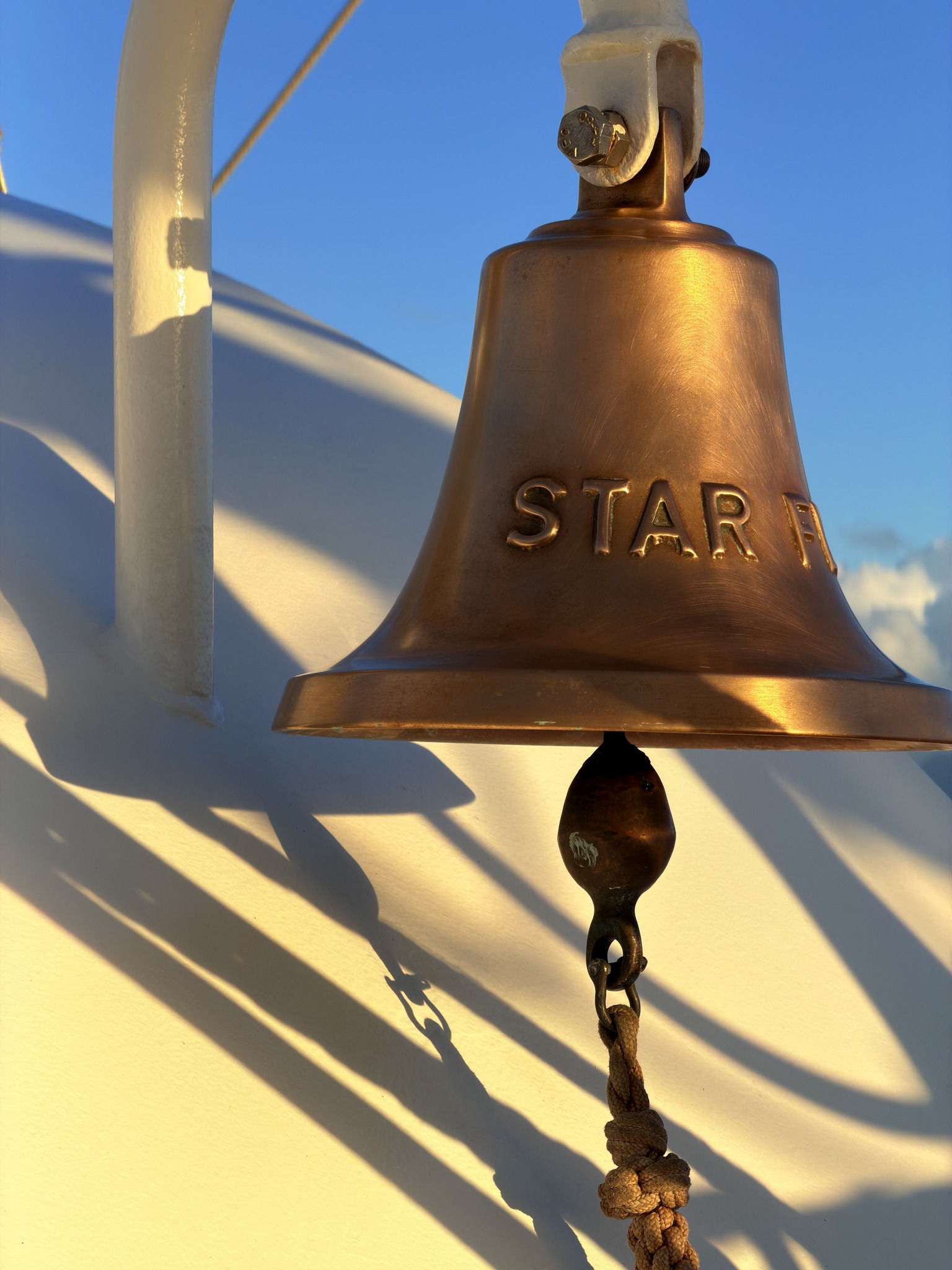
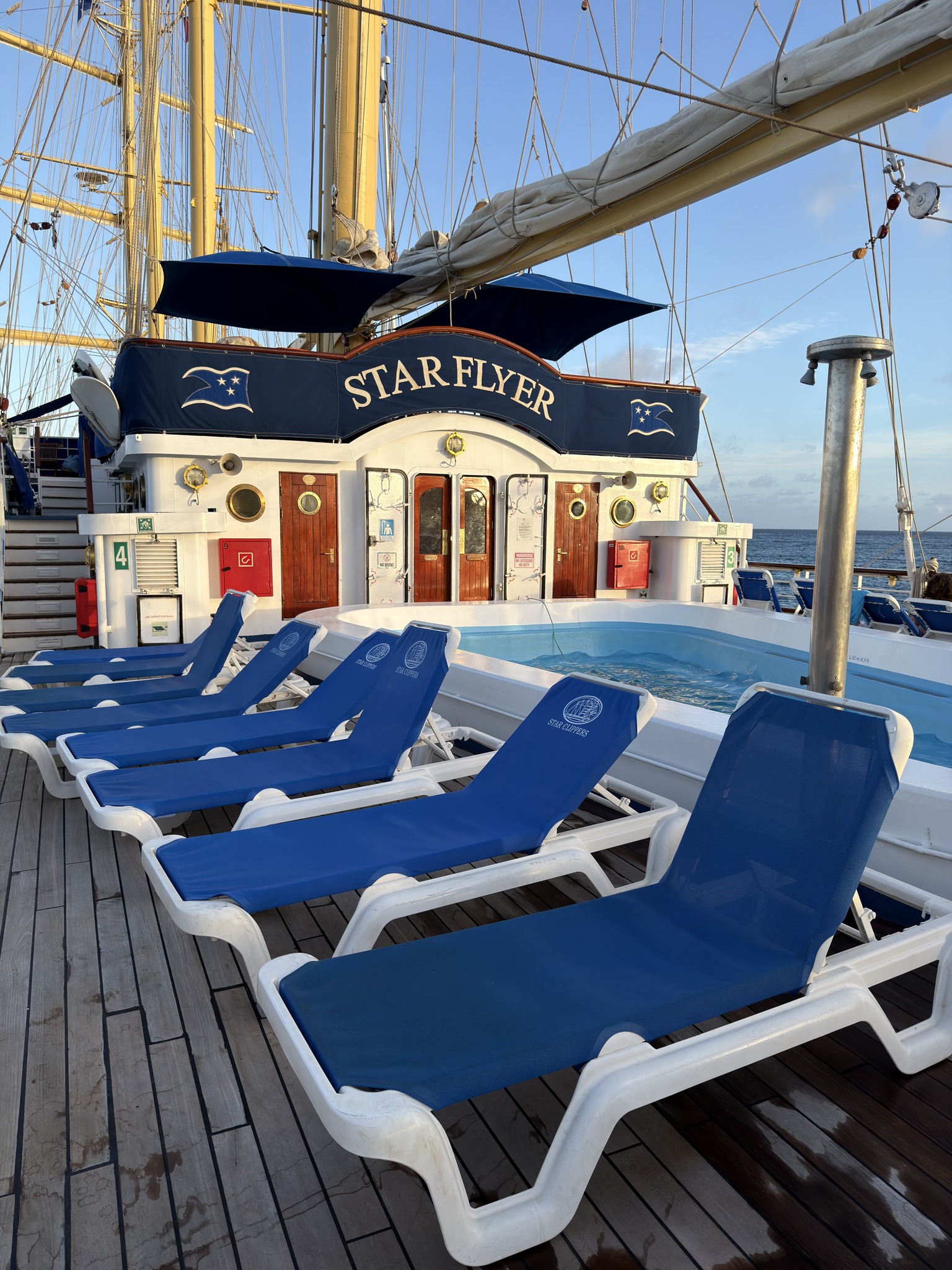
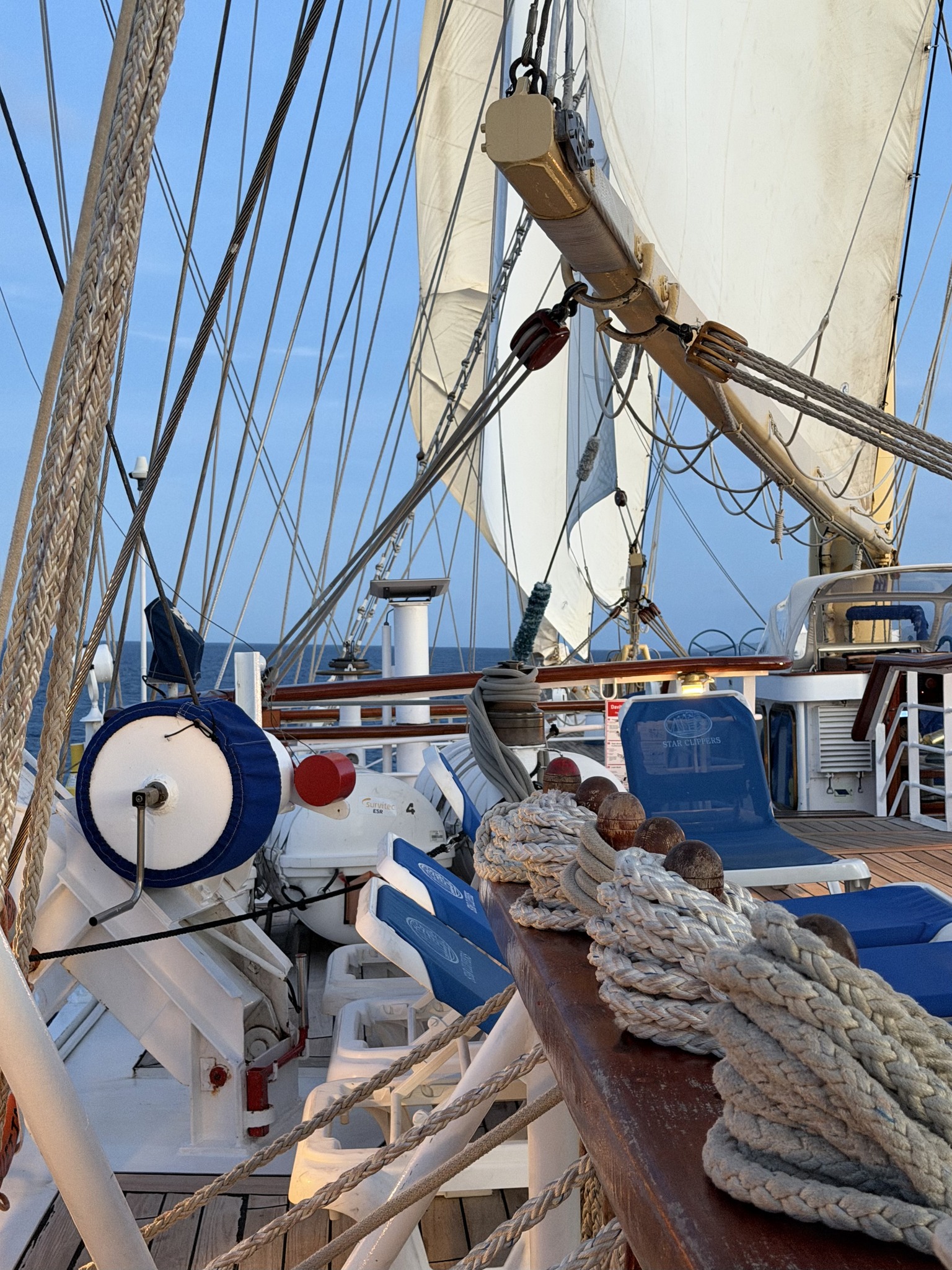
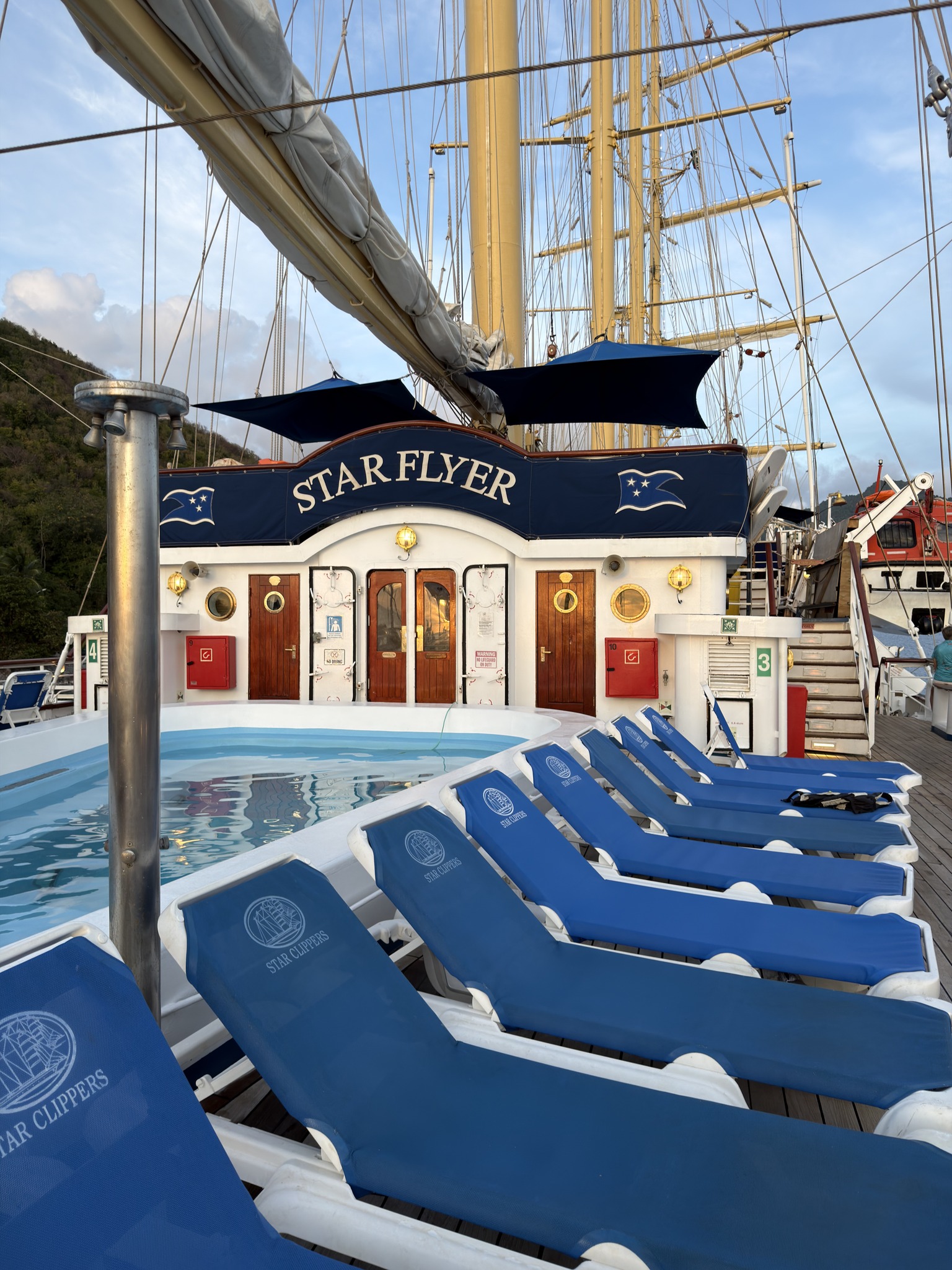
P.S. Her name is Star Flyer-a Tall ship in the Star Clippers fleet