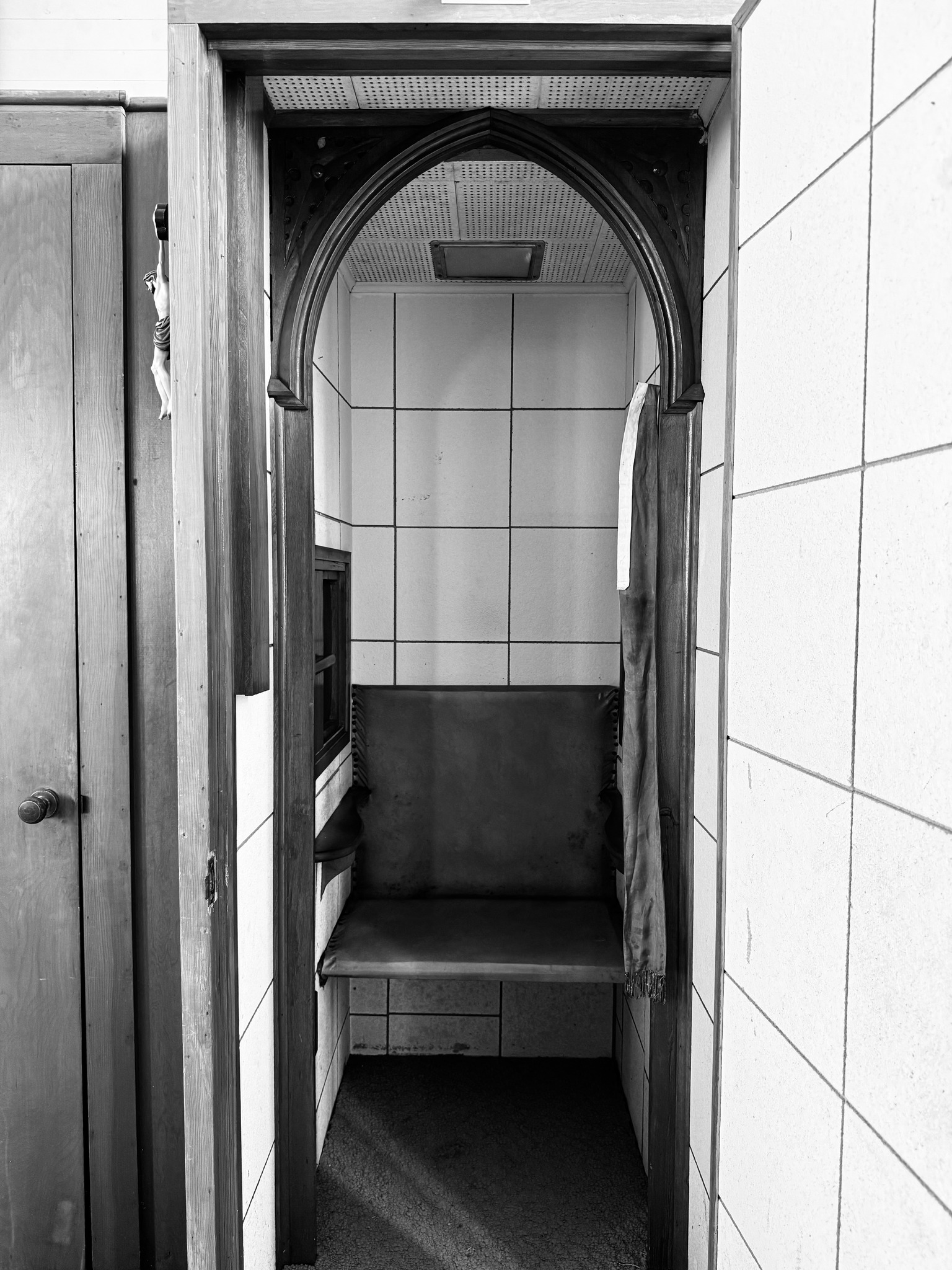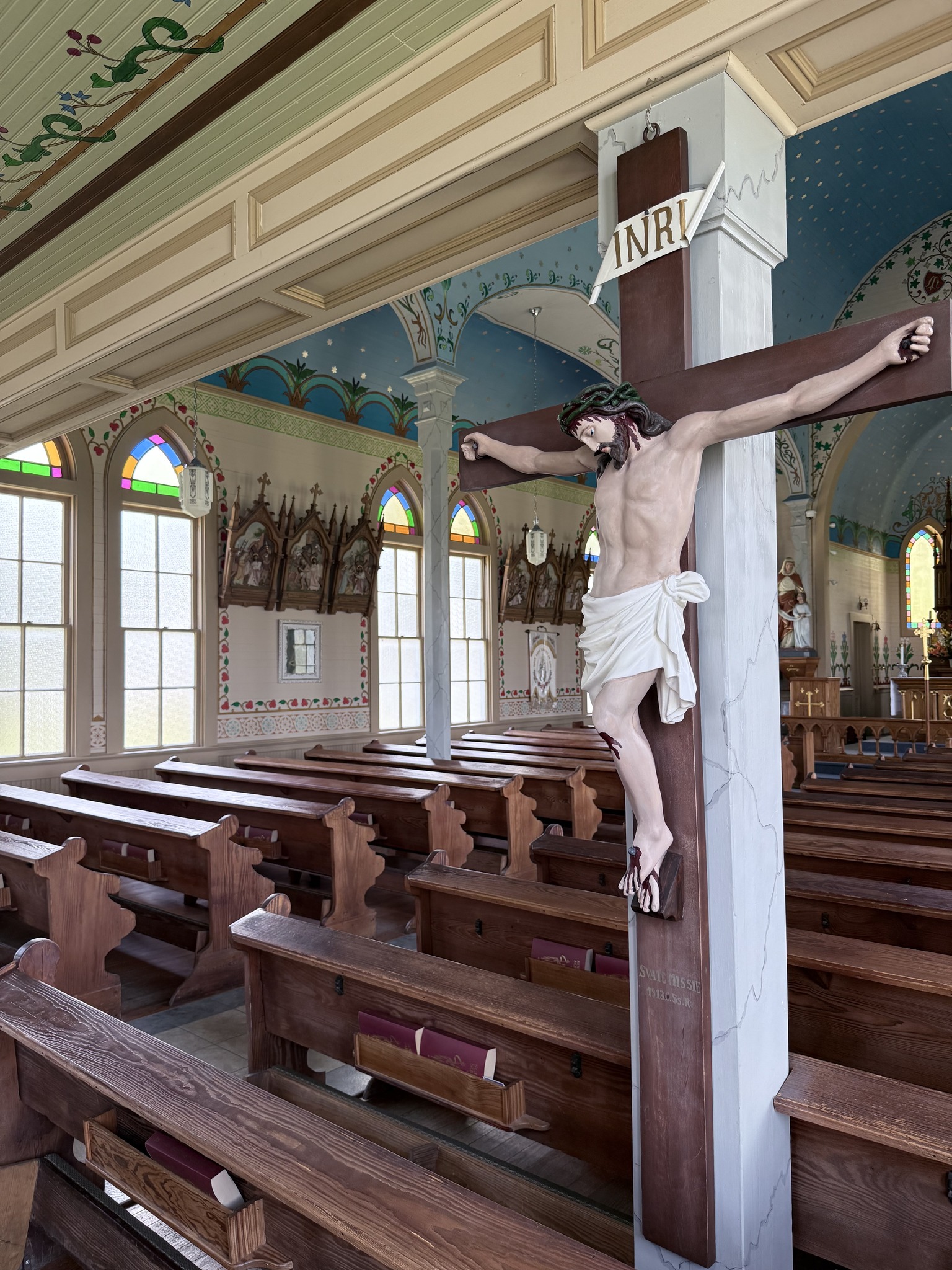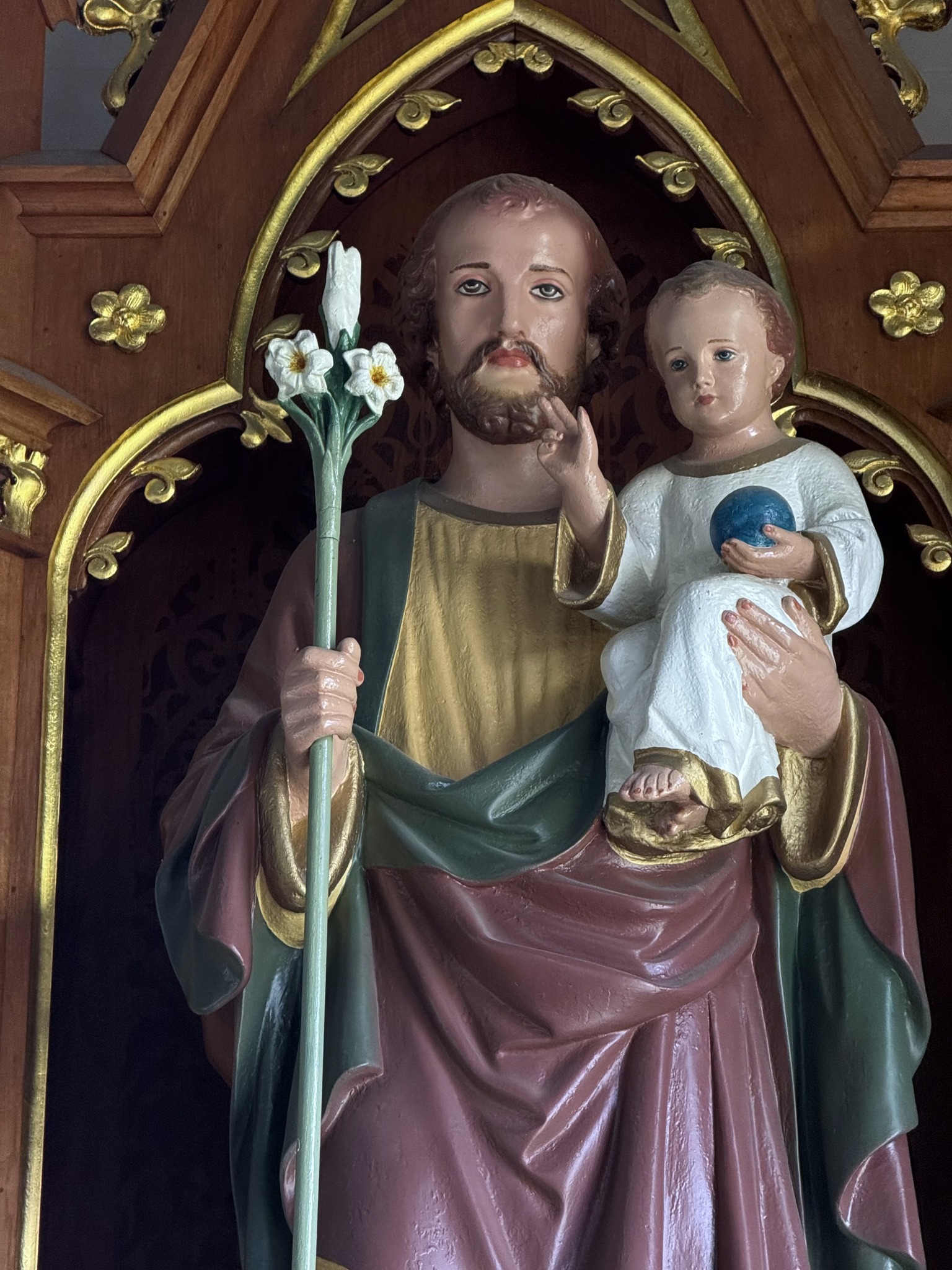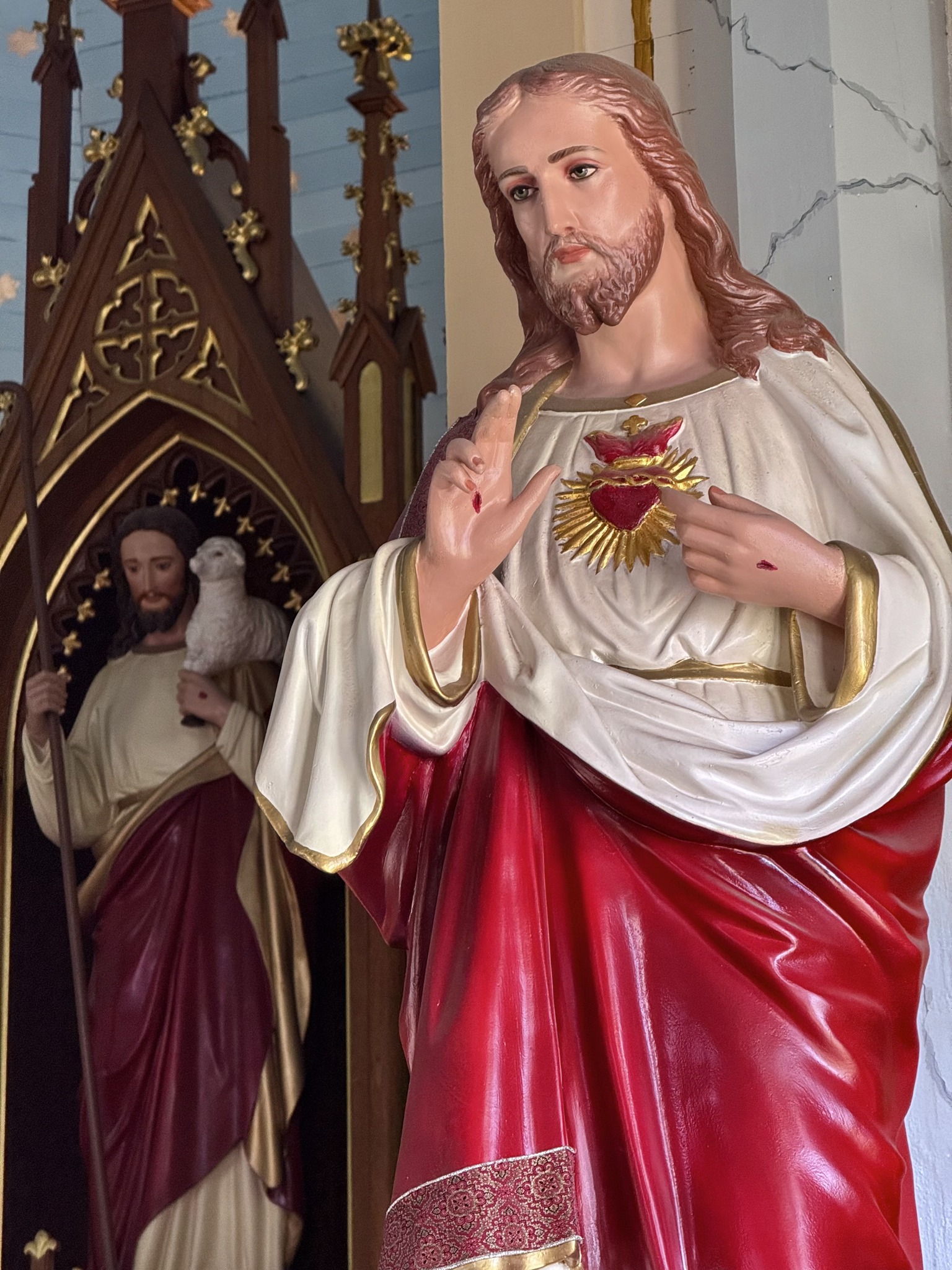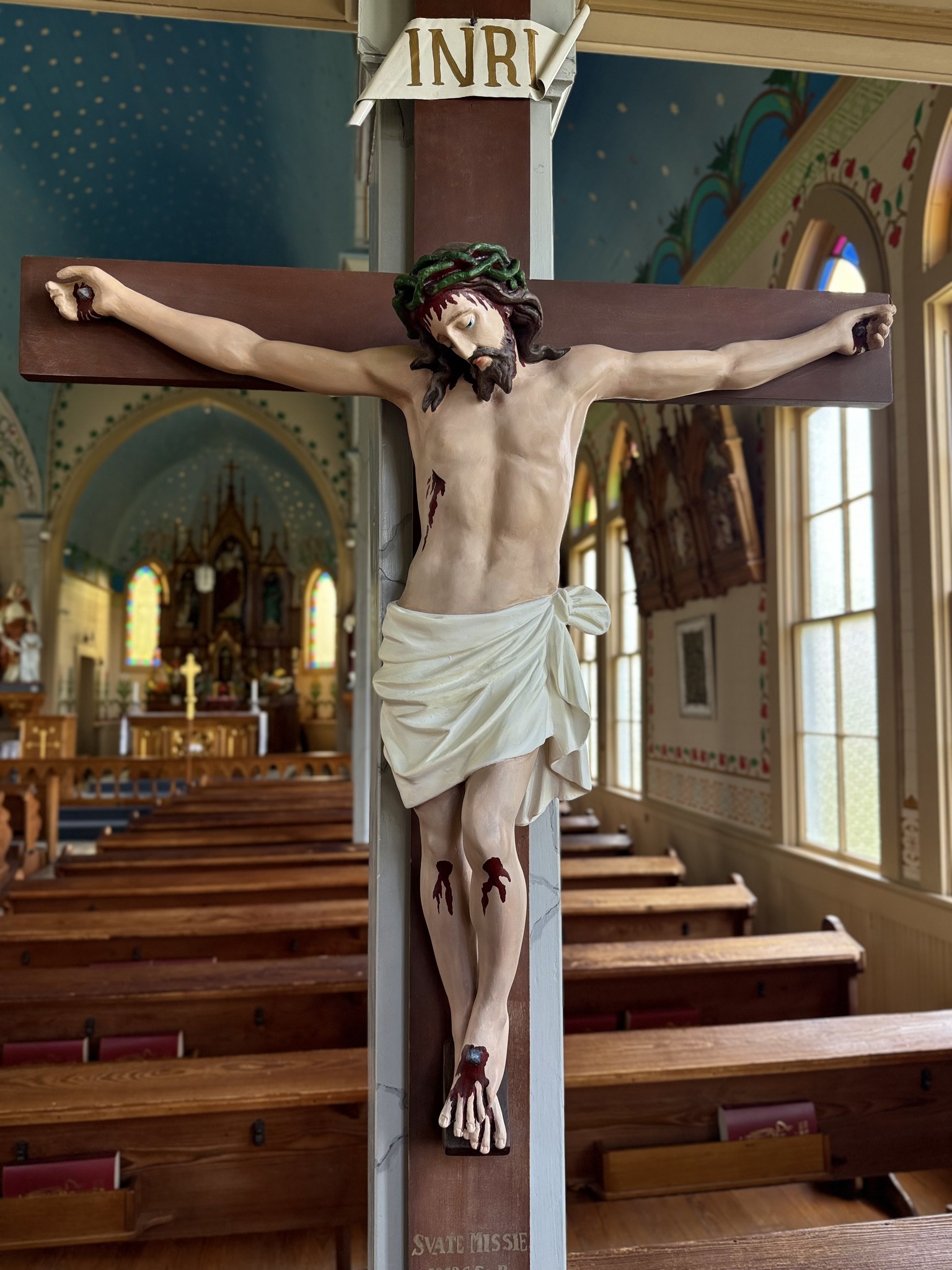
Interior, Low Light, Remarkable: Sts. Cyril & Methodius – Dubina
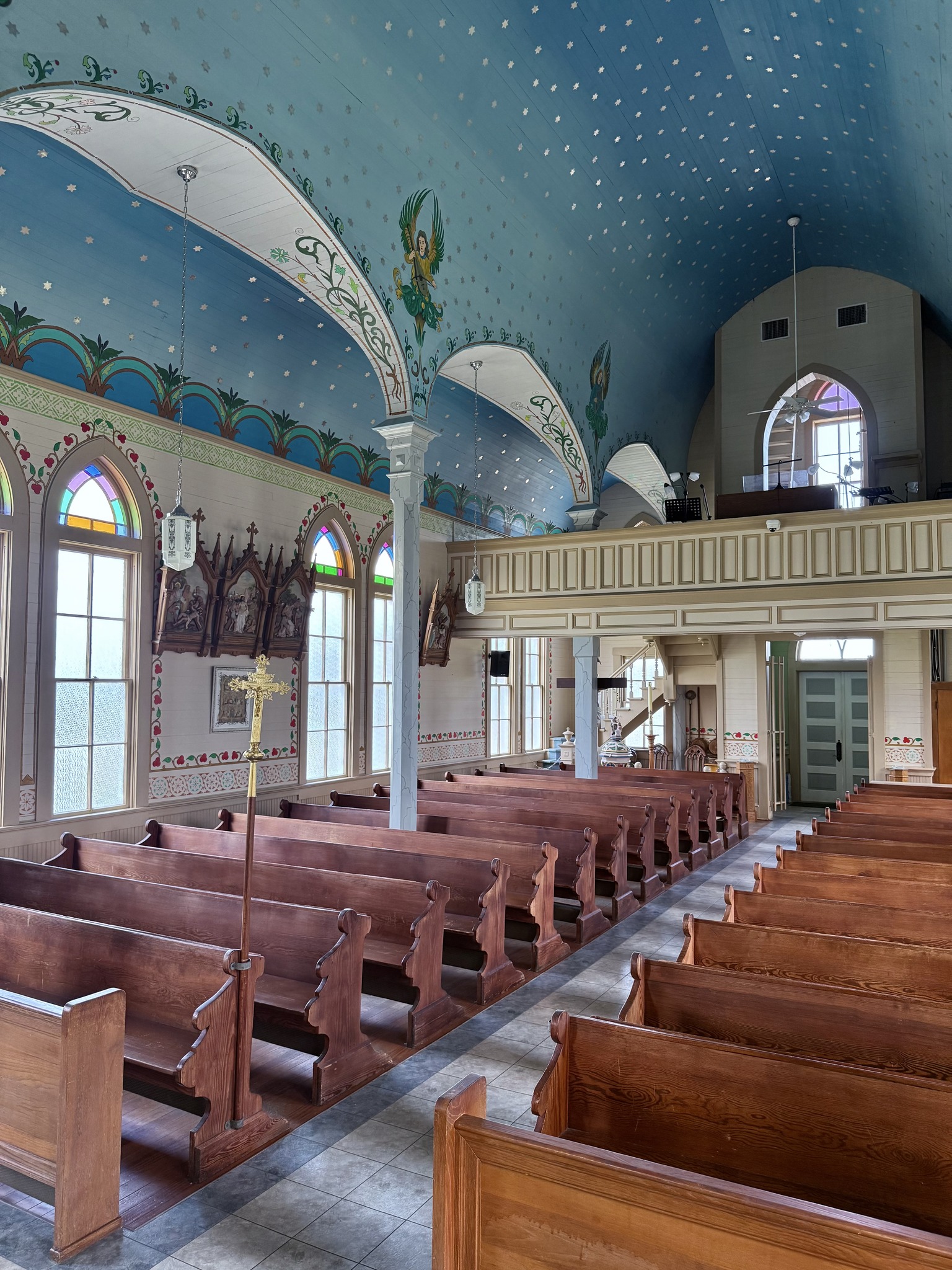
On my recent day-long road trip through the Texas Hill Country, photographing four of the state’s most iconic Painted Churches, my second stop was Sts. Cyril & Methodius Catholic Church in Dubina.
Dubina is a tiny, quiet crossroads just outside of Schulenburg. You could pass through it in the blink of an eye and never know you were standing on sacred ground. But pull off FM 1383 and step through the humble white doors of this wooden church, and the world shifts.
You’re no longer in Texas.
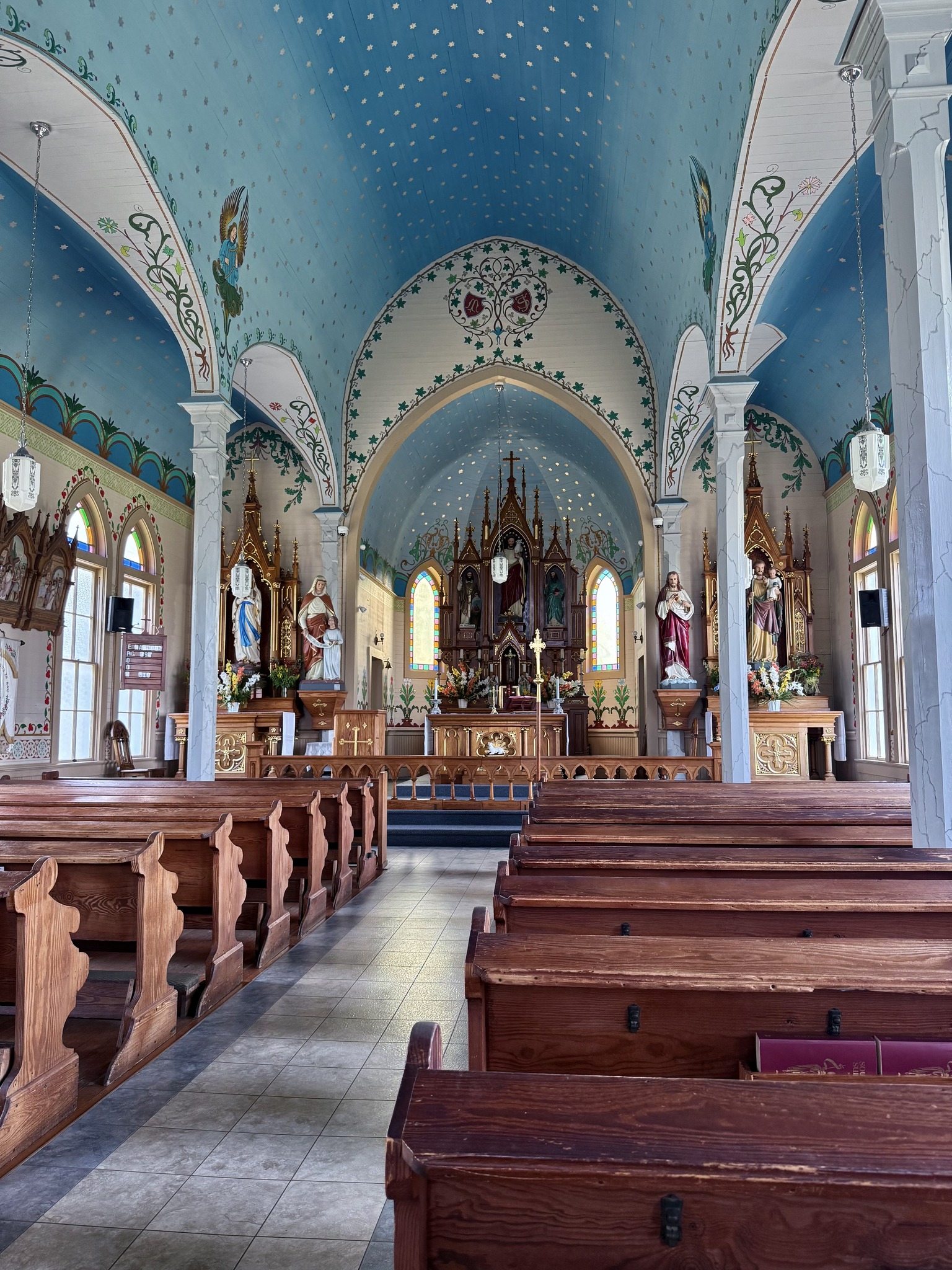
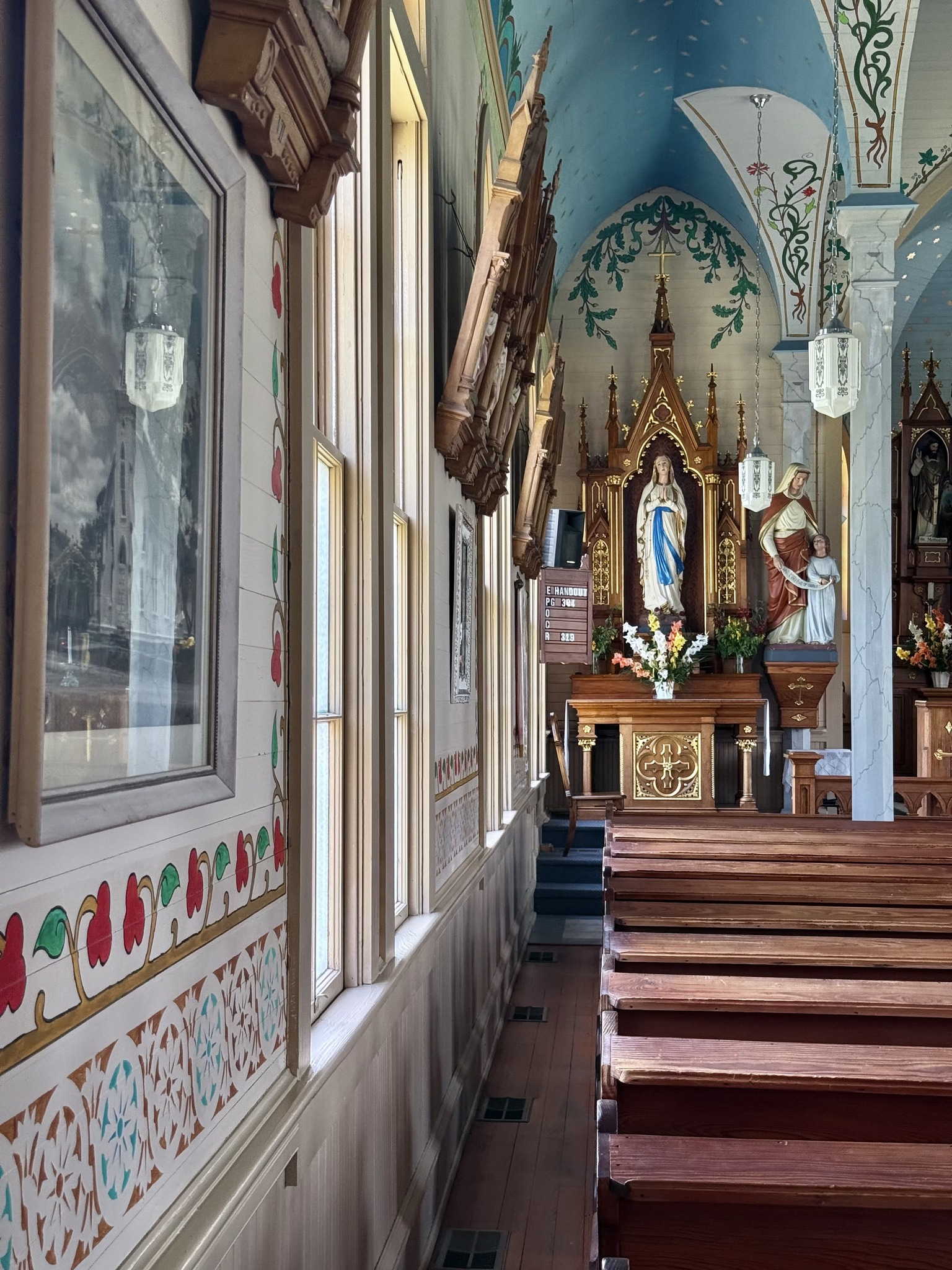
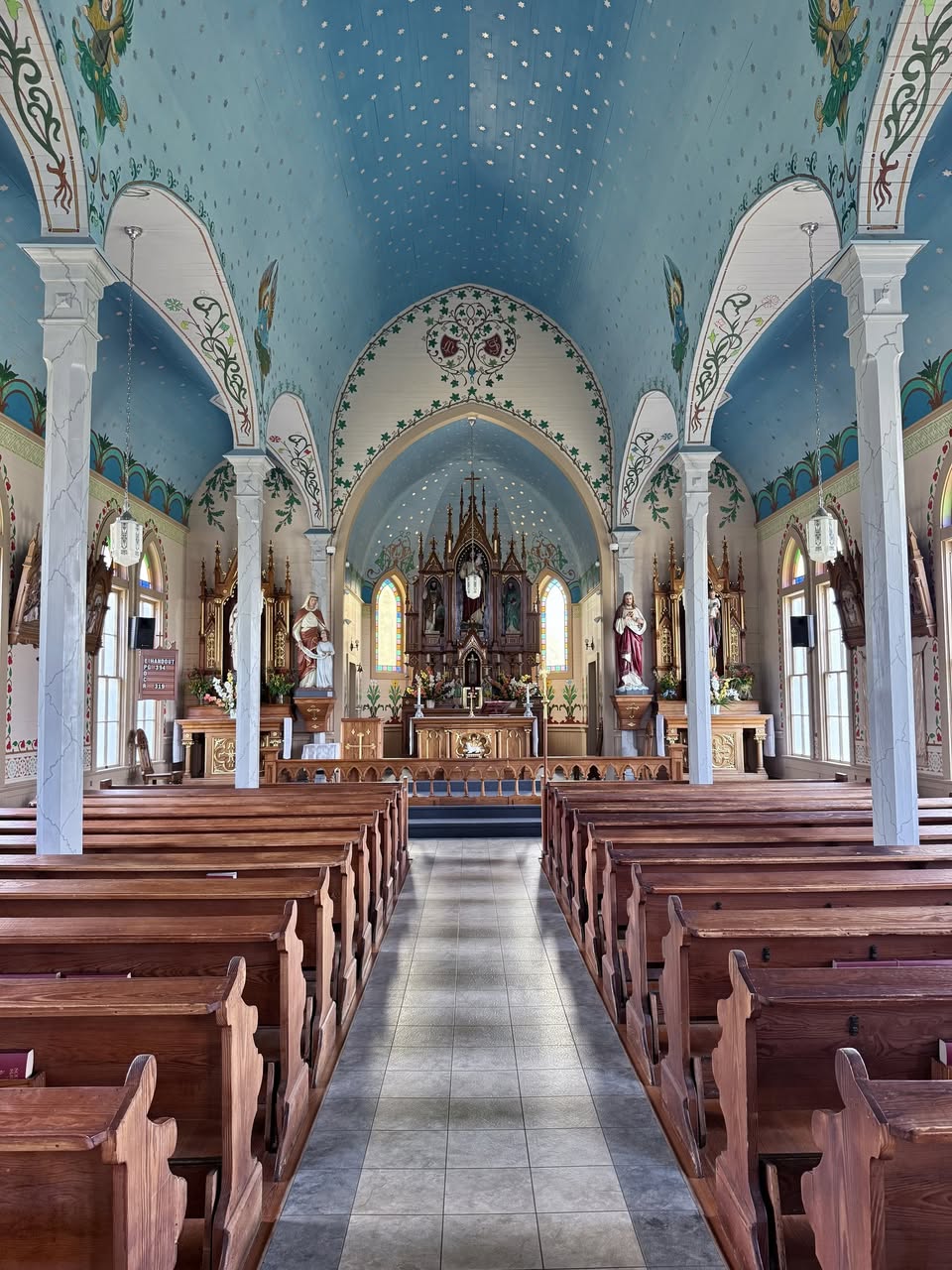
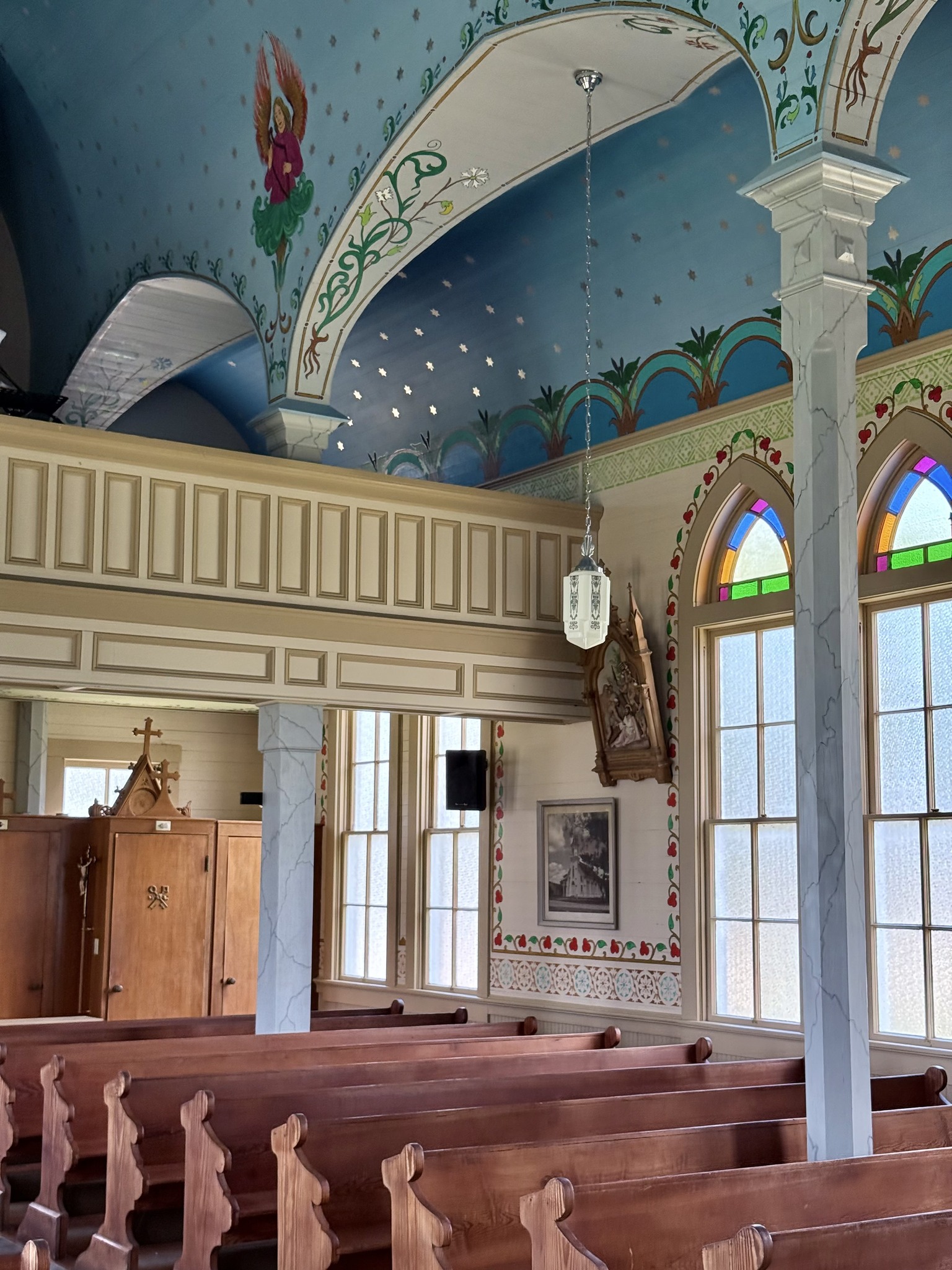
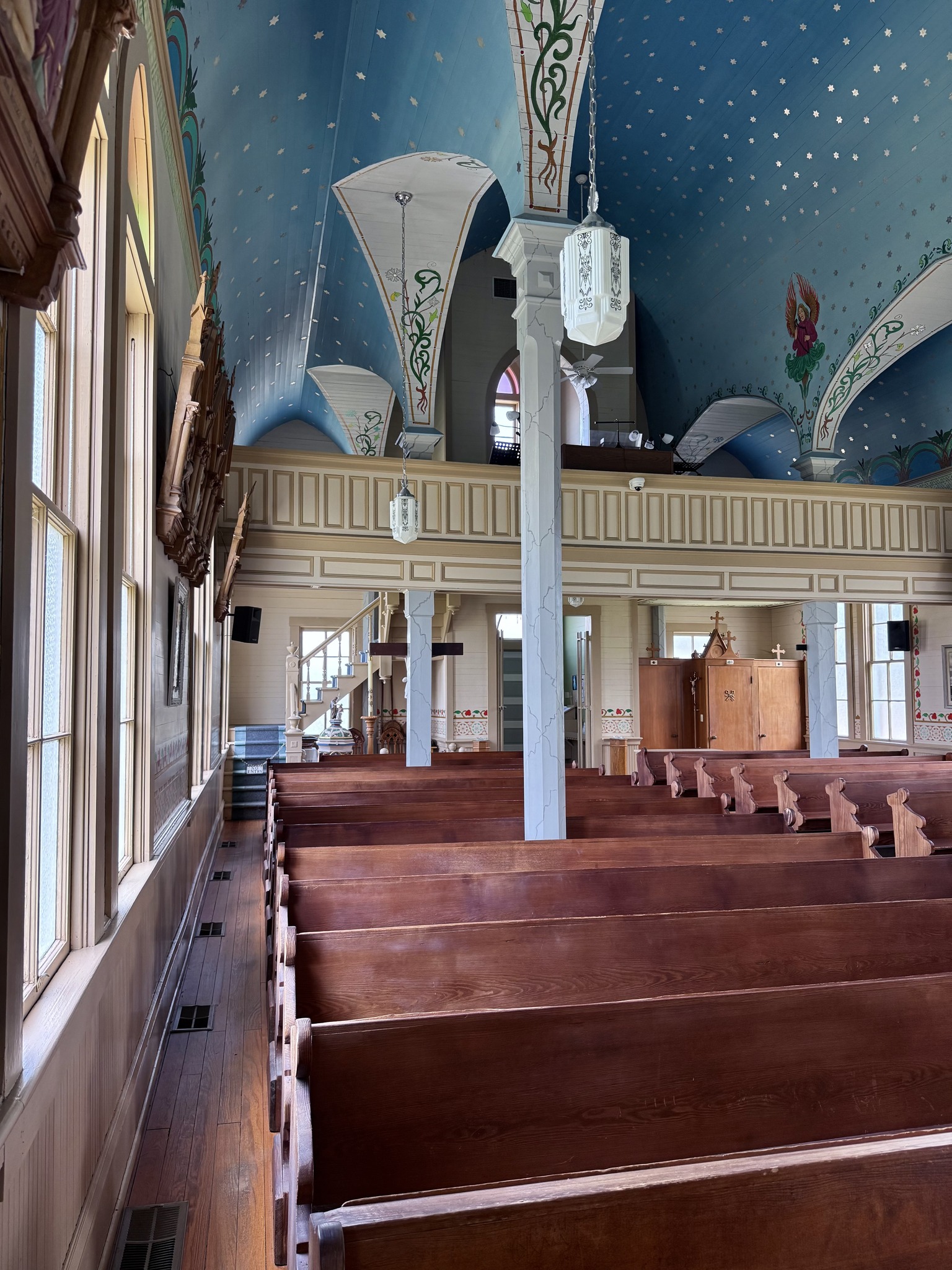
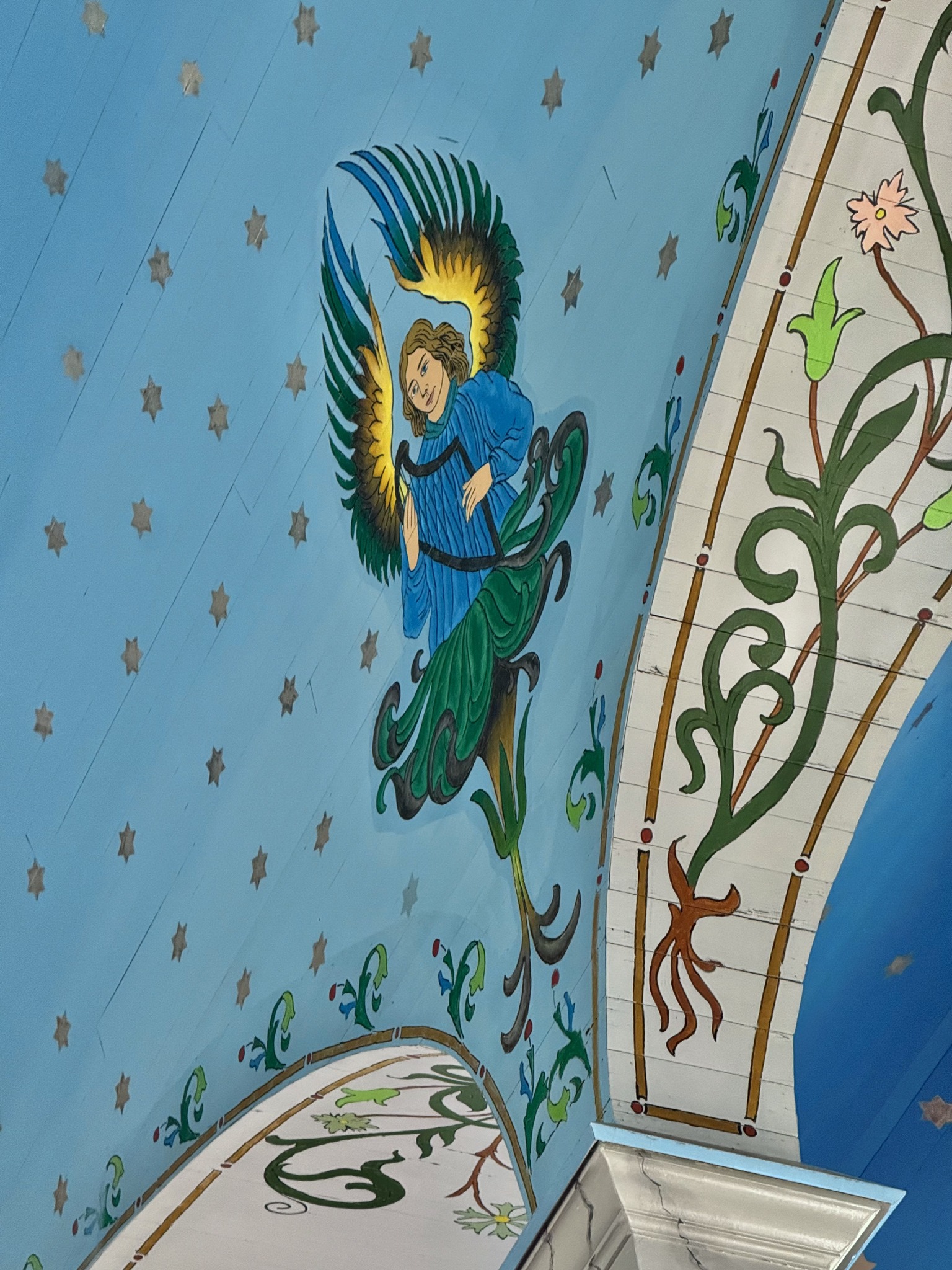
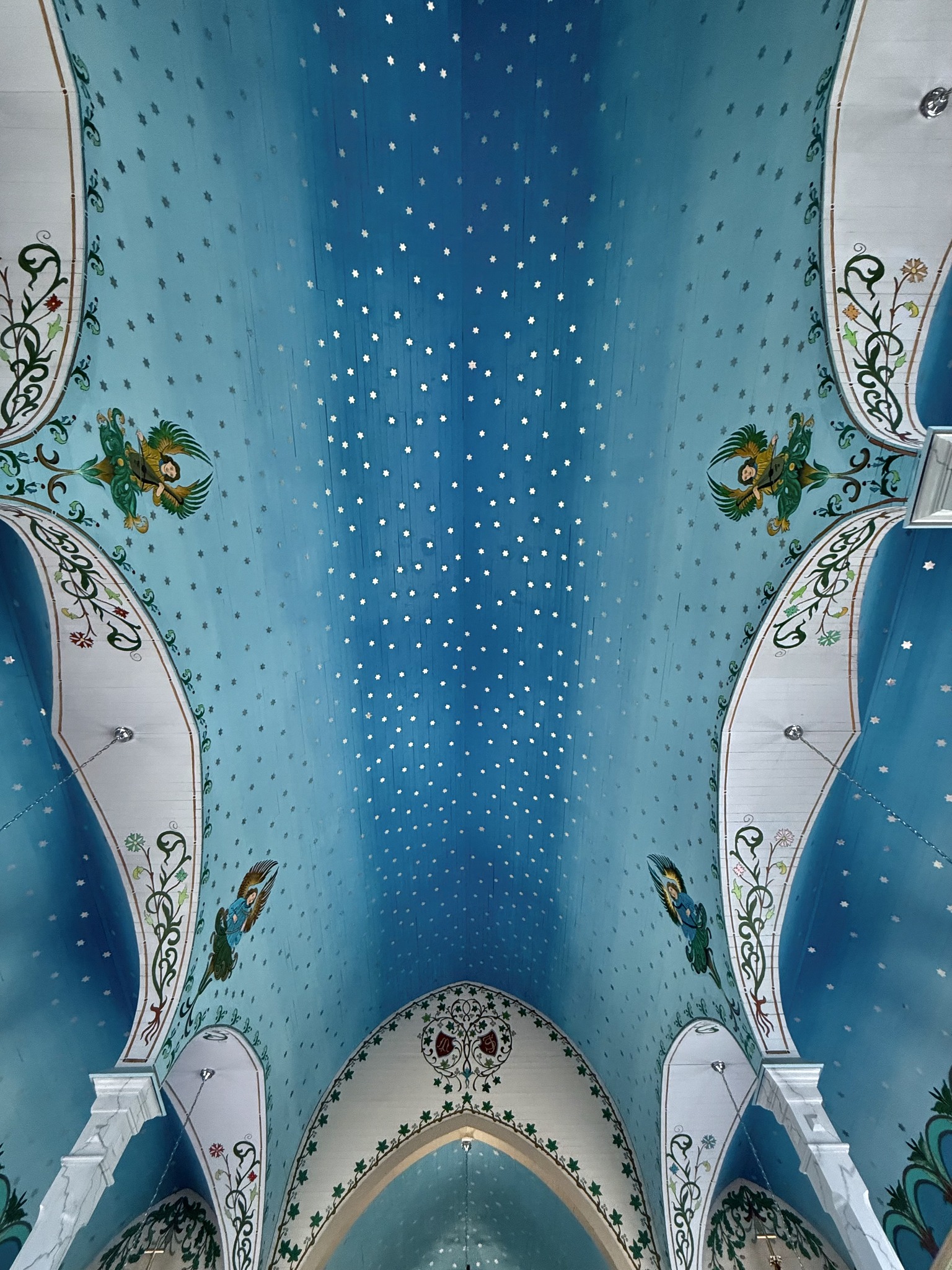
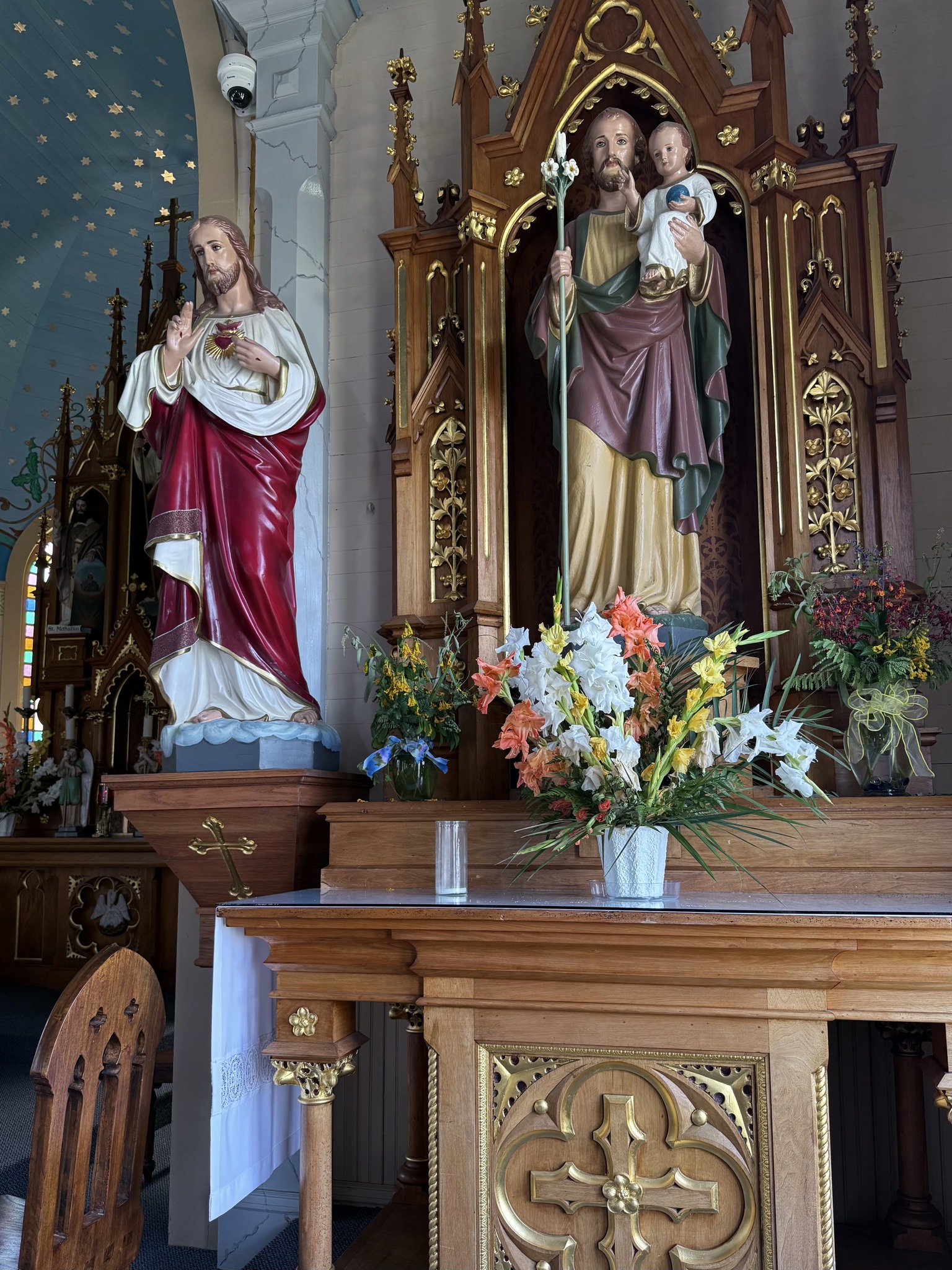
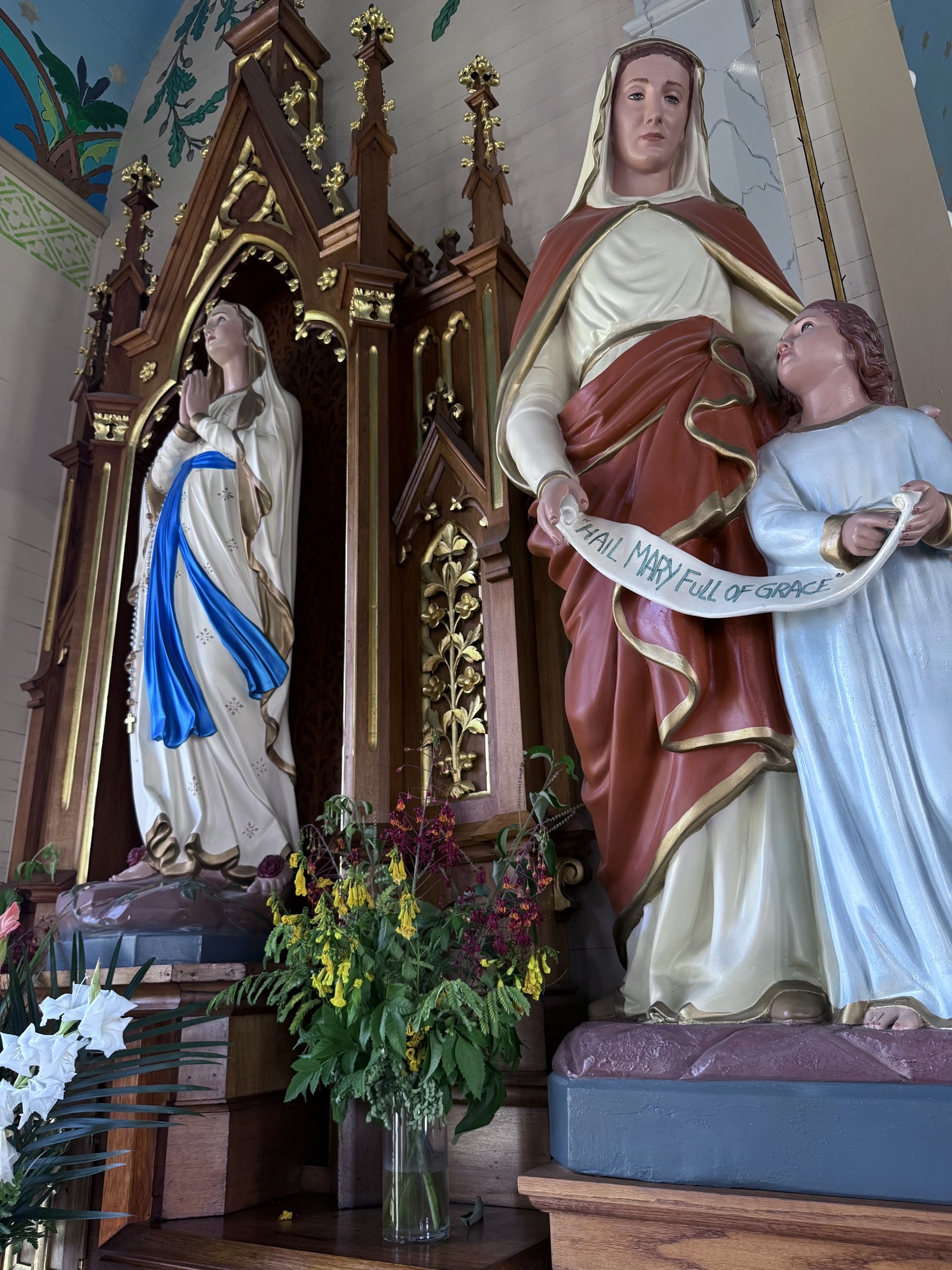
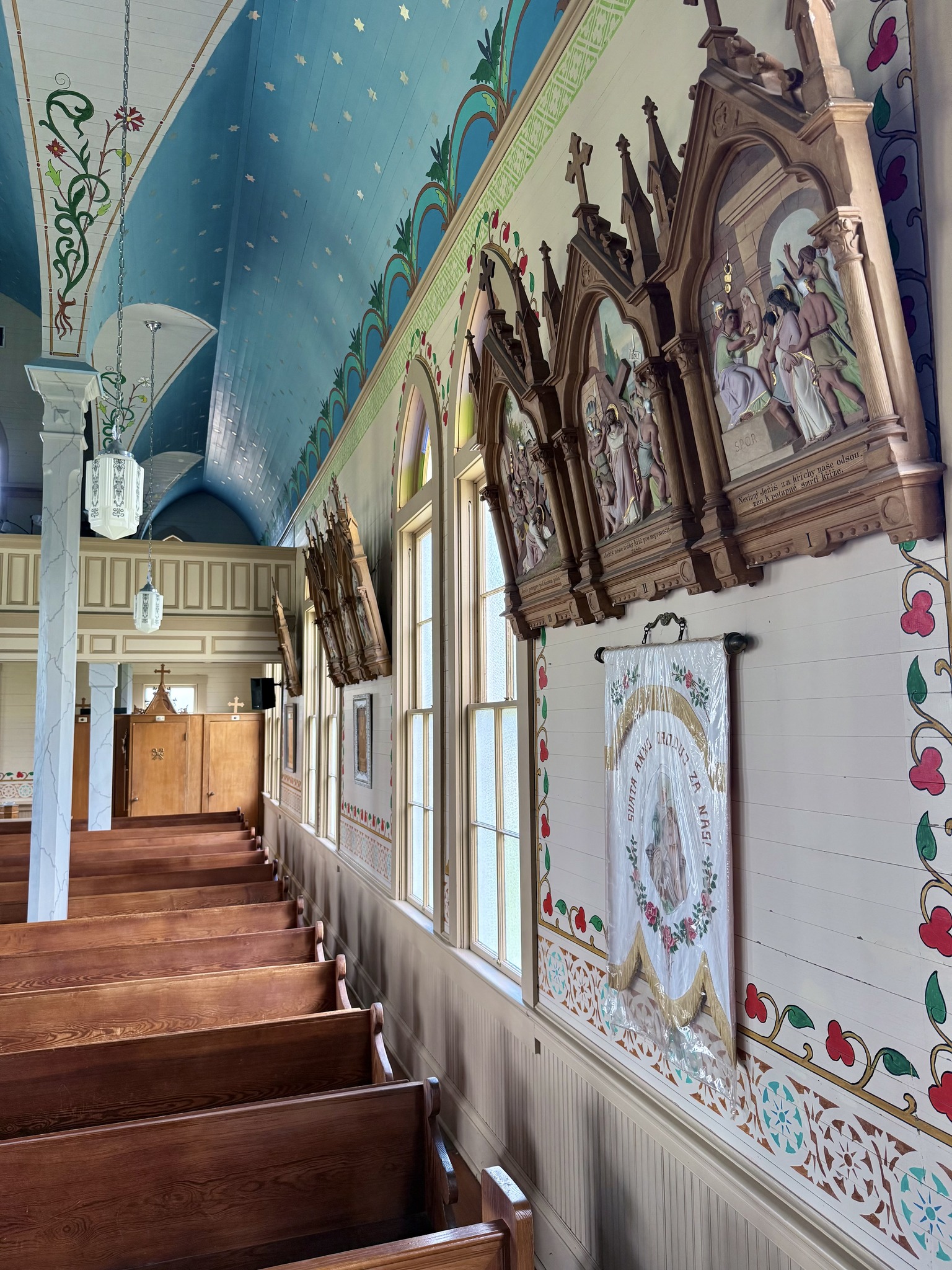
You’re in 19th-century Bohemia—only it’s been reimagined in faded blue stencils, stars of creation, and soft interior gloom that feels more like mystery than absence.
And this is where the iPhone camera truly shines.
The Magic of Low-Light Interiors
Let’s be honest: these Painted Churches are not well lit.
They weren’t built with photography in mind.
They weren’t designed for stage lighting or social media moments.
These interiors were painted for quiet contemplation. For candlelight. For Sunday morning sun filtering through tall windows.
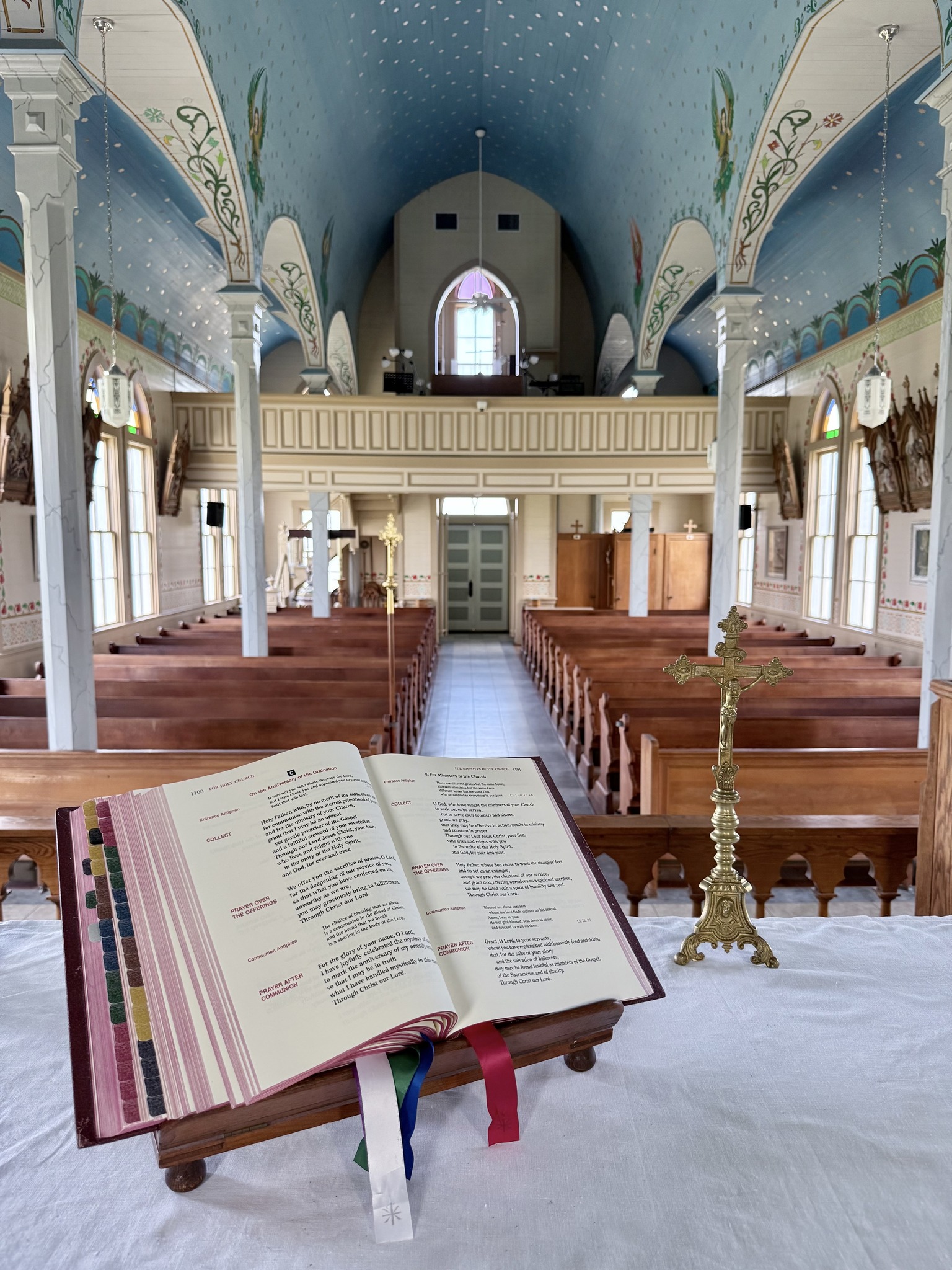
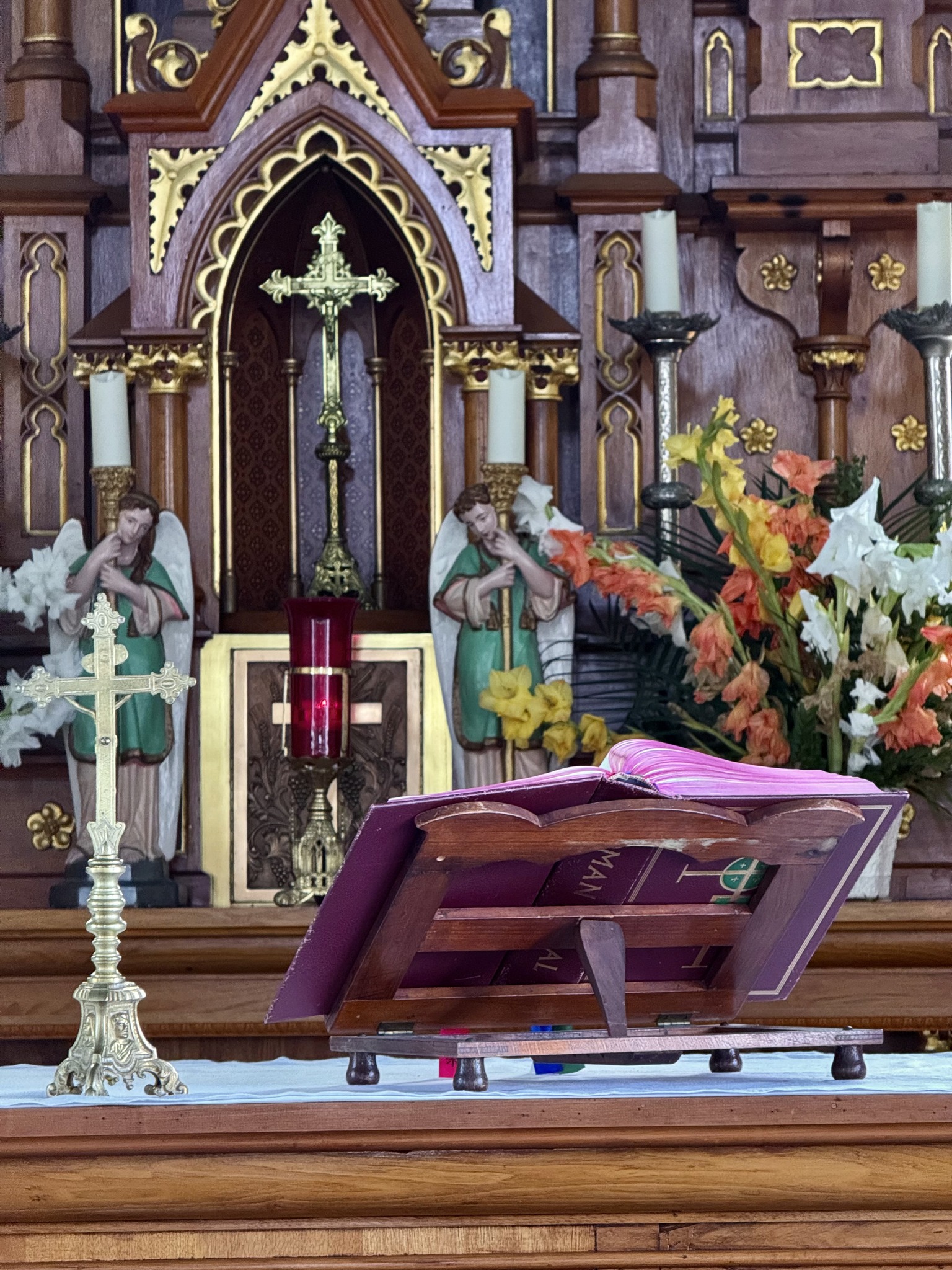
And when you visit on a weekday—like I did—the doors may be open, but the lights are off. No sanctuary bulbs, no overhead fixtures, no tour guide flipping on switches to help you get the shot.
What you get instead is the natural light of the moment:
Muted, directional, uneven. Sometimes golden. Sometimes blue. Sometimes barely there.
But the iPhone? It doesn’t flinch.
Click.
One of the greatest advantages of using the iPhone as your everyday camera—especially in sacred spaces like this—is that it performs shockingly well in low light.
Is it a Sony A7R with a 1.4 prime lens? No.
Is it a full-frame sensor shooting RAW at ISO 1600 with zero noise? Of course not.
But in practical terms—real life, real time, no fuss—the iPhone is damn close.
And it’s only getting better.
I shot these interiors with no tripod. No gimbal. No rig.
Just the camera in my pocket and the instinct in my gut.
I tapped to focus, adjusted the exposure manually with a swipe of my thumb, and trusted the iPhone’s computational magic to do the rest.
And it did.
Why It Works So Well
The iPhone camera system is a hybrid machine—part hardware, part software, always thinking.
And in low-light situations like these, it becomes more of a collaborator than a tool.
Here’s what’s happening under the hood when you shoot in low light with an iPhone:
Smart HDR kicks in to balance shadows and highlights across multiple exposures.
Deep Fusion analyzes textures and noise pixel-by-pixel to preserve detail in dim areas.
Night Mode (if needed) stacks several long exposures for better clarity and brightness.
Computational White Balance smooths out mixed lighting (think: stained glass, ambient daylight, shadow pockets).
Autofocus and Auto Exposure adjust instantly without hunting, drifting, or lag.
What all this means in plain English is this:
You walk into a dark church, hold up your phone, and it just works.
No focusing issues.
No muddy blacks.
No blown-out highlights.
No color cast nightmares.
Just clean, beautiful files that hold up to real scrutiny.
Sts. Cyril & Methodius – A Quiet, Blue Masterpiece
Now let me tell you a little more about this place.
Sts. Cyril & Methodius is the first Czech Catholic parish in Texas, founded in the 1850s. The current structure was rebuilt in 1912 after a hurricane destroyed the previous church.
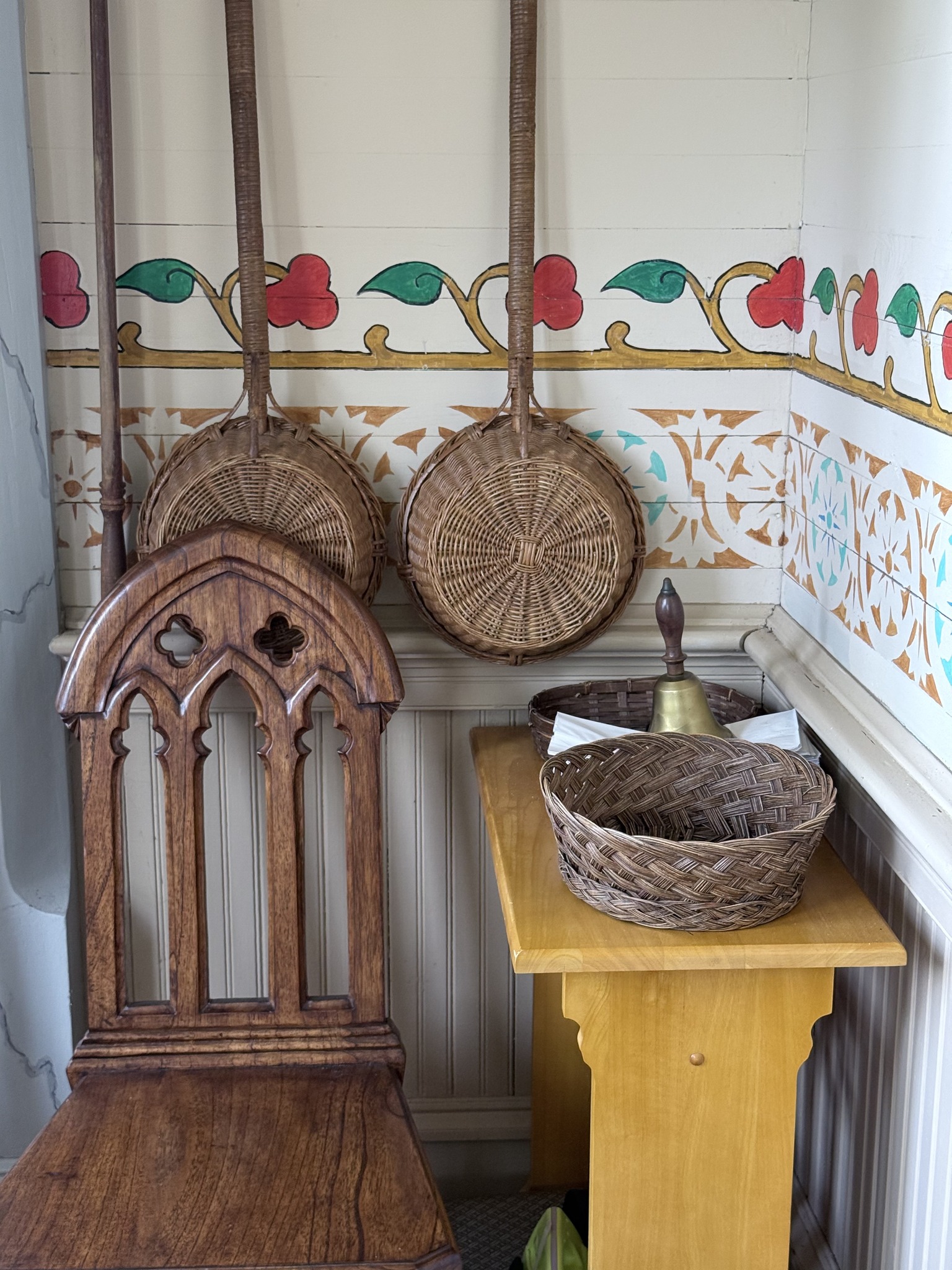
From the outside, it’s modest—white clapboard siding, simple steeple, plain signage. You’d never guess what’s inside.
But once you cross the threshold, it hits you.
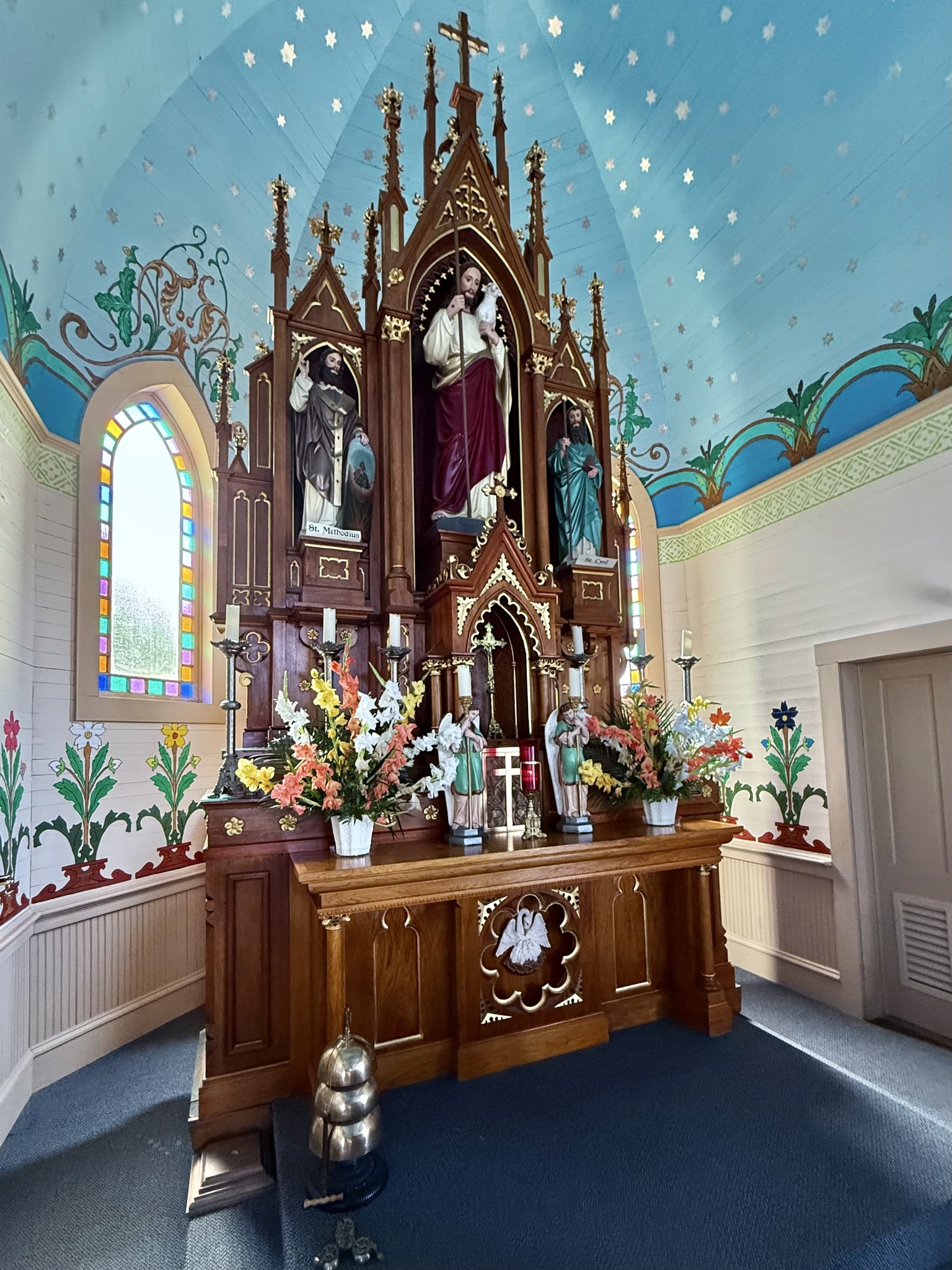
The whole interior is bathed in a soft, faded blue.
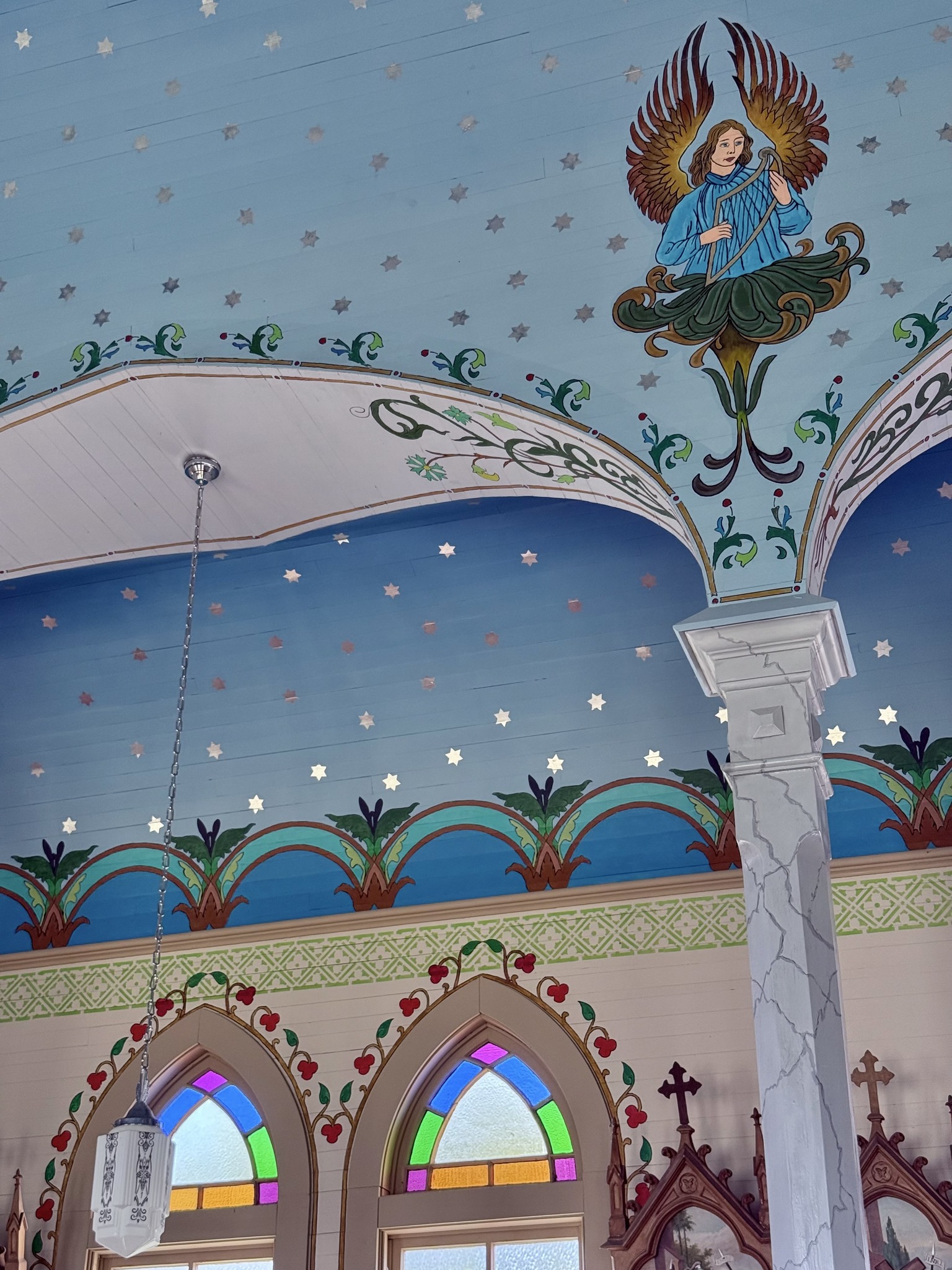
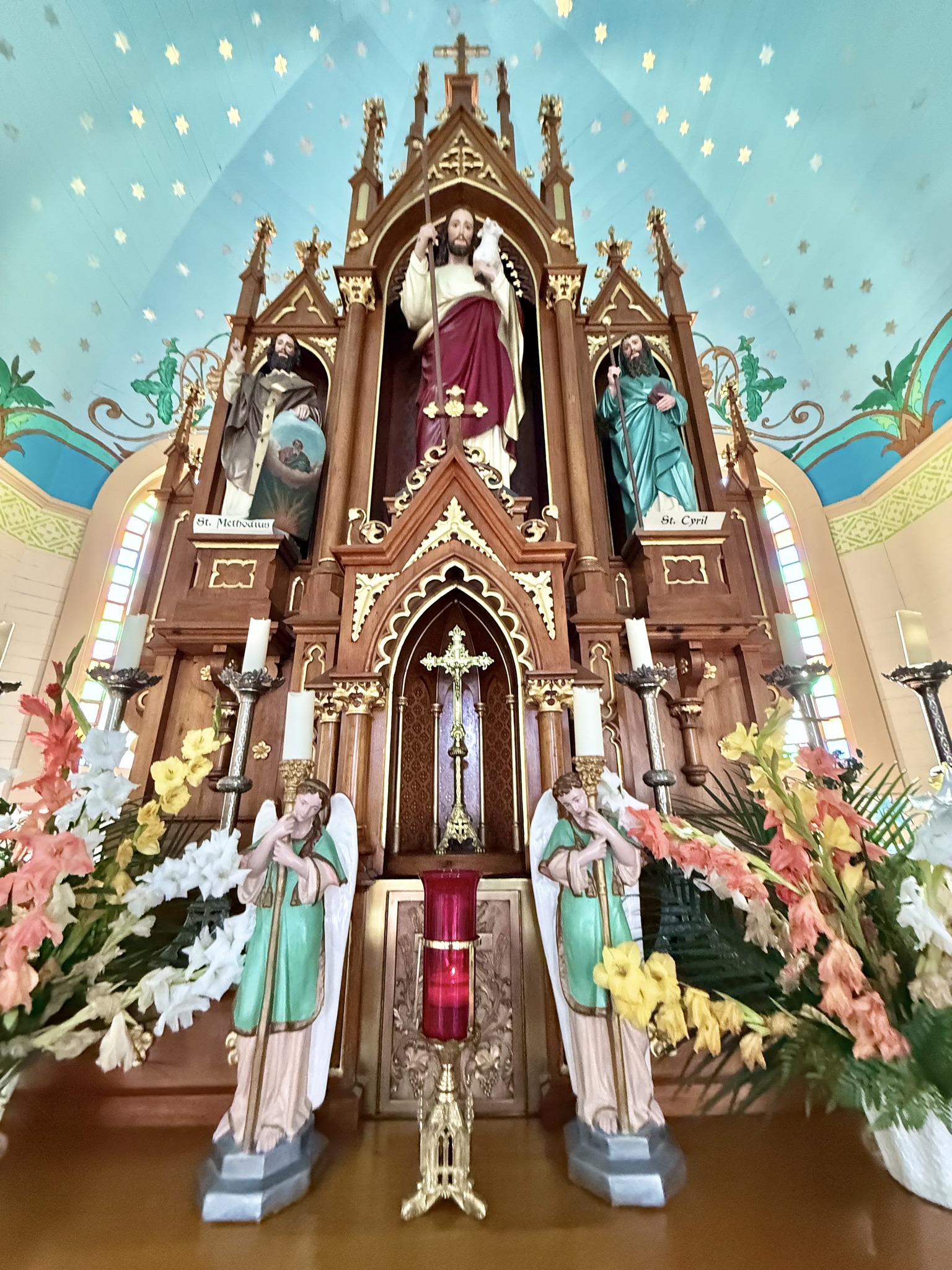
The ceiling is stenciled with rows of six-pointed stars.
The columns are faux-painted to mimic stone.
Above the altar, angels are hand-painted into motion.
There’s a quiet here that’s not just about silence. It’s about intention.
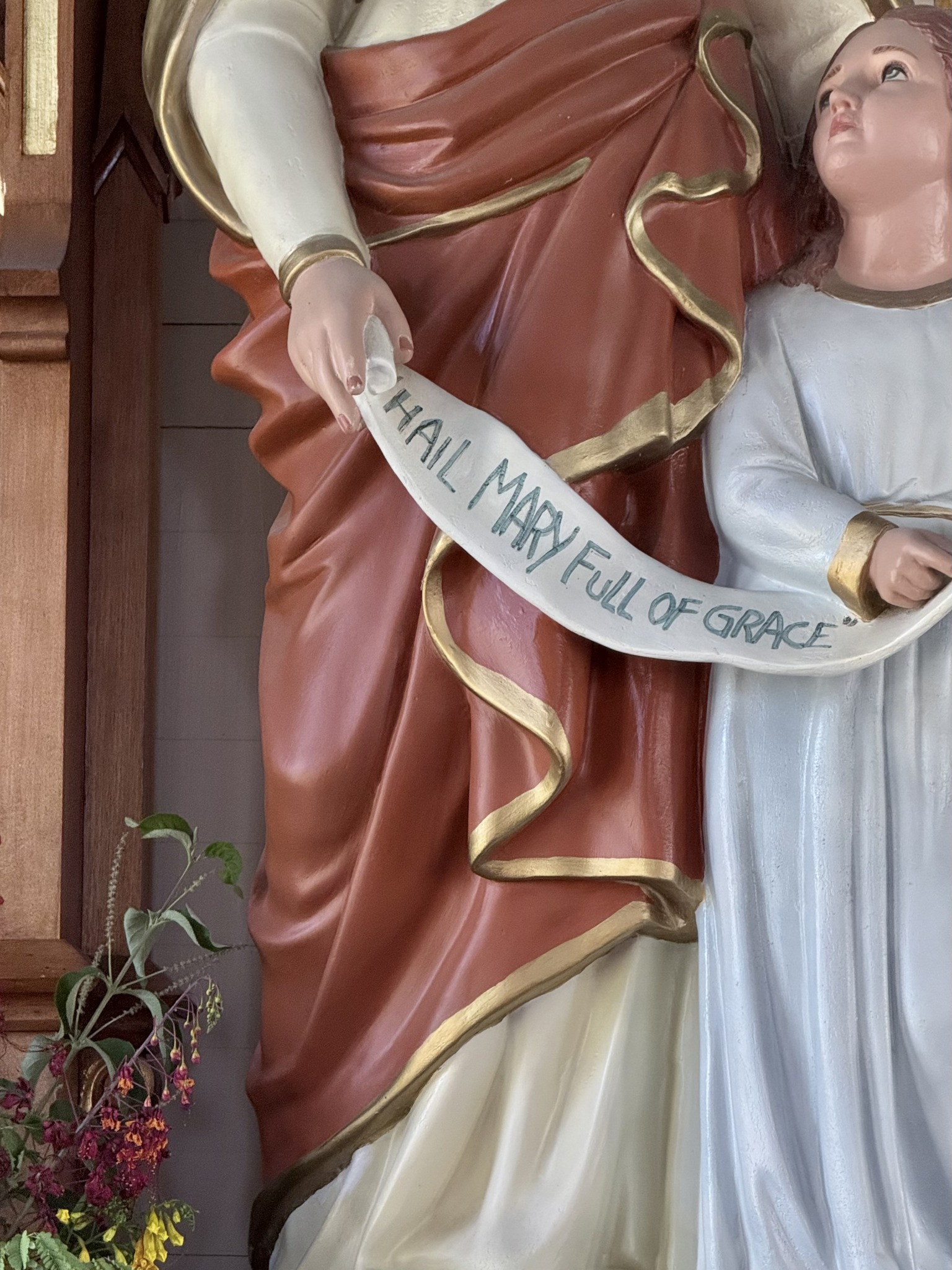
This is a space where paint was prayer.
What I Love Most About Shooting These Interiors
When I step into churches like Dubina, I don’t just want to capture the architecture.
I want to capture the mood—the quality of the light, the softness of the space, the way your voice disappears into the ceiling.
Low light photography is not about struggling—it’s about slowing down.
Letting the shadows breathe.
Letting the highlights flirt with the edge of detail.
And the iPhone gets me there faster than any camera I’ve ever used.
I don’t need a lens bag.
I don’t need ISO charts.
I don’t need a second take.
I just walk in, breathe, see—and shoot.
The Religion of Reverence
As I mentioned in Part 1 of this series, I’m an atheist.
I don’t come to these churches as a believer.
But I do come as a pilgrim of beauty.
I come to bear witness.
To stand where generations have stood.
To see what they saw.
To photograph what they built—not for approval, but for preservation.
And the fact that I can do all that with a tool as small and intuitive as an iPhone still stuns me.
In places like Dubina, quiet reverence doesn’t require belief.
It just requires presence.
And presence is something the iPhone encourages.
No gear to fuss with.
No settings to troubleshoot.
No barrier between me and the shot.
Closing Frame
Sts. Cyril & Methodius may not be the flashiest of the Painted Churches.
It doesn’t have gold accents or vaulted grandeur.
But it might be the most honest.
It was painted by immigrants, rebuilt after disaster, and restored by memory.
It’s a prayer in pale blue.
A whisper of Bohemia in the middle of Texas.
And on a quiet weekday afternoon—with the doors open, the lights off, and the shadows pooling just right—it was perfect.
I raised my phone, tapped the screen, and clicked.
No noise.
No hesitation.
No divine intervention required.
Just a camera that’s always with me.
And a church that reminds me why I keep going back.
Stay tuned for Part 3: The Pink Glow of Ammannsville.
But for now—just look.
Let the low light speak.
Click.
Jack.