St. John the Baptist – Ammannsville
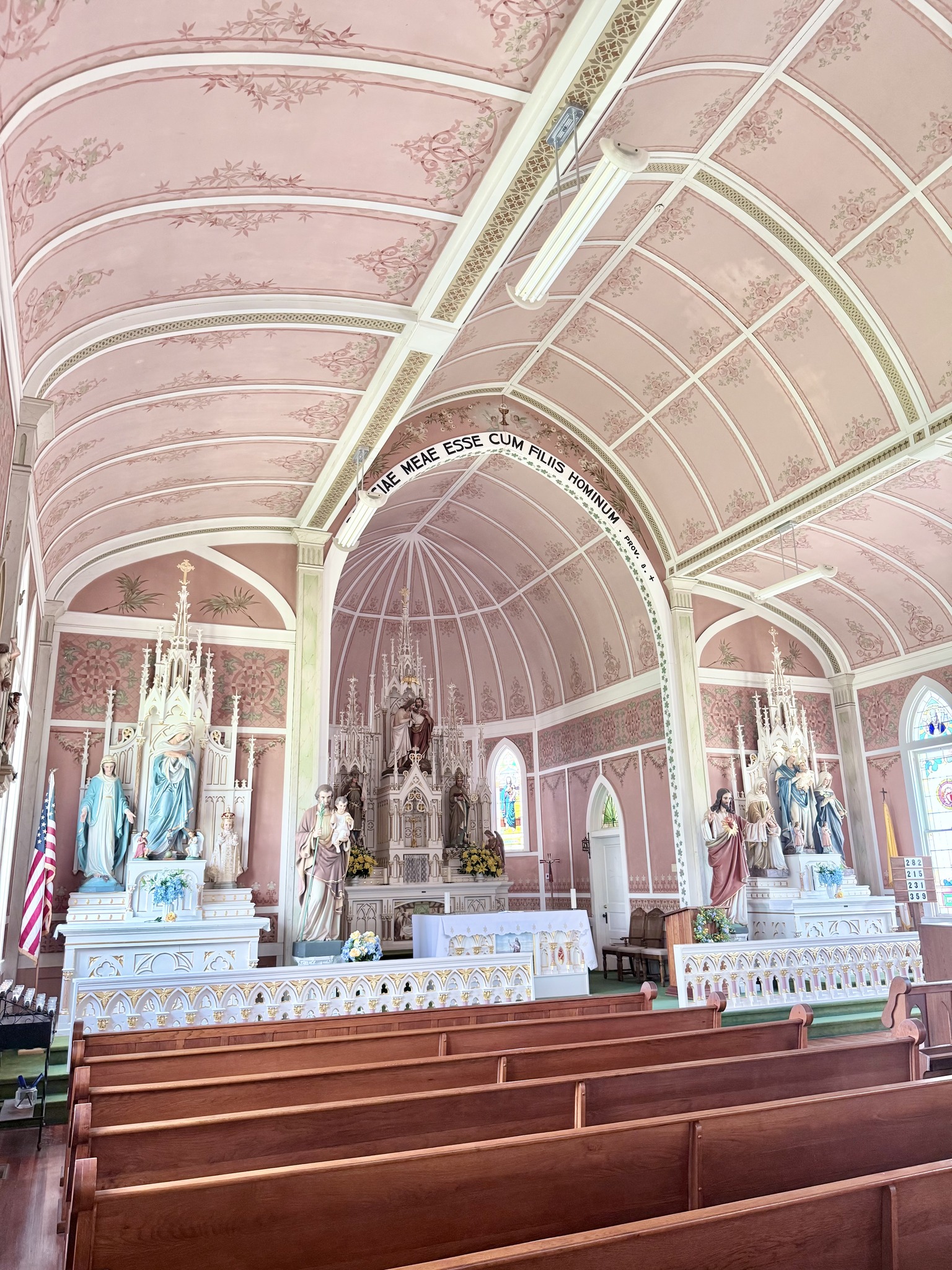
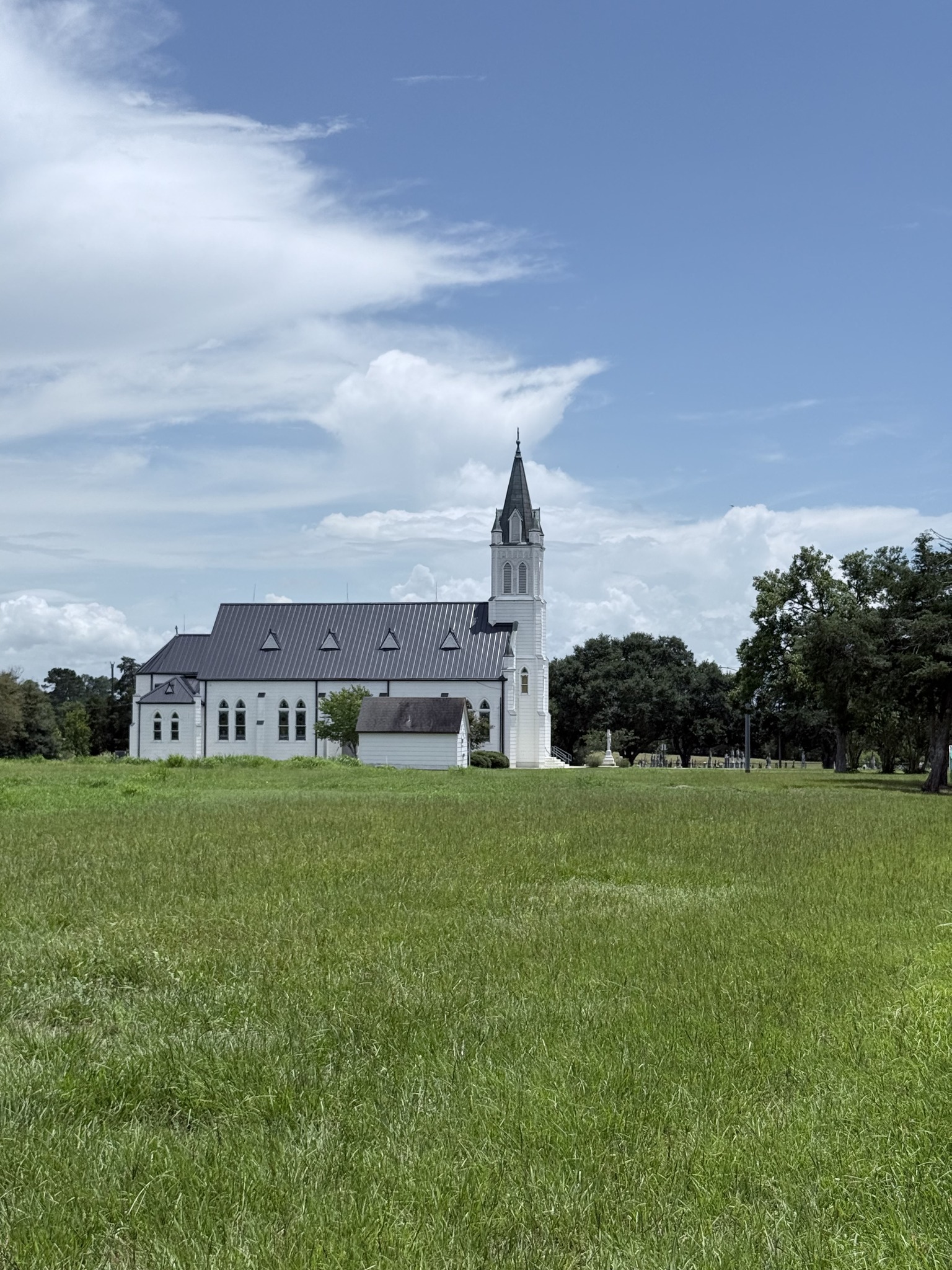
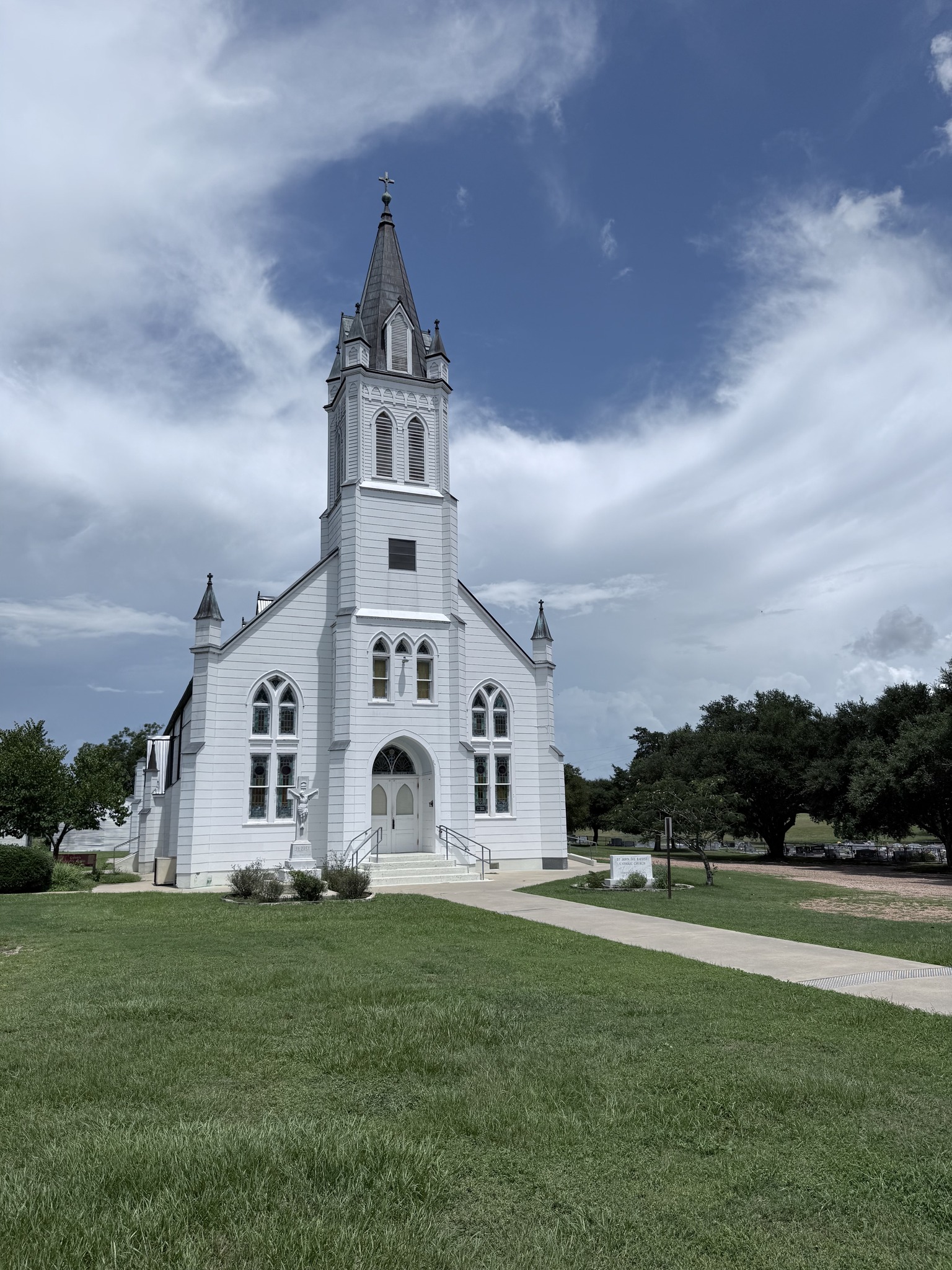
Our third stop: St. John the Baptist Catholic Church in Ammannsville.
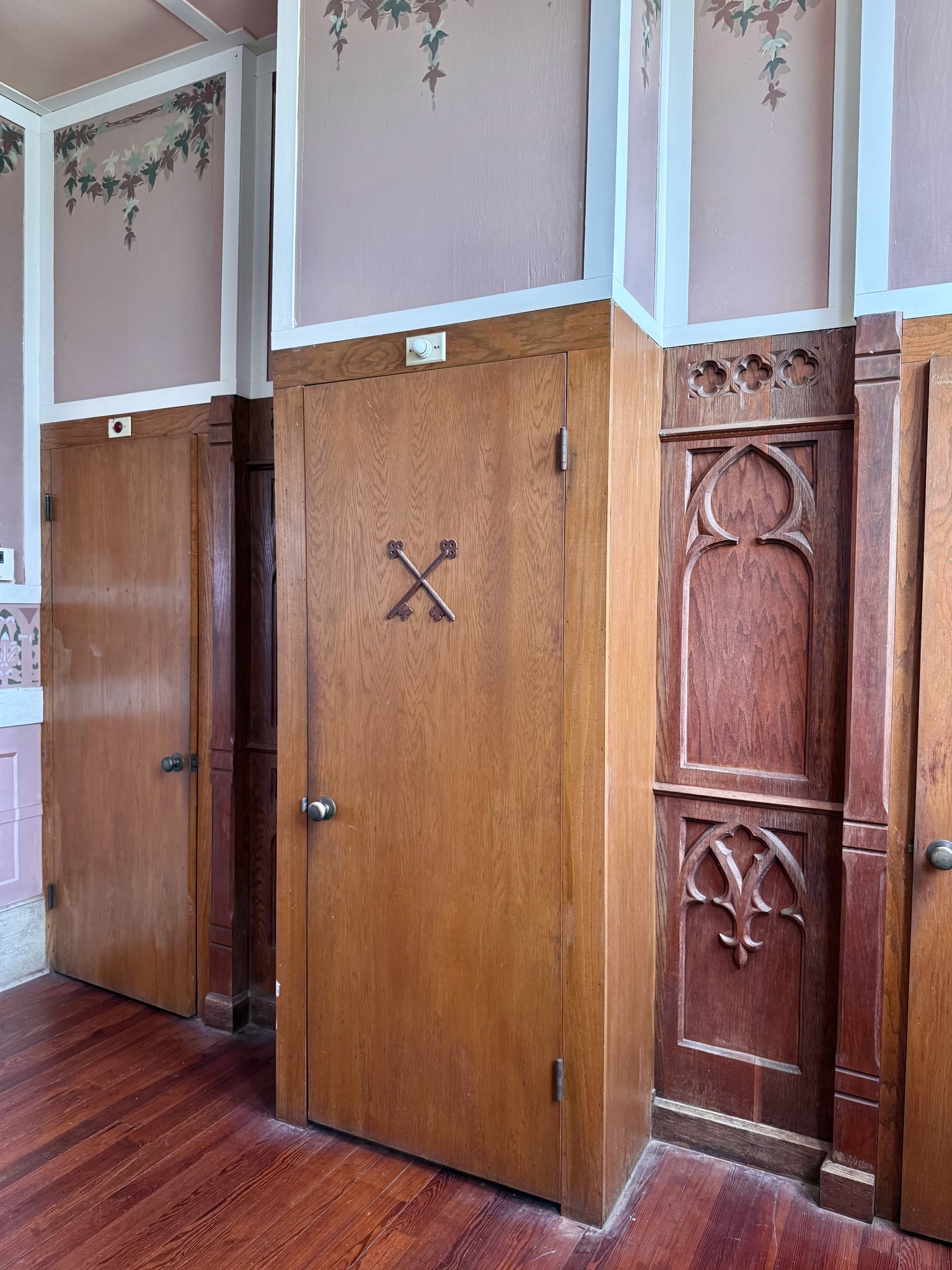
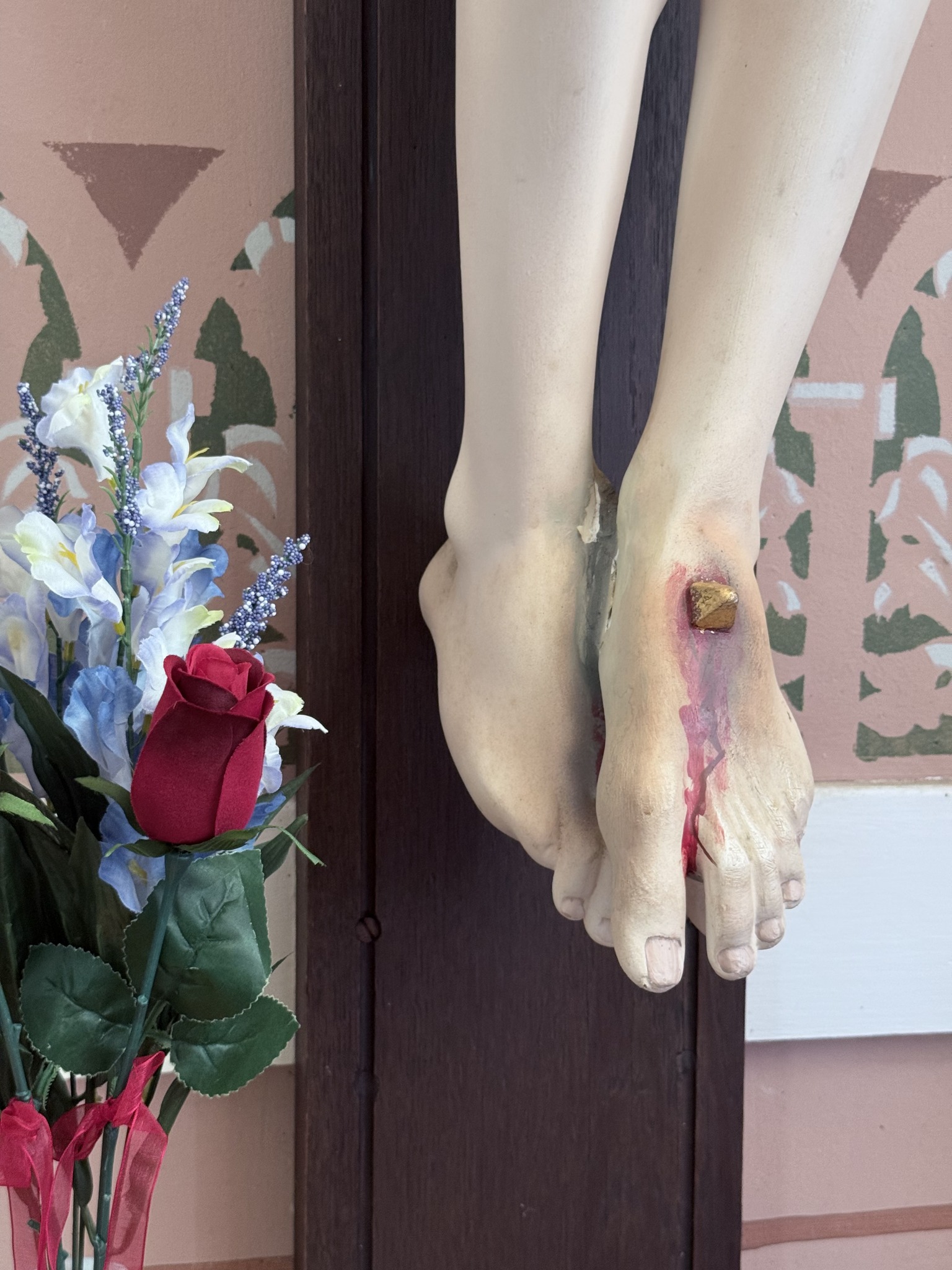
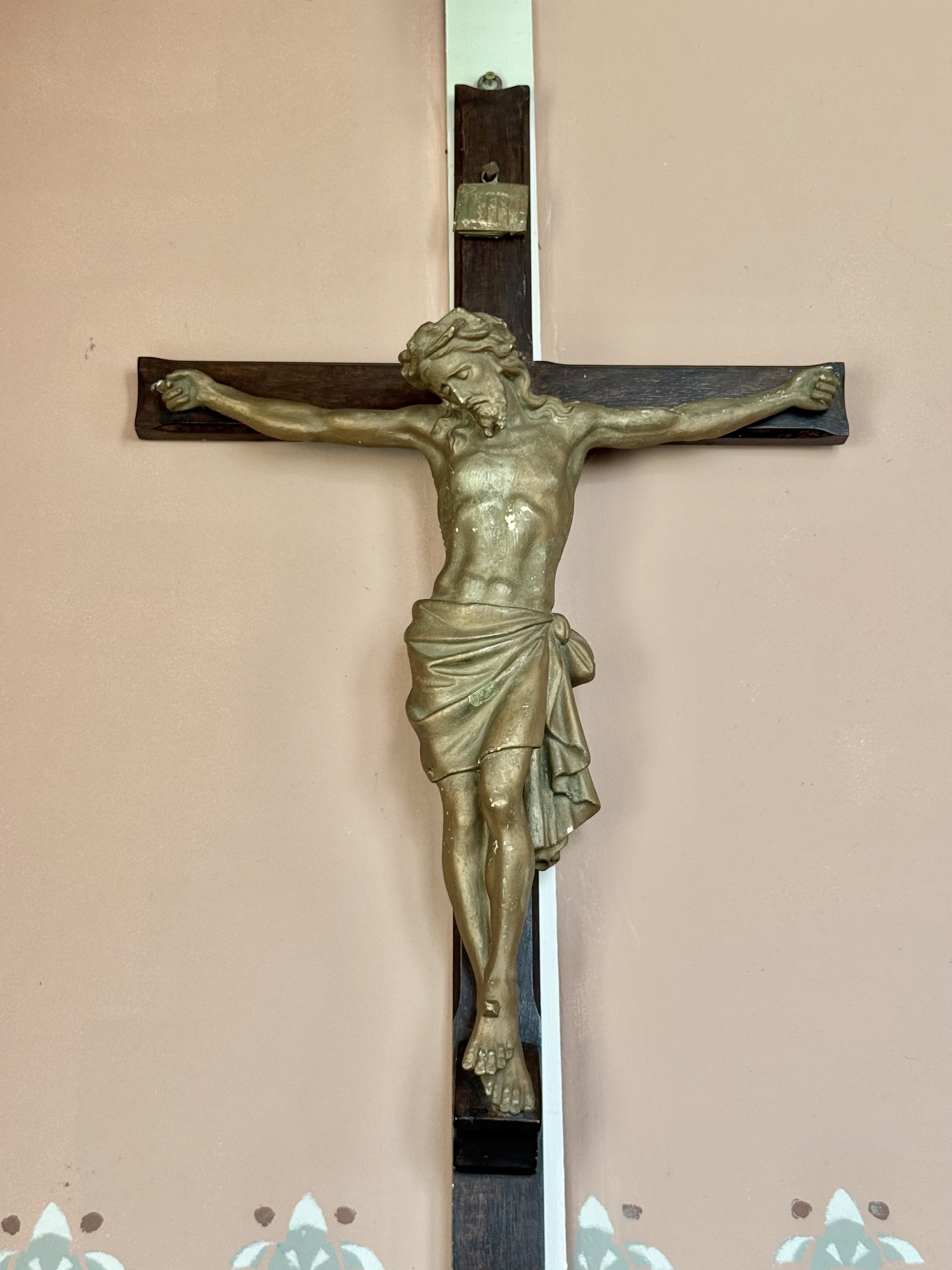
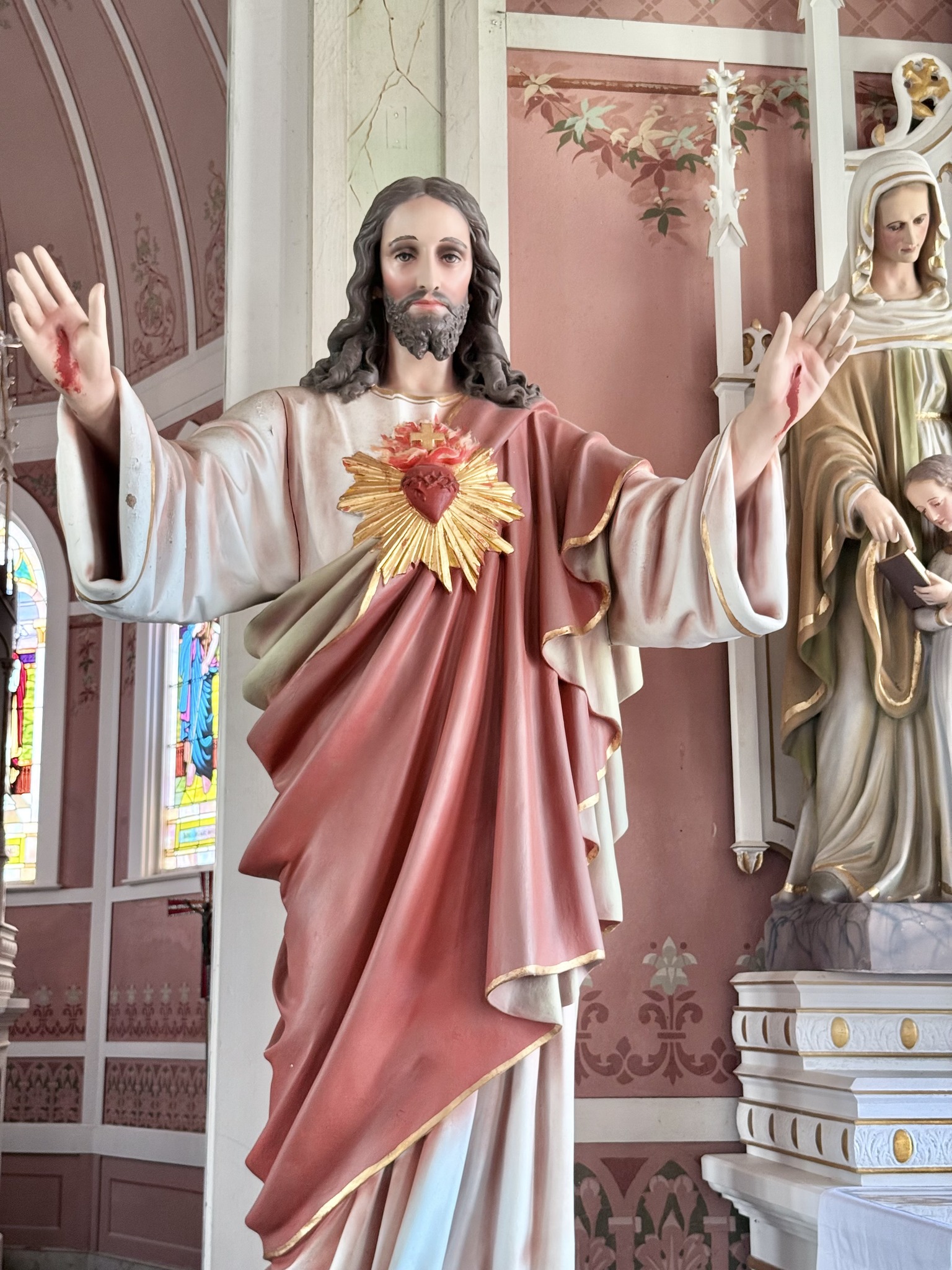
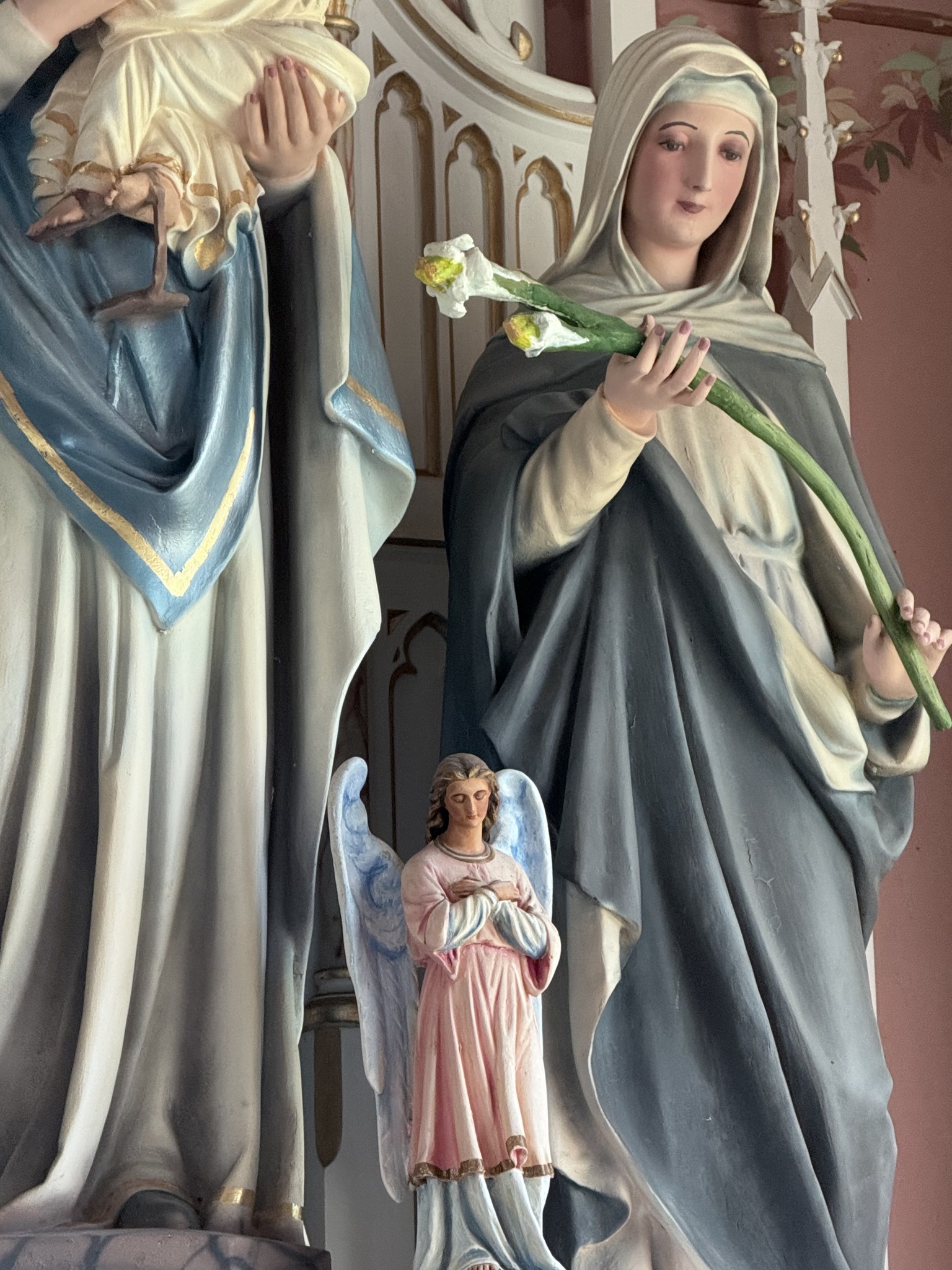
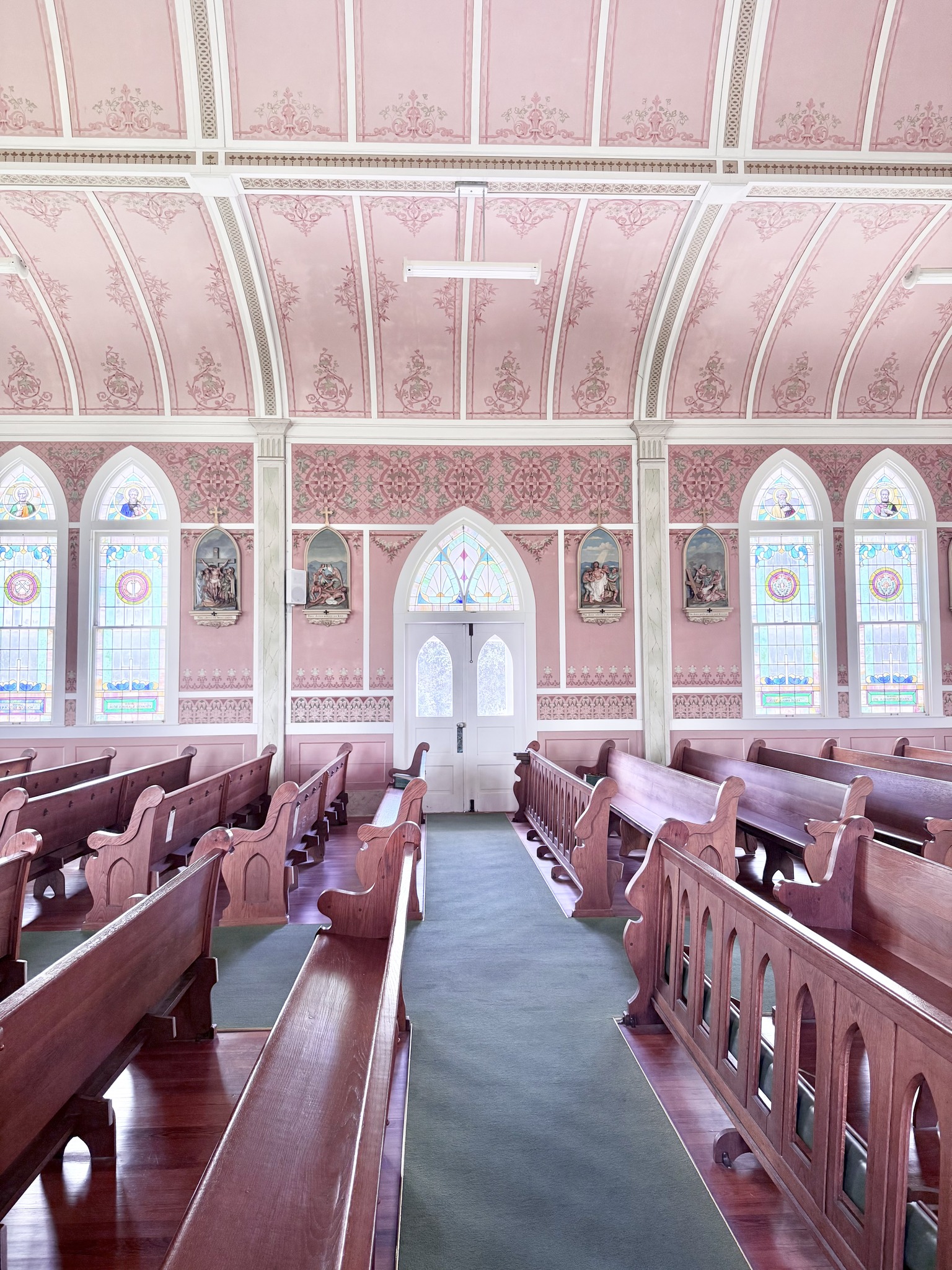
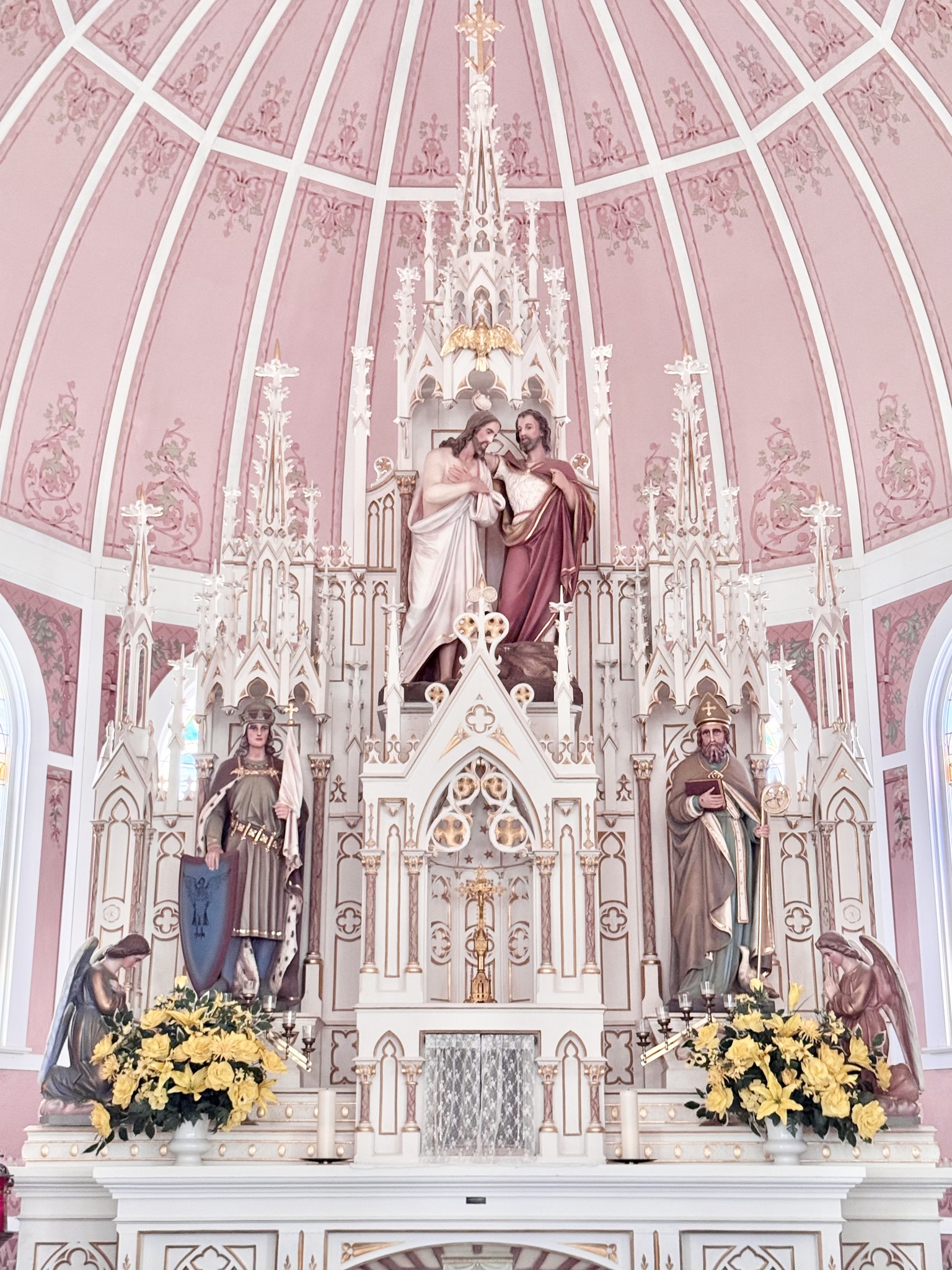
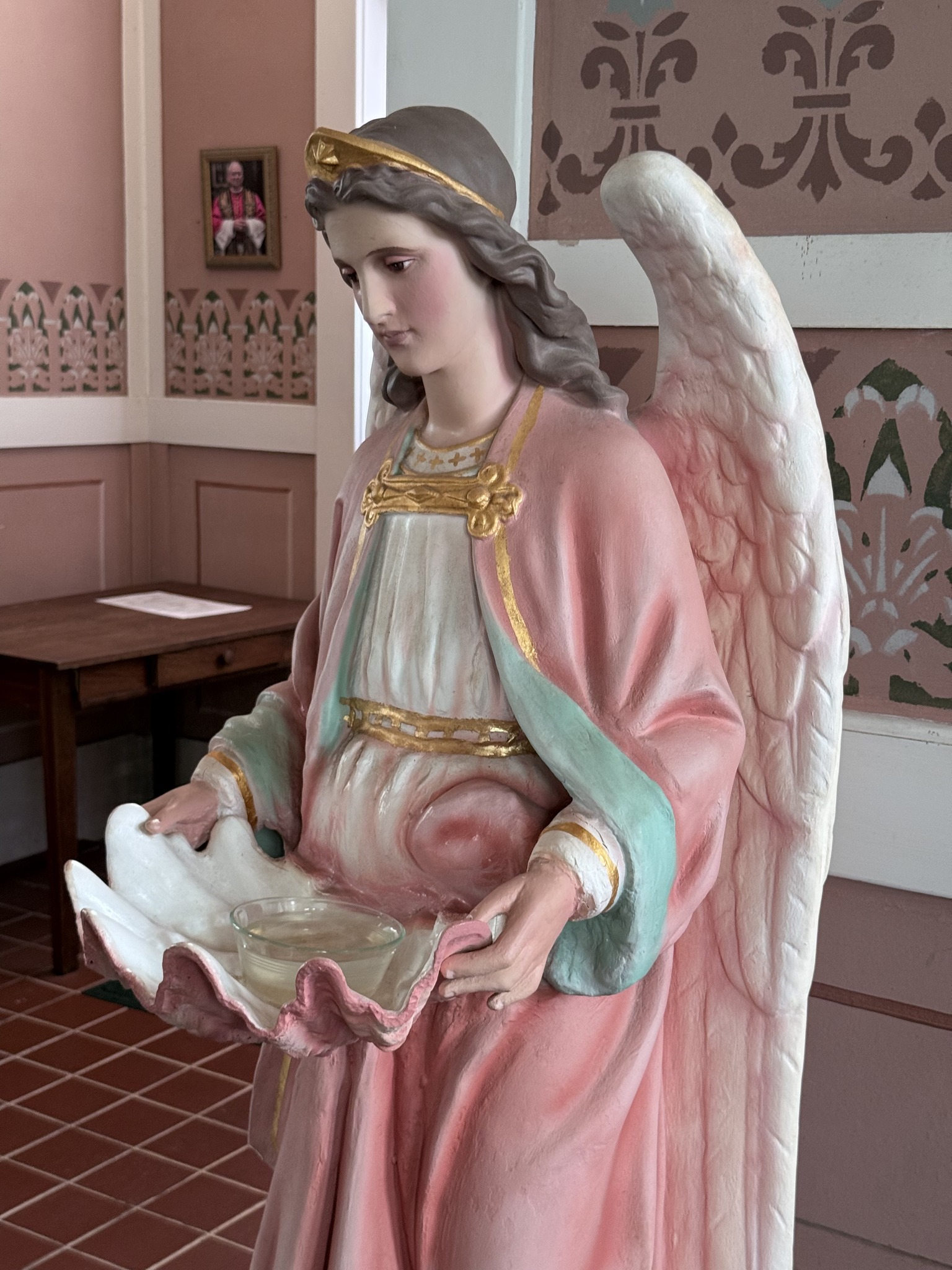
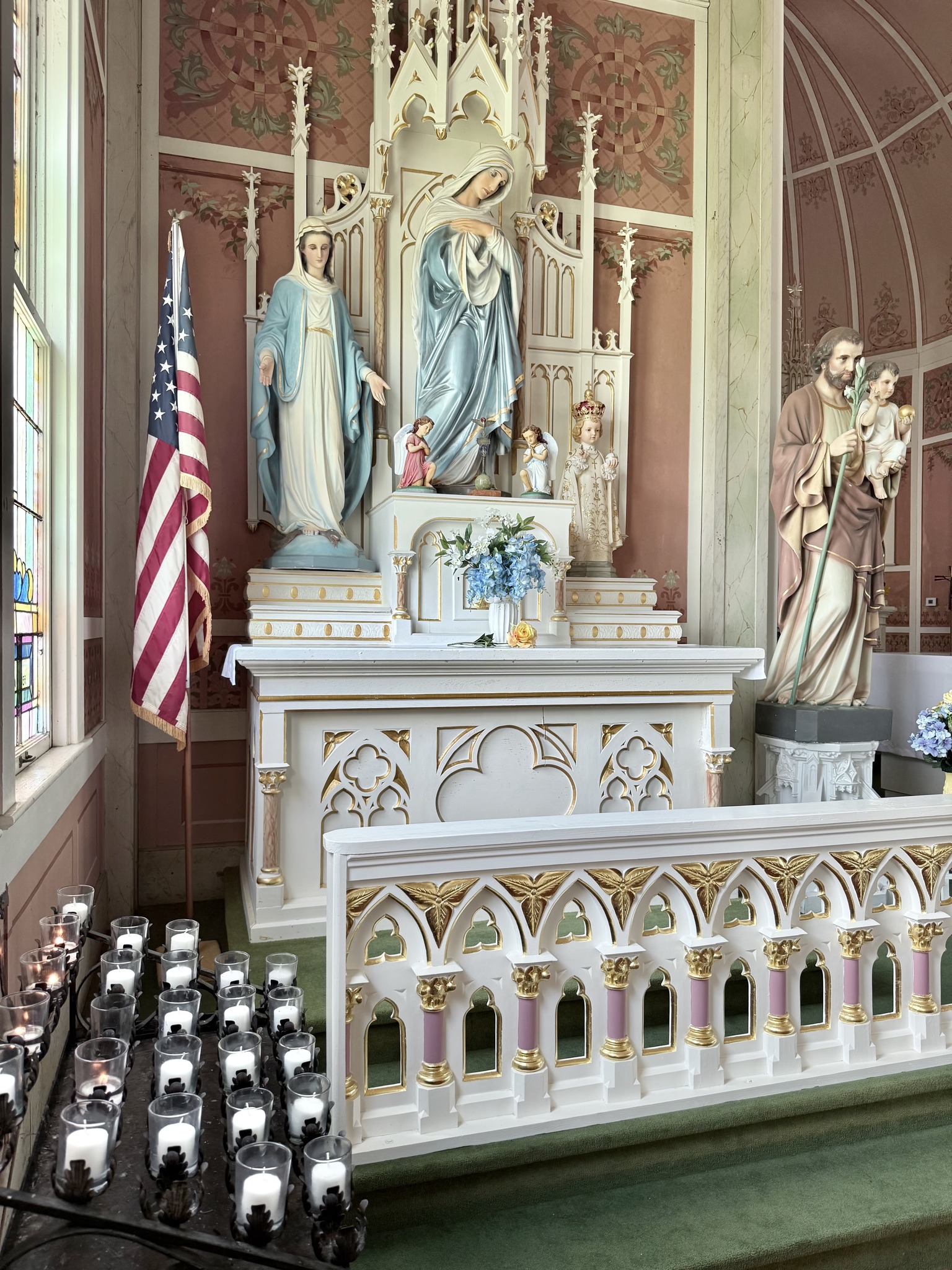
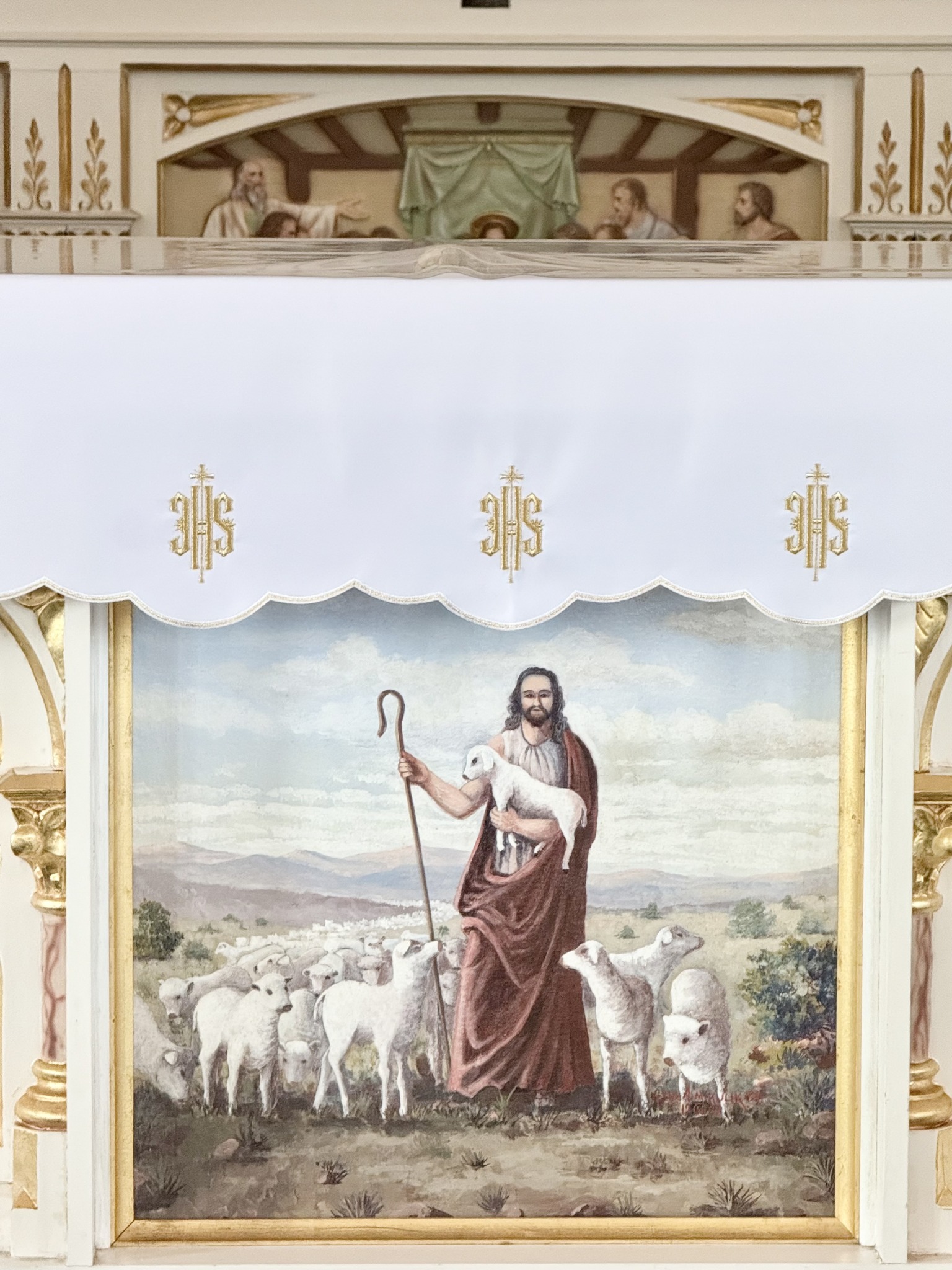
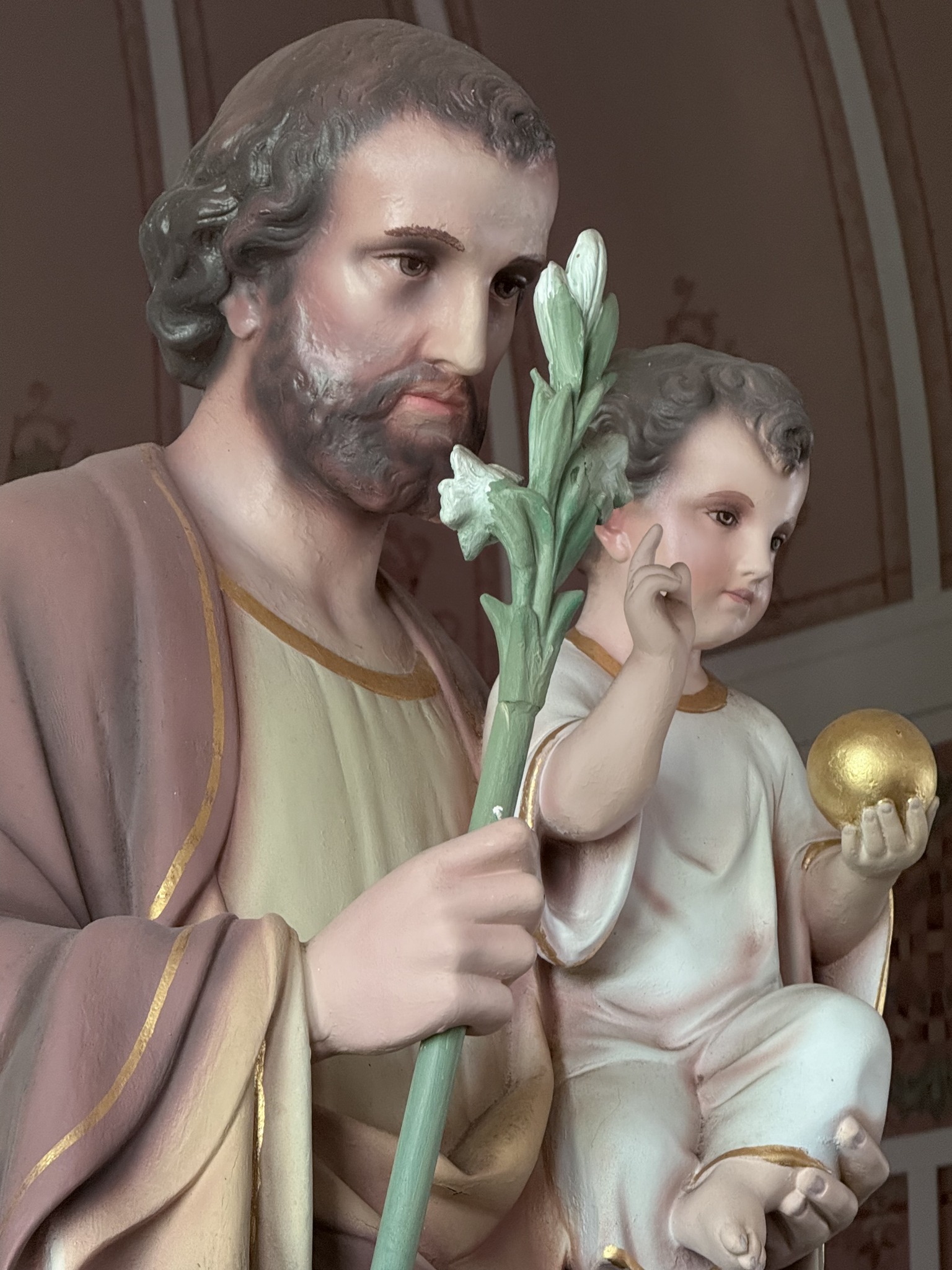
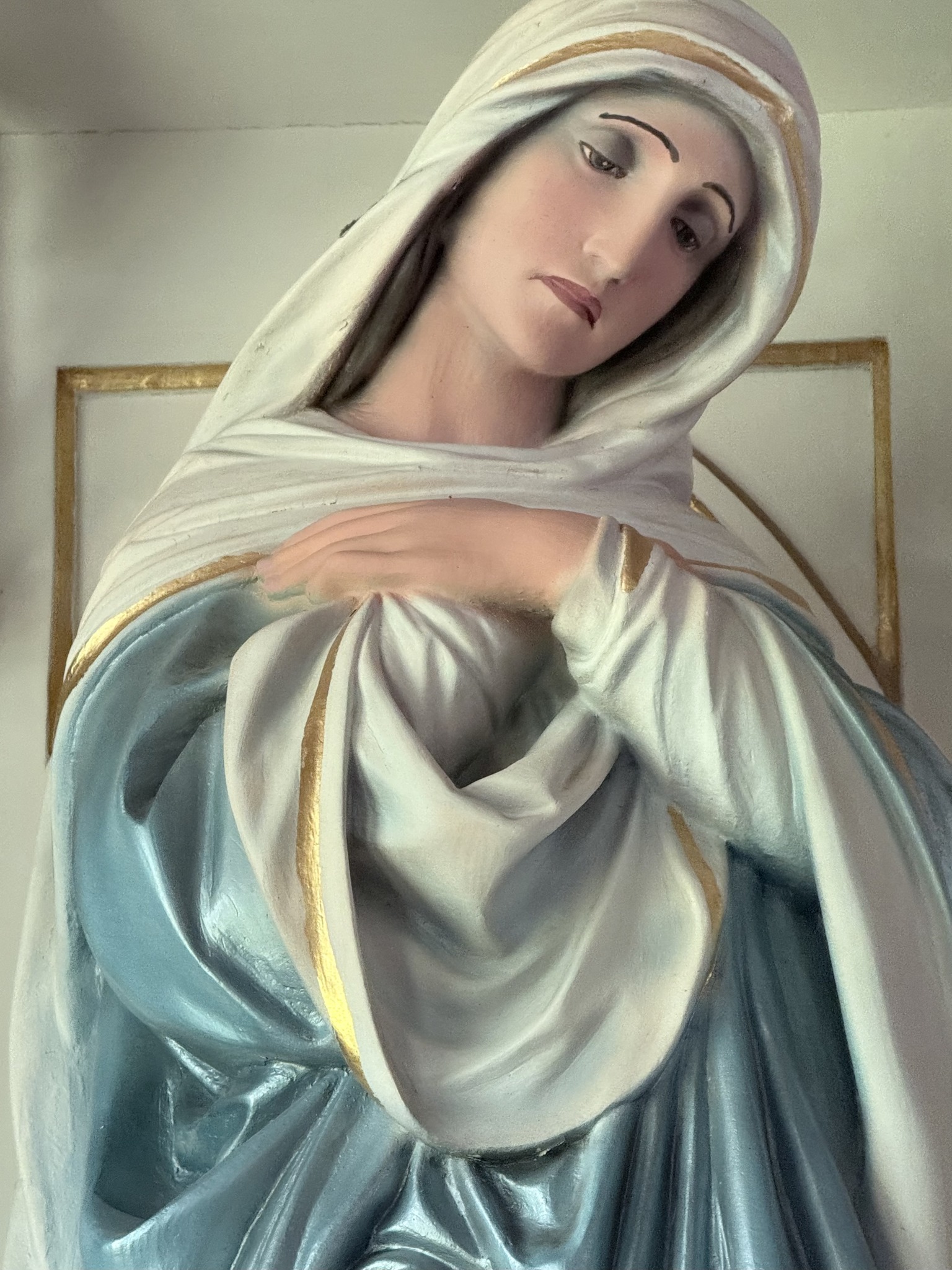
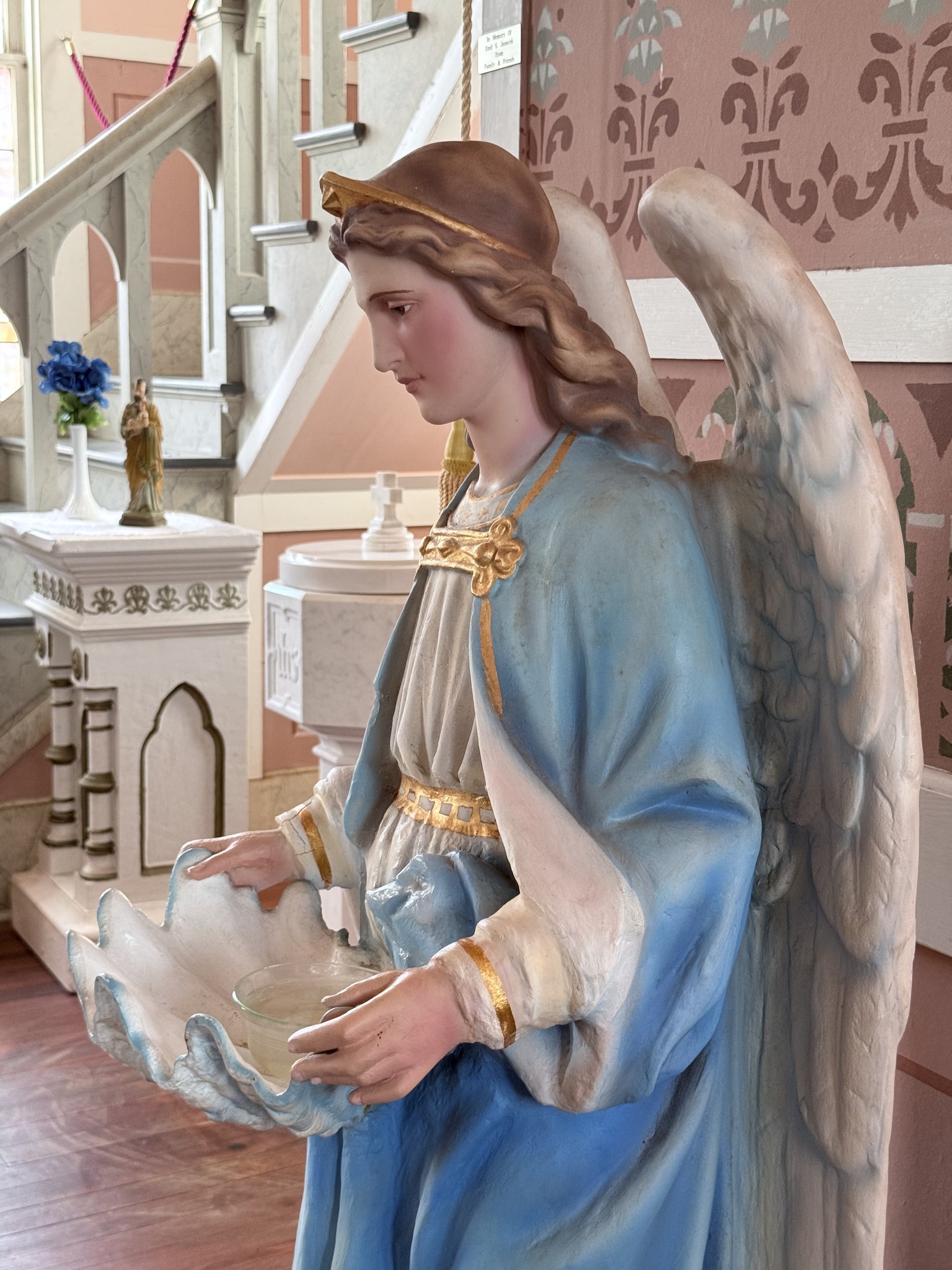
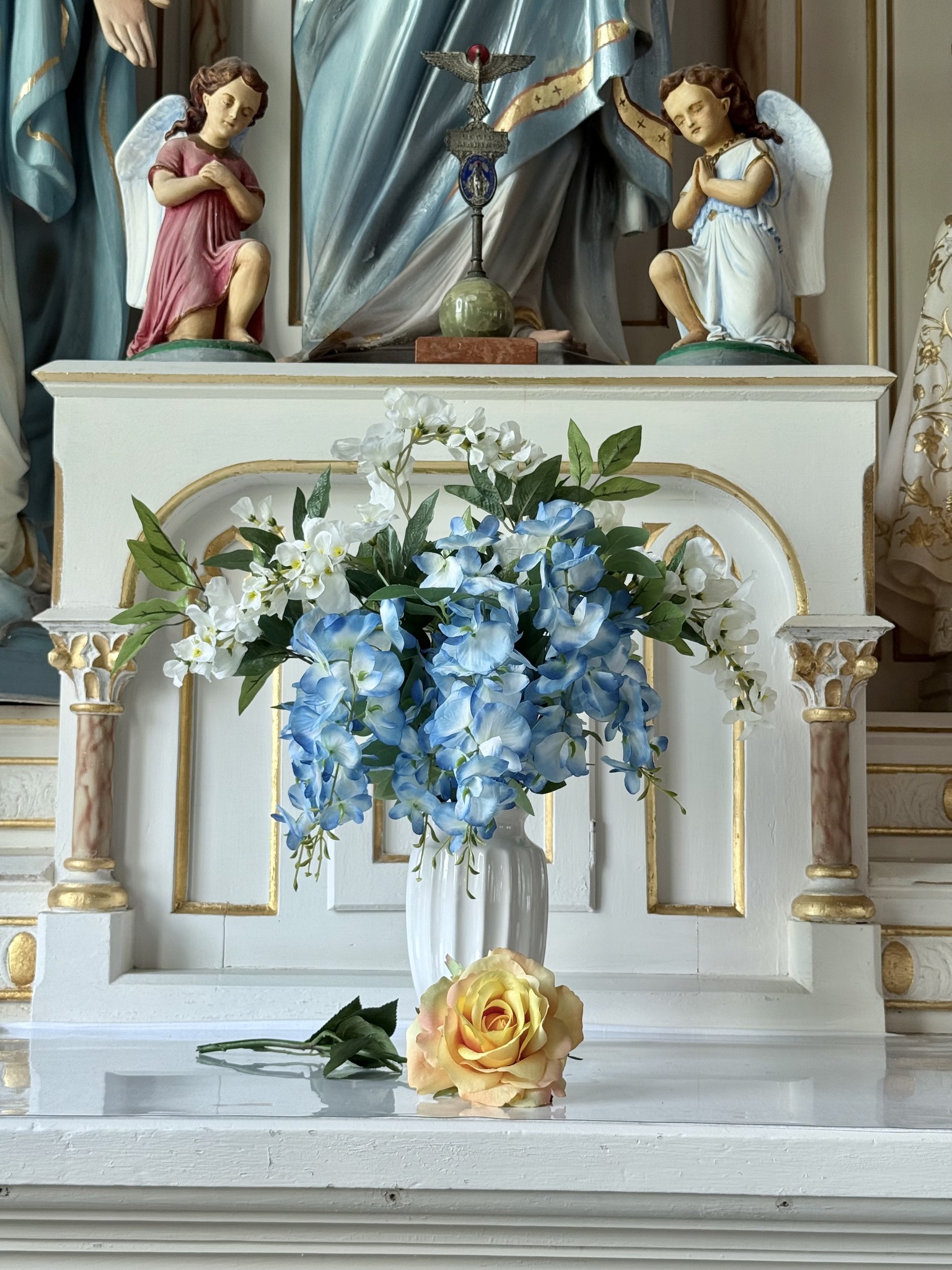
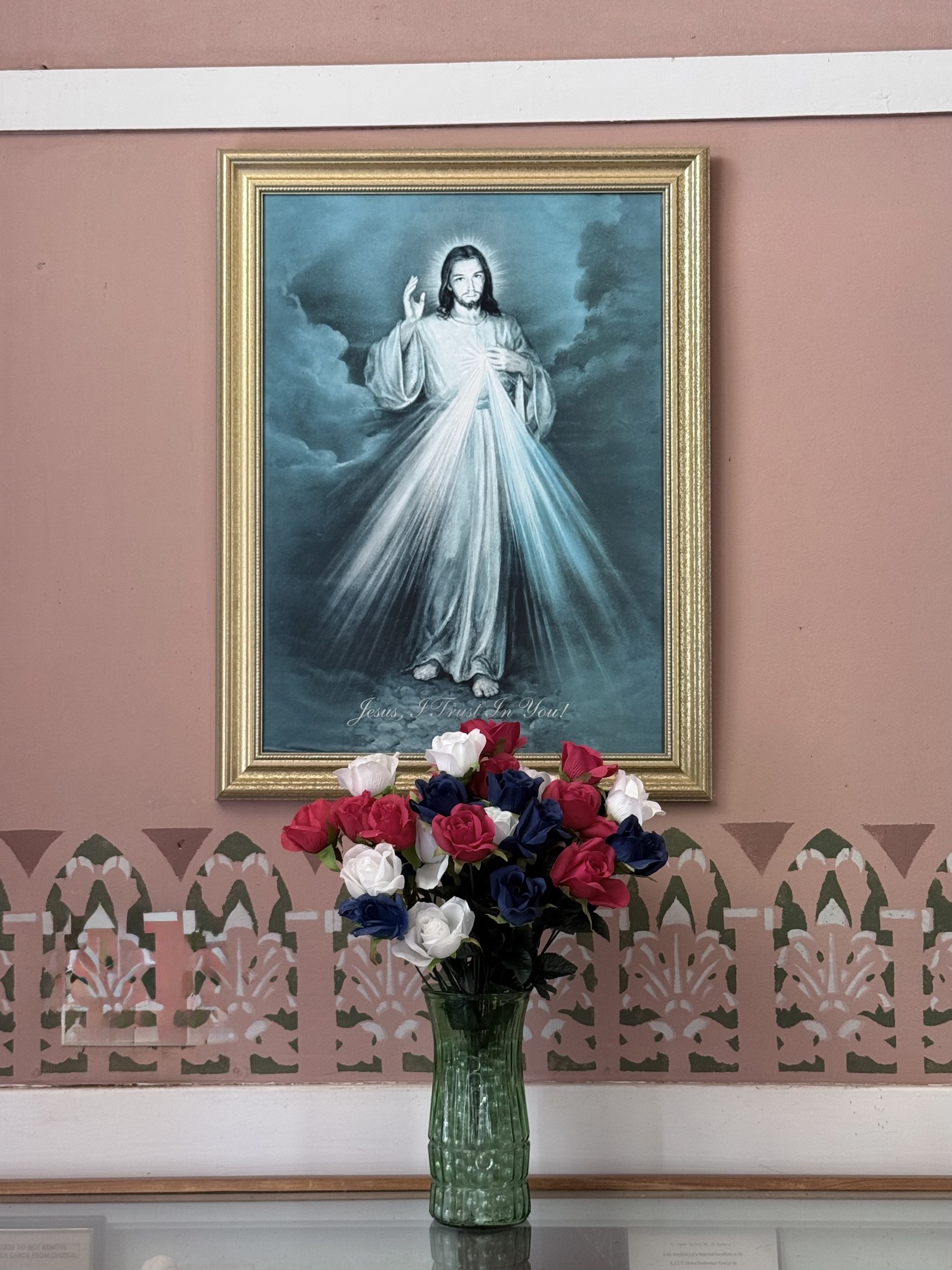
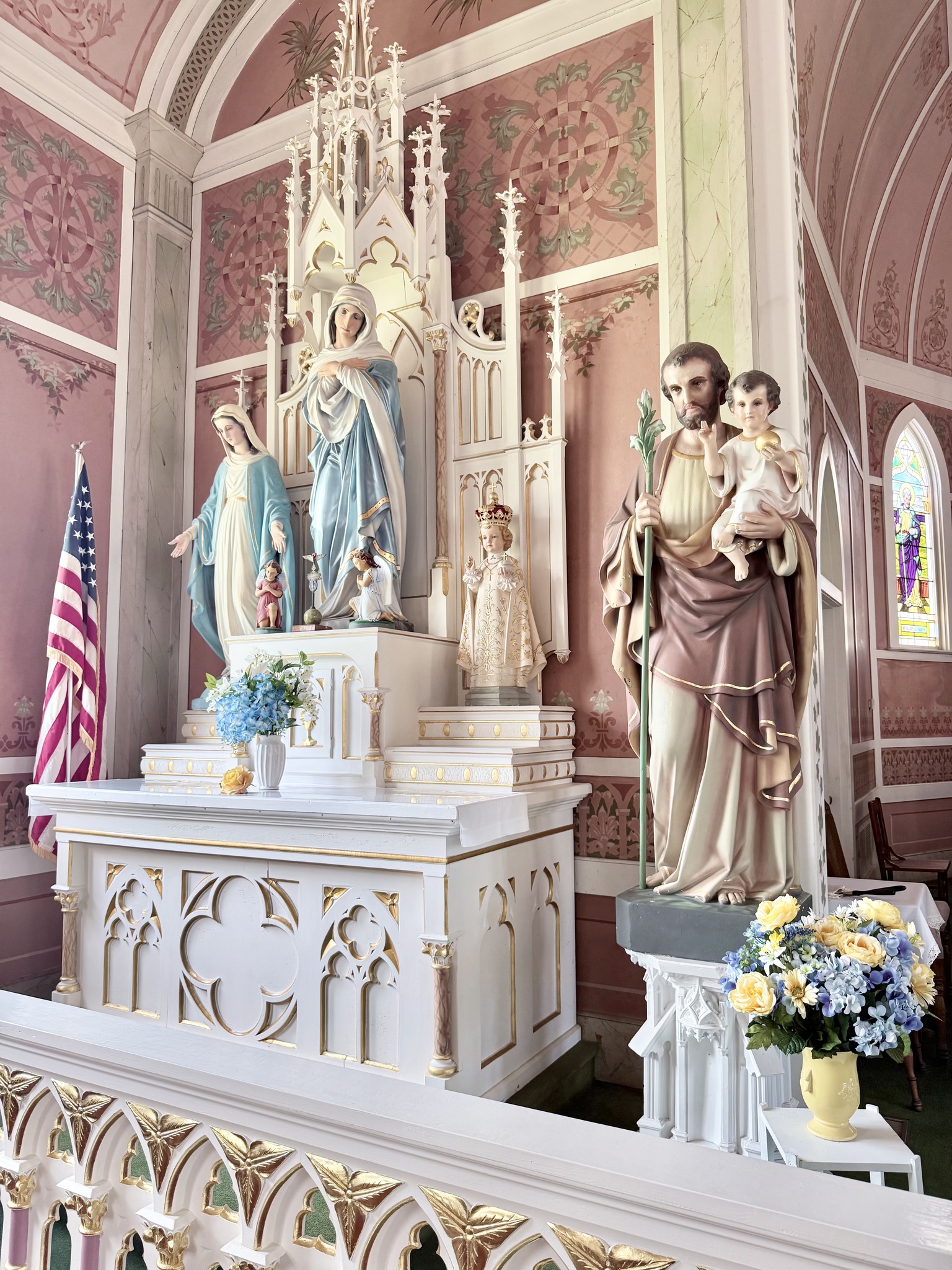
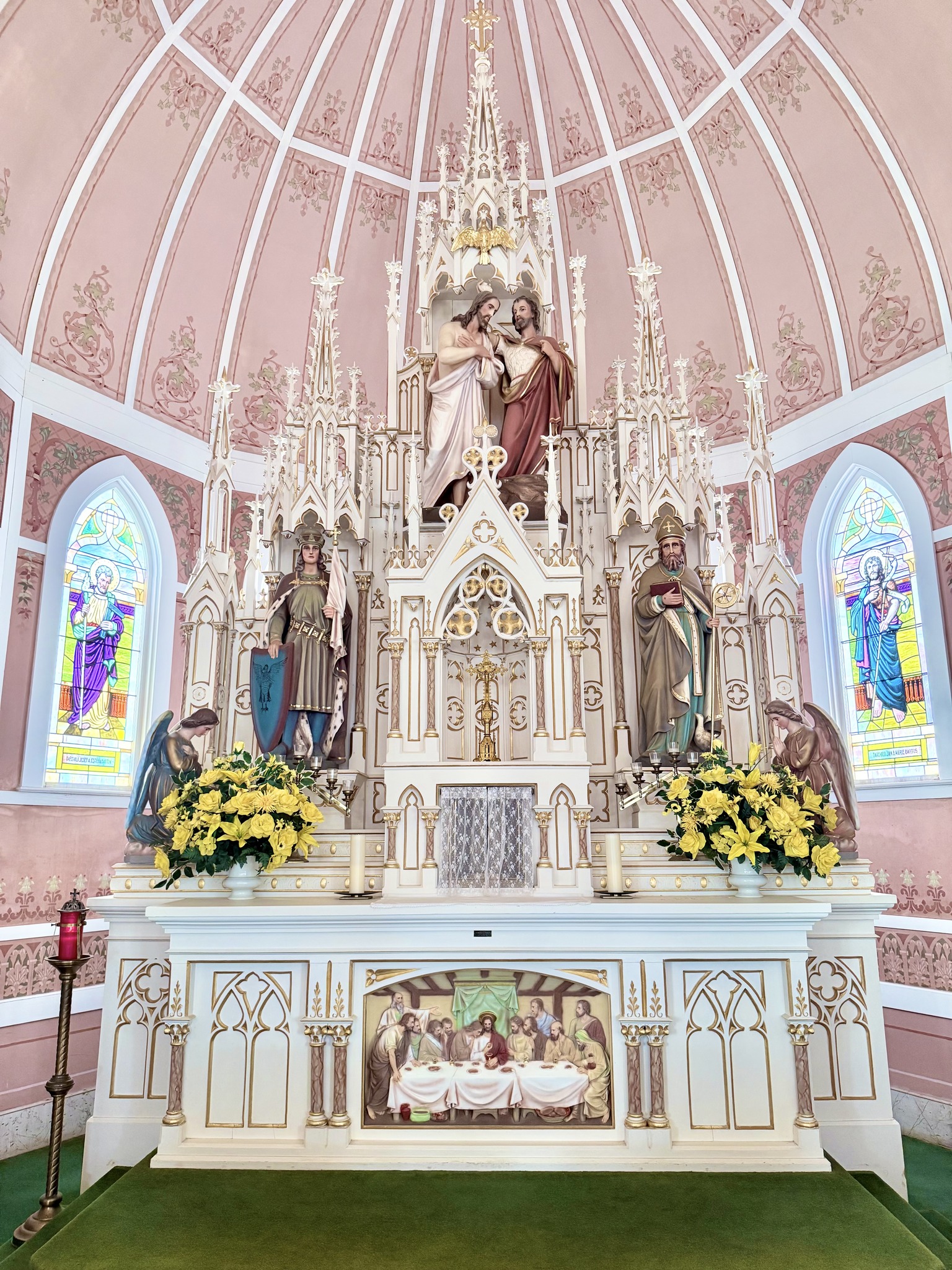
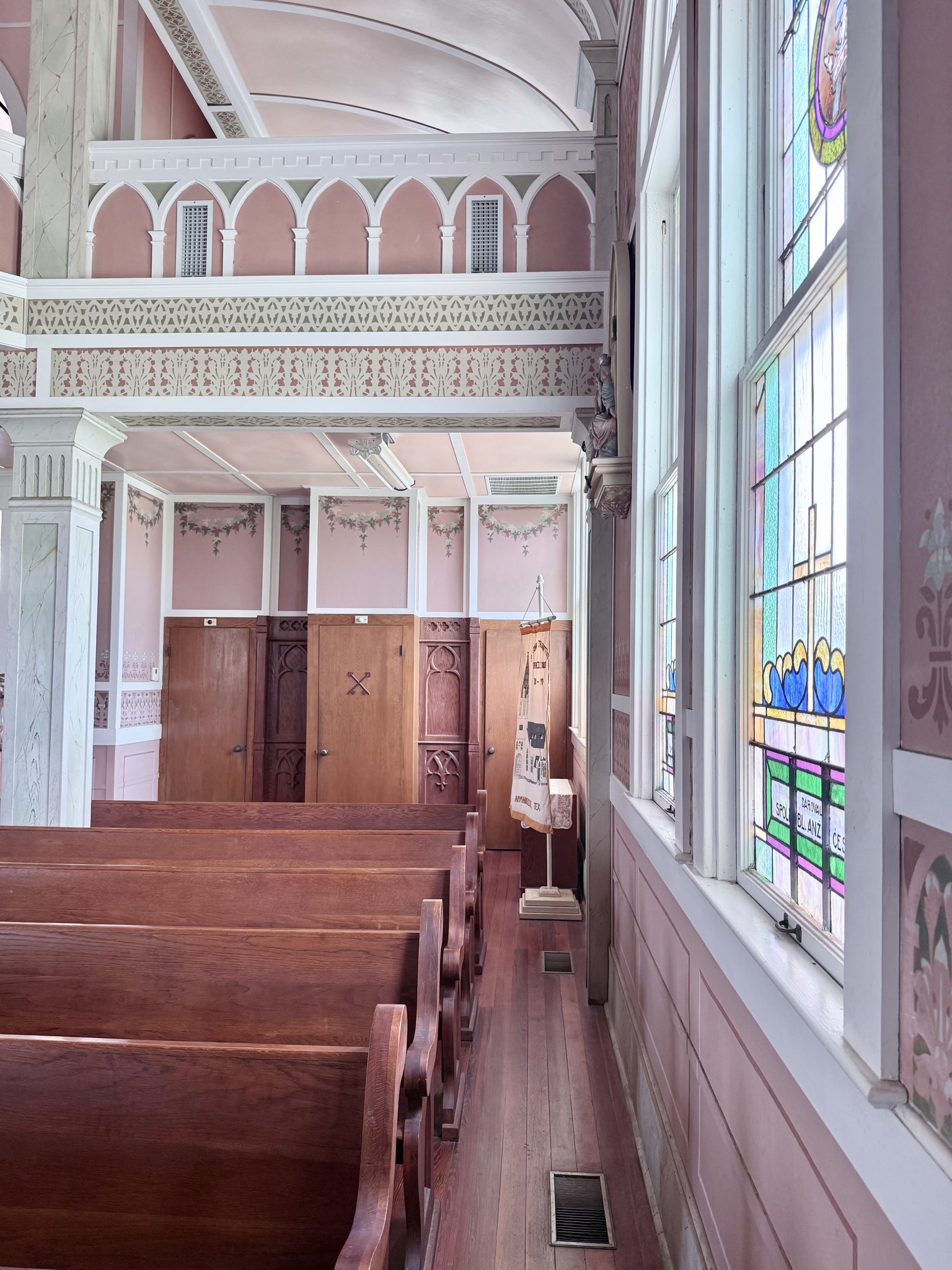
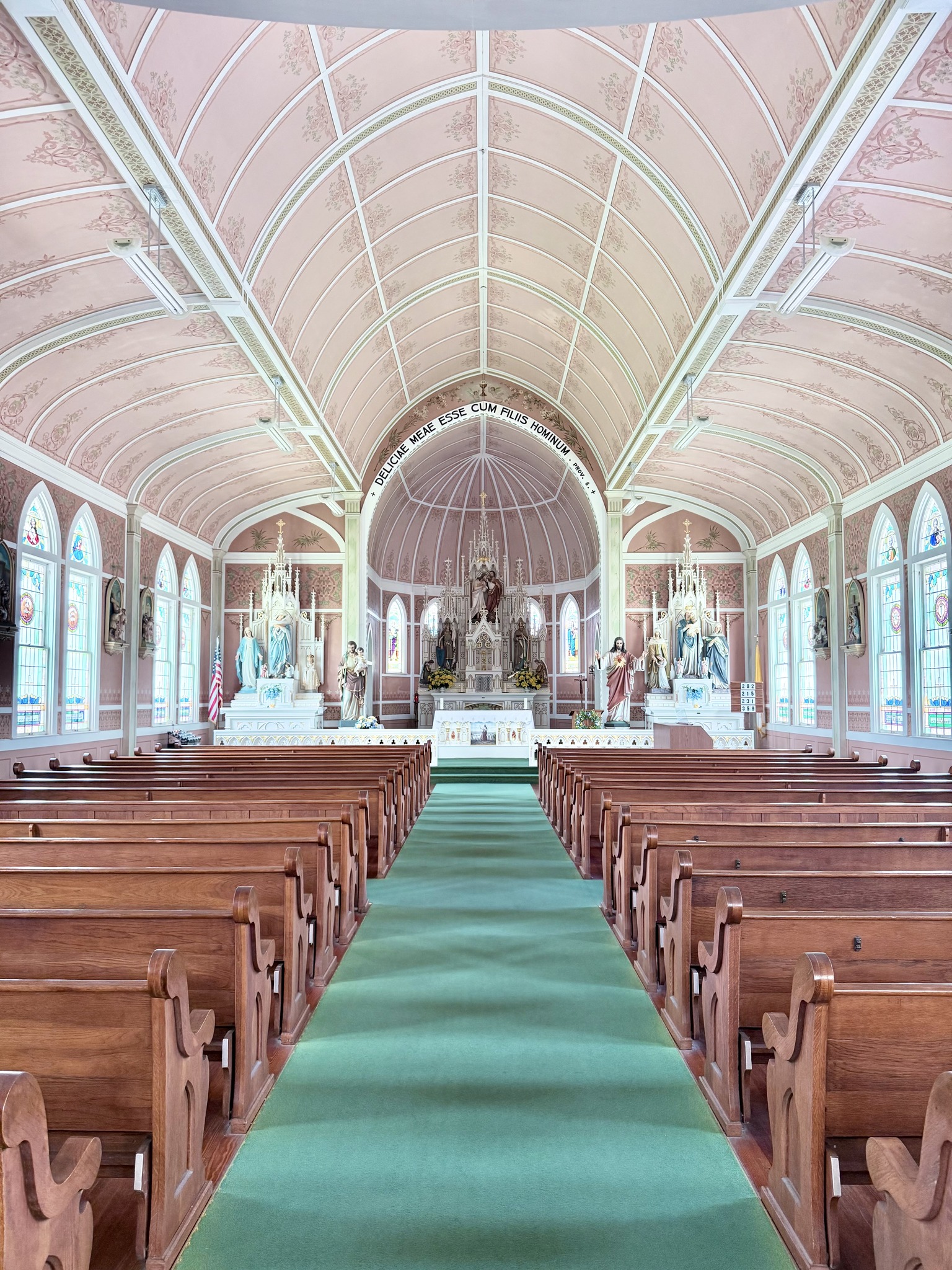
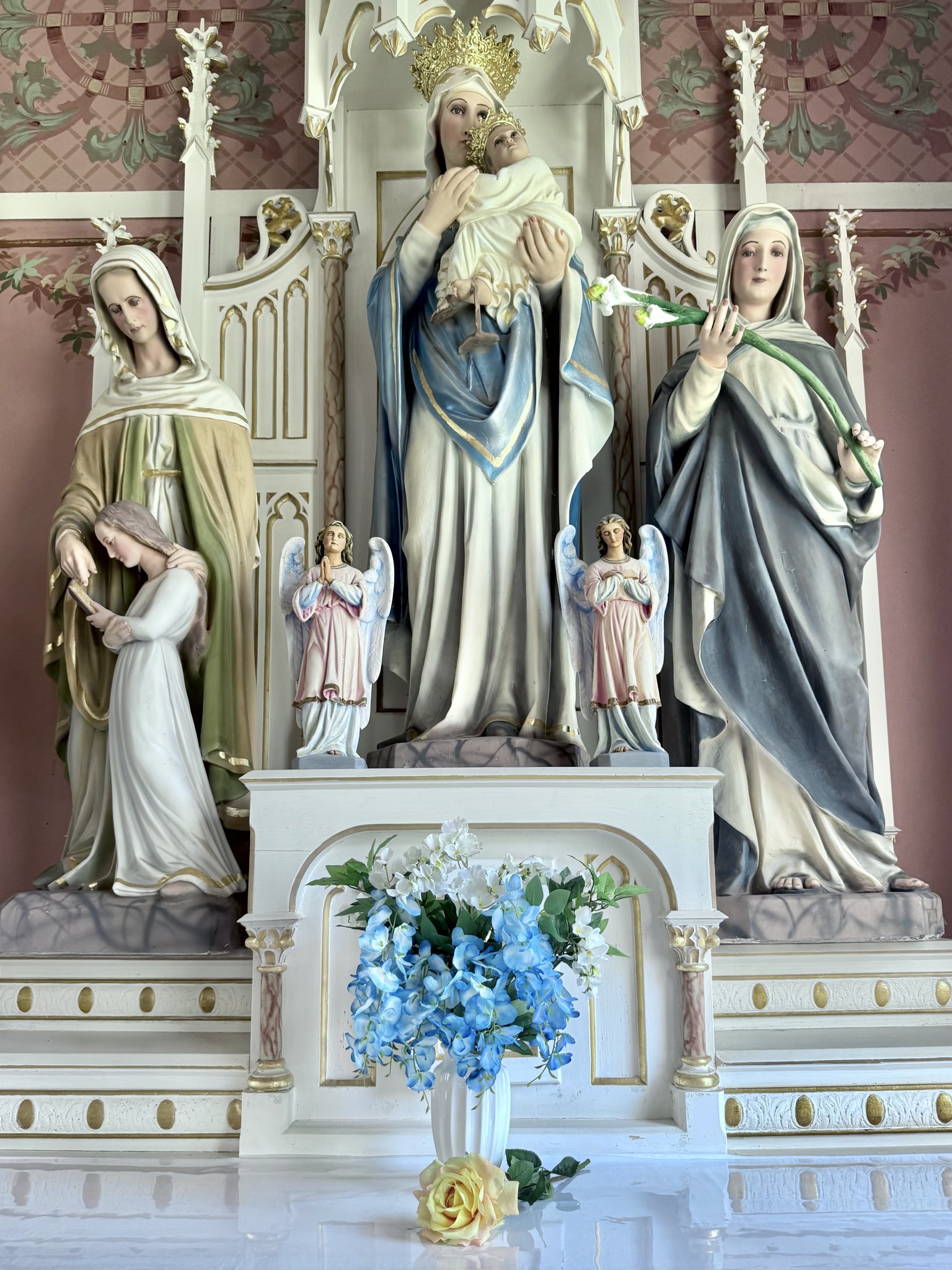
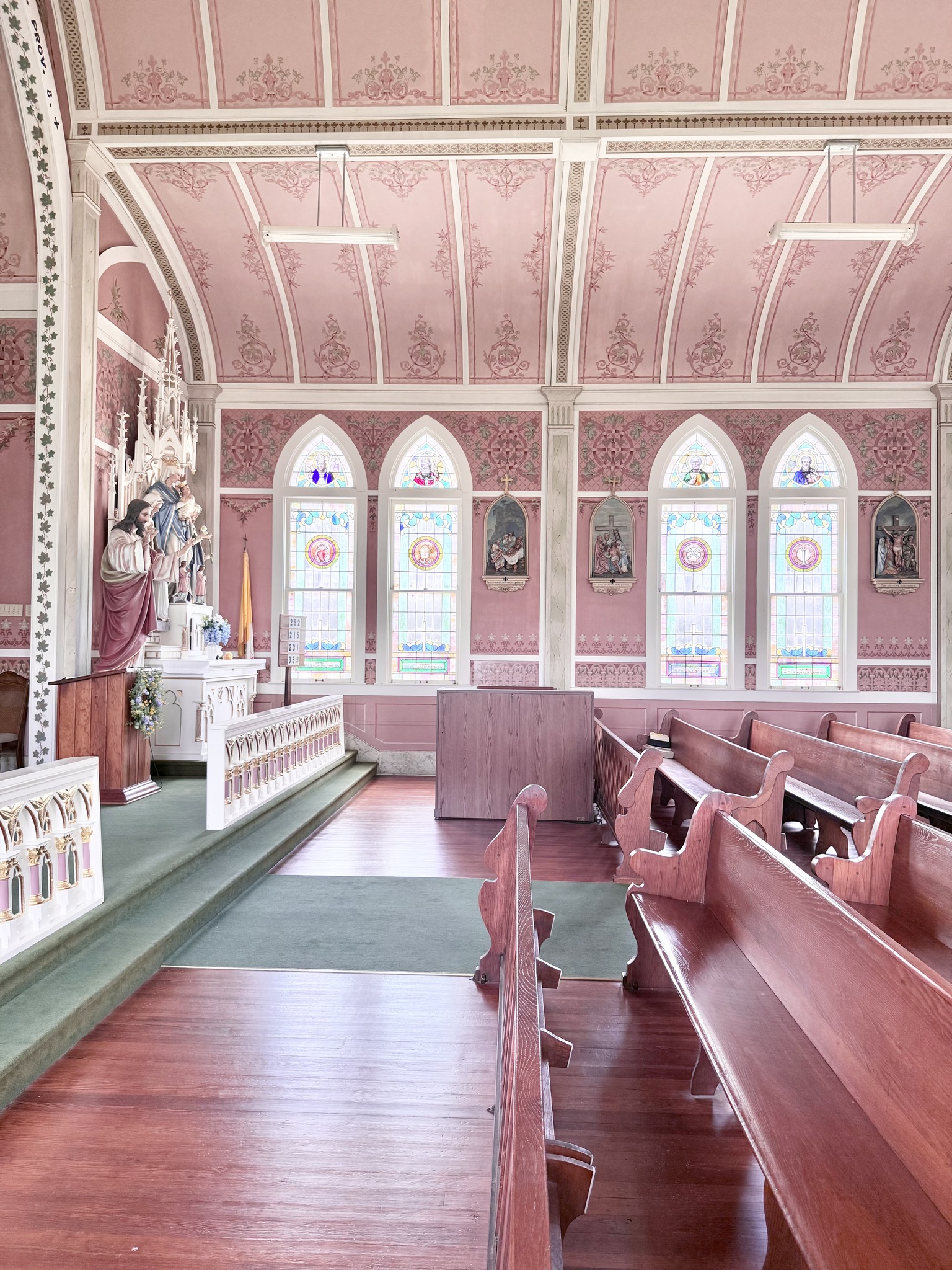
Let me paint the picture—soft rose-pink walls, creamy florals stenciled into every surface, impossibly symmetrical altar lines, a gentle calm that invites you to speak in whispers. The place practically hums with serenity.
And the name?
St. John the Baptist.
What a riot.
I can’t think of a more peculiar namesake for this delicate, rosy haven. I mean, really. The historical John the Baptist? The one from the Jordan River? He wasn’t exactly known for his soft pastels and quiet restraint. He was a firebrand—a wild-eyed, locust-eating, camel-hair-wearing, doomsday street preacher who made people nervous just by showing up.
He shouted, he warned, he called out the religious elite and told everyone to repent or else. He didn’t calm rooms; he cleared them.
Fiery.
Contankerous.
Loud.
Apocalyptic.
Rough around the edges.
Sweaty in the desert.
Hair matted, beard unruly.
The kind of guy who probably hadn’t smiled since childhood.
Who the hell names these churches, anyway?
I mean no disrespect—but if the real John the Baptist were alive today, I honestly think he’d walk into this sanctuary, take one look at the rose-colored tranquility, and mutter (in ancient Aramaic, of course), “What in the actual hell is this?” He wouldn’t sit down to pray; he’d flip the pews and shout at the tabernacle.
And yet—
Despite the strange mismatch between name and space, this is one of my favorite painted churches. Maybe because it doesn’t try to impress. It isn’t showy. It doesn’t glitter like some others do. It’s humble. Understated. Confident without screaming.
It reminds me how often our religious memories replace raw truth with retouched portraits.
There’s a widening gap between the historical figures we read about and the religious icons we build in their name. The historical John was wild, uncomfortable, and deeply human. The St. John of Ammannsville? He’s polite. He’s fragrant. He doesn’t yell.
Maybe that’s how it goes.
Maybe we clean up our prophets the same way we clean up our past—soften the angles, brighten the colors, and hush the inconvenient bits. Maybe, in the end, that’s how we make room for belief: not by remembering who they really were, but who we wish they had been.
Still, I can’t help but imagine the original John the Baptist walking in here, sniffing the incense, staring up at the ceiling, and yelling down the aisle:
“REPENT!”
(And then slipping in the polished aisle tile on his way out.)
Click.
Jack.